
Teaching Kids Math Through Cooking and Baking: A Grade-by-Grade Kitchen Guide
Short answer: Cooking and baking naturally teach fractions, measurement, ratios, and number sense through hands-on, low-pressure practice — doubling a recipe teaches multiplication, measuring 3/4 cup teaches fractions, and adjusting oven timing teaches basic time calculations. Teaching Kids Math Through Cooking and Baking works because it turns abstract worksheet concepts into something a child can taste, touch, and see the results of immediately.
Key takeaways:
- The kitchen naturally reinforces fractions, measurement, ratios, and basic arithmetic without feeling like a math lesson.
- Different grades benefit from different kitchen tasks, matched to what they’re learning in the Ontario math curriculum.
- Mistakes in the kitchen (too much salt, a lopsided cake) provide immediate, meaningful feedback that a worksheet error doesn’t.
- No special equipment is needed beyond standard measuring cups, spoons, and a kitchen scale if you have one.
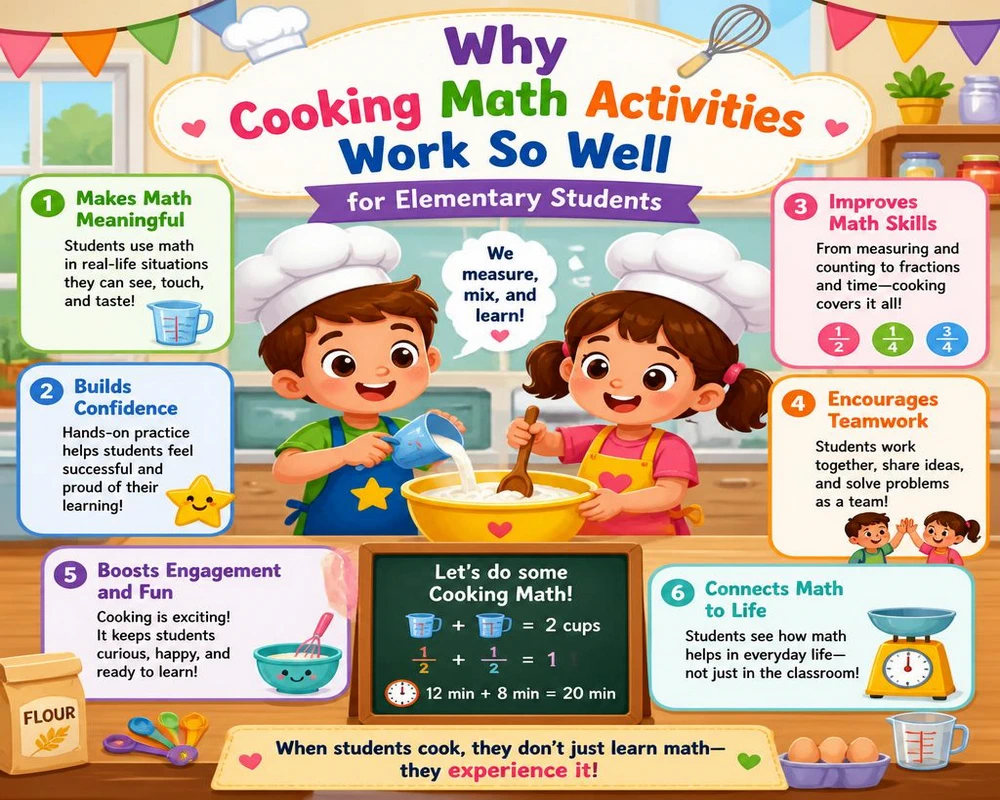
Why Cooking Math Activities Work So Well for Elementary Students
Cooking math activities elementary teachers and parents rely on work because they combine several conditions known to support learning: immediate feedback, genuine purpose, low stakes, and multi-sensory engagement. When a child measures 1/2 cup instead of 1 cup by mistake, the pancakes come out wrong — a natural consequence that reinforces the lesson far more memorably than a red X on a worksheet.
Educational research on situated learning consistently shows that skills practiced in a meaningful, real-world context transfer better than the same skills practiced in isolation on a worksheet. Cooking checks every box for this kind of context: there’s a genuine goal (an edible result), immediate sensory feedback (taste, texture, appearance), and a natural reason to get the math right rather than an abstract instruction to “show your work.” This is precisely why Teaching Kids Math Through Cooking and Baking shows up so consistently as a recommended strategy among elementary educators and occupational therapists working on applied numeracy.
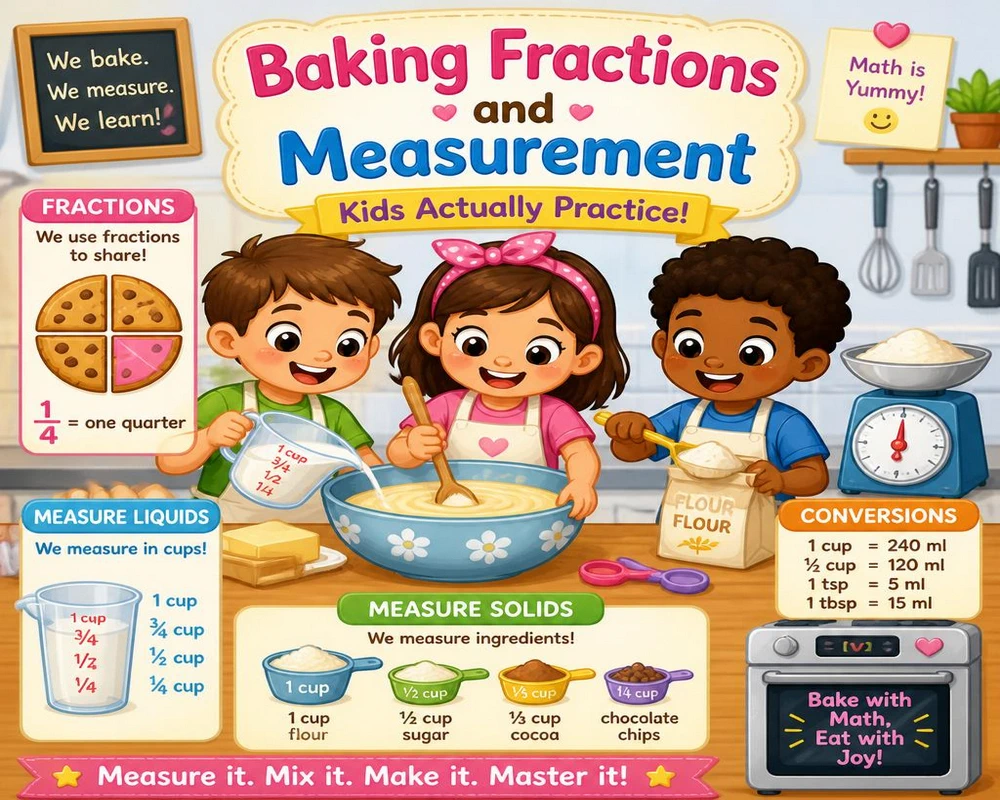
Baking Fractions and Measurement Kids Actually Practice
Baking fractions measurement kids encounter most often involve halves, thirds, and quarters — exactly the fractions introduced in Ontario’s Grade 2 and Grade 3 curriculum. A standard recipe calling for 3/4 cup of sugar or 1/3 cup of oil is a direct, practical application of exactly what’s being taught in class.
Measuring Tools as Fraction Models
A set of nesting measuring cups (1 cup, 1/2 cup, 1/3 cup, 1/4 cup) is essentially a physical fraction manipulative. Lining them up side by side and asking a child to predict how many 1/4 cups fill the 1 cup measure is a hands-on fraction lesson that costs nothing extra beyond ordinary kitchen tools you likely already own.
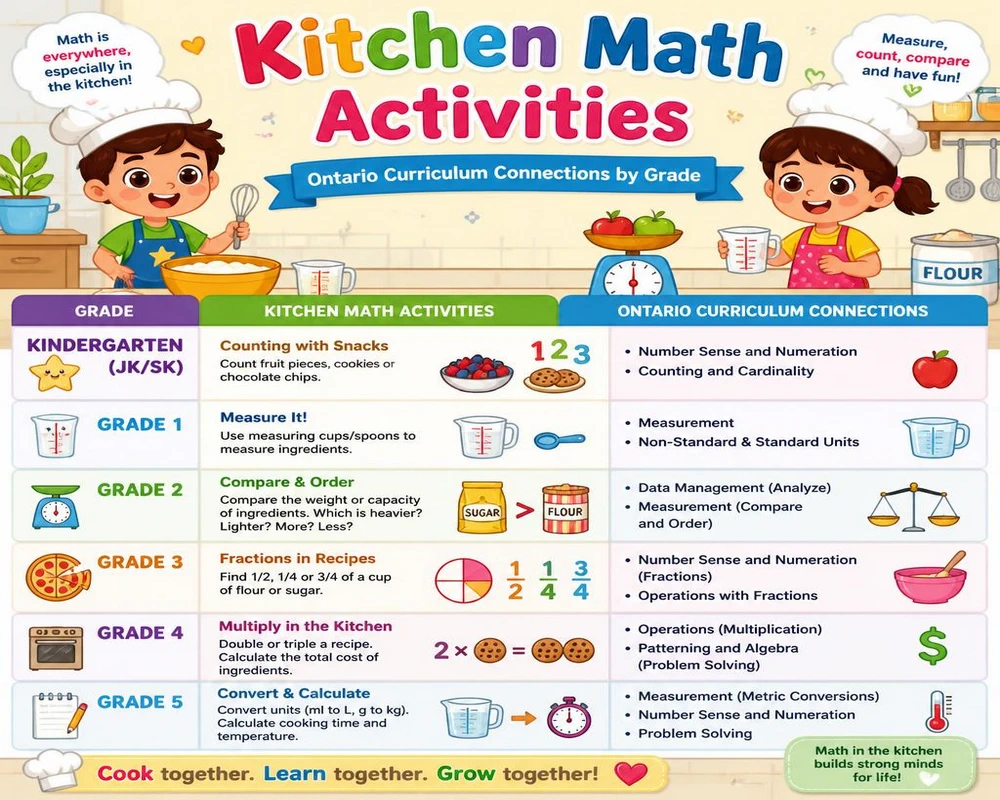
Kitchen Math Activities Ontario Curriculum Connections by Grade
Here’s how kitchen math activities Ontario curriculum expectations line up, grade by grade, so you can pick activities that reinforce exactly what your child is learning in school right now.
| Grade | Curriculum Focus | Kitchen Activity |
|---|---|---|
| Grade 1 | Counting, number sense | Counting out ingredients (eggs, cups of flour) one at a time |
| Grade 2 | Addition, basic measurement | Measuring two ingredients and figuring out the total volume |
| Grade 3 | Multiplication, fractions | Doubling a simple recipe; measuring 1/2 and 1/3 cup amounts |
| Grade 4 | Area, perimeter, larger multiplication | Calculating the area of a pan to decide if a recipe will fit |
| Grade 5 | Decimals | Converting between decimal and fraction measurements (0.5 cup = 1/2 cup) |
| Grade 6 | Ratios and rates | Scaling a recipe up or down using ratios (e.g., tripling a recipe for a party) |
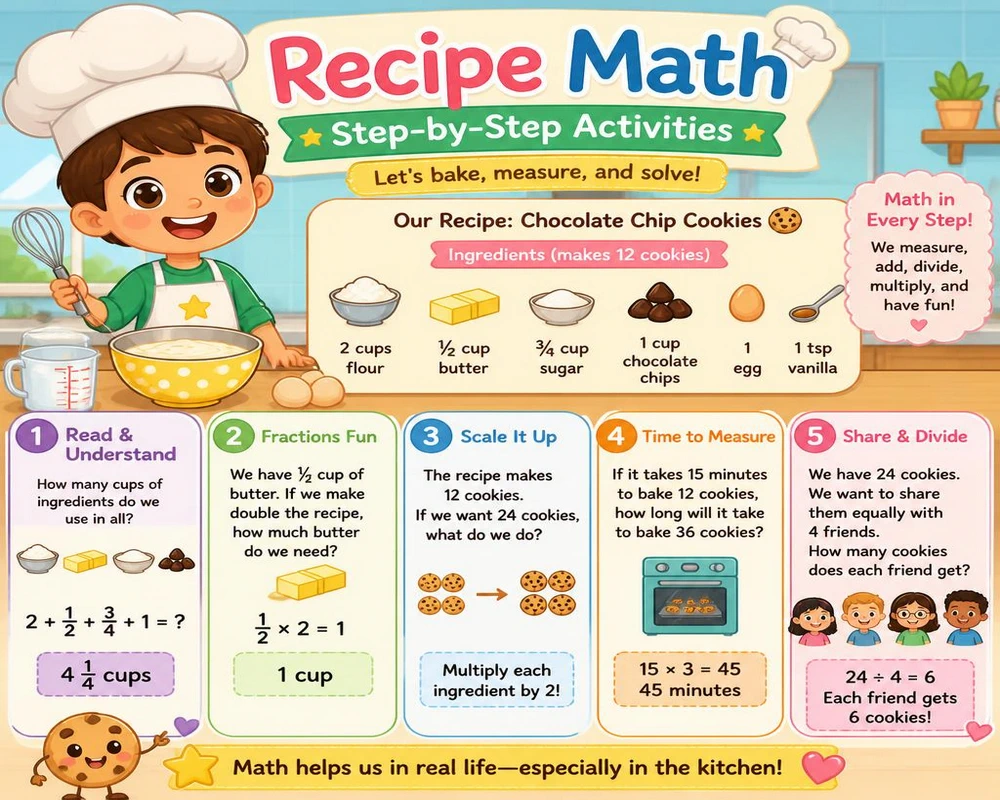
Recipe Math for Elementary Students: Step-by-Step Activities
Here are specific recipe math for elementary students activities you can try this week, organized from simplest to most advanced.
Activity 1: Counting and Sorting (Grades 1-2)
- Choose a simple recipe with 4-6 ingredients.
- Have your child count out each ingredient as it’s added (5 eggs, 3 cups of flour).
- Ask them to predict which ingredient has the “most” and “least” before you start.
Activity 2: Doubling a Recipe (Grades 3-4)
- Pick a favorite simple recipe (pancakes, cookies).
- Before cooking, have your child calculate what each ingredient amount would be if doubled.
- Actually measure and cook the doubled batch, checking the math held up in practice.
Activity 3: Fraction and Decimal Conversion (Grade 5)
- Give your child a recipe using fractions (3/4 cup, 1/3 cup).
- Ask them to write each fraction as a decimal.
- Check the conversion using a measuring cup that shows both units, if you have one.
Activity 4: Scaling for a Party (Grade 6)
- Pick a recipe designed for 4 servings.
- Ask your child to calculate the ingredient amounts needed for 10 or 12 servings using ratios.
- Discuss why some things (like baking soda) don’t always scale in perfectly equal proportion — a genuine, advanced insight into real-world cooking chemistry.
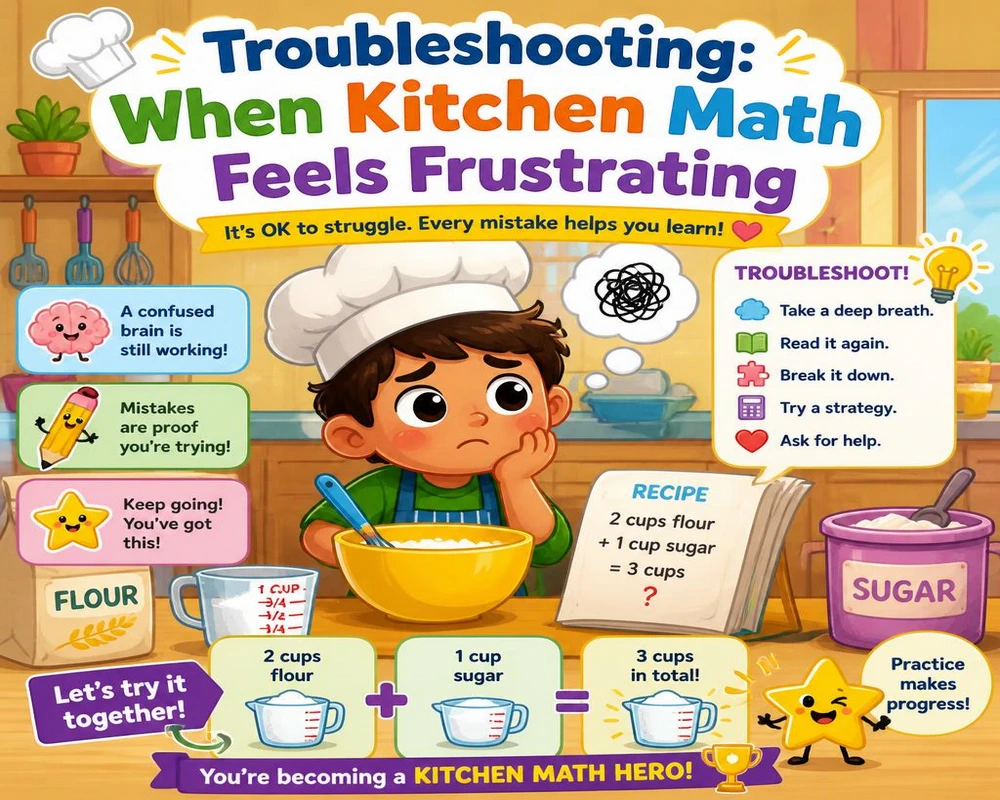
Troubleshooting: When Kitchen Math Feels Frustrating
Not every kitchen math session goes smoothly, and it helps to know what to do when frustration shows up instead of engagement.
The Recipe Didn’t Turn Out — Now What?
Resist the urge to immediately fix the mistake yourself. Instead, work backward together: “Let’s check the math — what did we measure, and what should we have measured?” This turns a disappointing result into a genuine debugging exercise, which is a valuable analytical skill well beyond just cooking.
My Child Gets Overwhelmed by Multiple Steps
Break the recipe into smaller decision points rather than asking your child to calculate every ingredient conversion at once. Handle two or three ingredients per session if needed — Teaching Kids Math Through Cooking and Baking works best when it stays low-pressure, not when it becomes another source of performance anxiety.
My Child Says Cooking Math Is “Not Real Math”
This reaction sometimes comes from kids who’ve been taught to associate “real math” only with worksheets and tests. Gently point out that the fraction they just measured, or the multiplication they just performed to double a recipe, is the exact same skill tested on their next math quiz — just applied somewhere that also produces cookies.
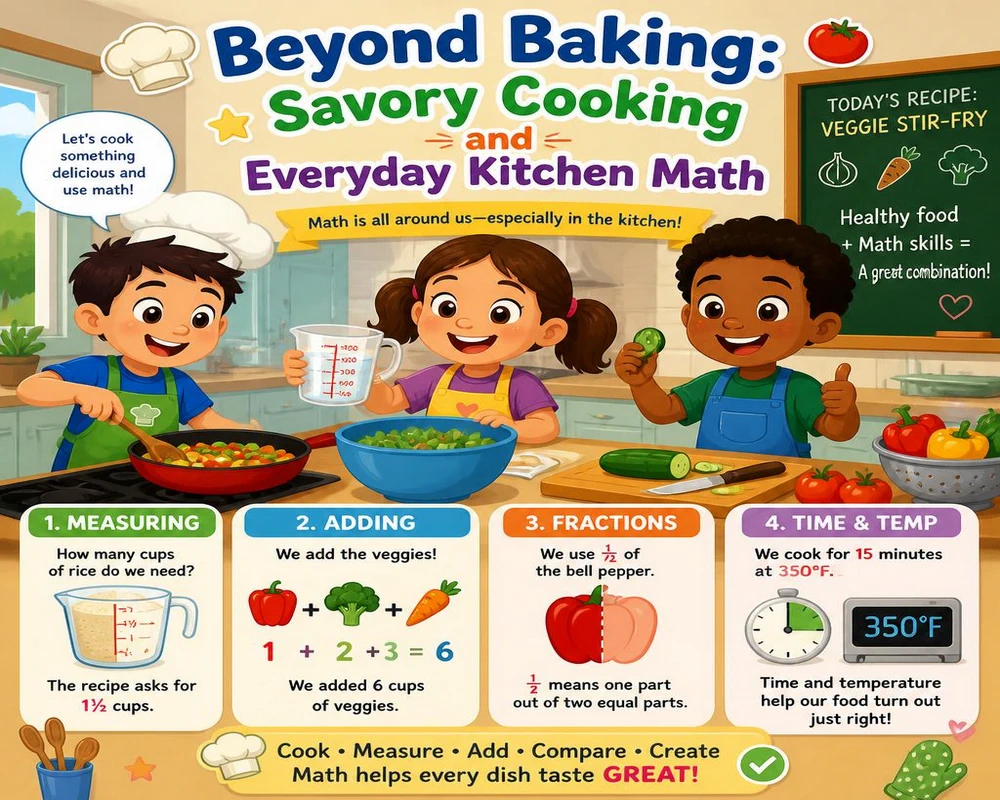
Beyond Baking: Savory Cooking and Everyday Kitchen Math
Baking gets most of the attention because measurement matters more precisely, but savory cooking offers its own math opportunities: estimating cooking time based on weight (a common ratio-based calculation used in real recipes for roasting meat or vegetables), calculating cost per serving when meal planning on a budget, and converting between metric and imperial units, which is particularly relevant in Canada where recipes sometimes mix millilitres, cups, and grams.
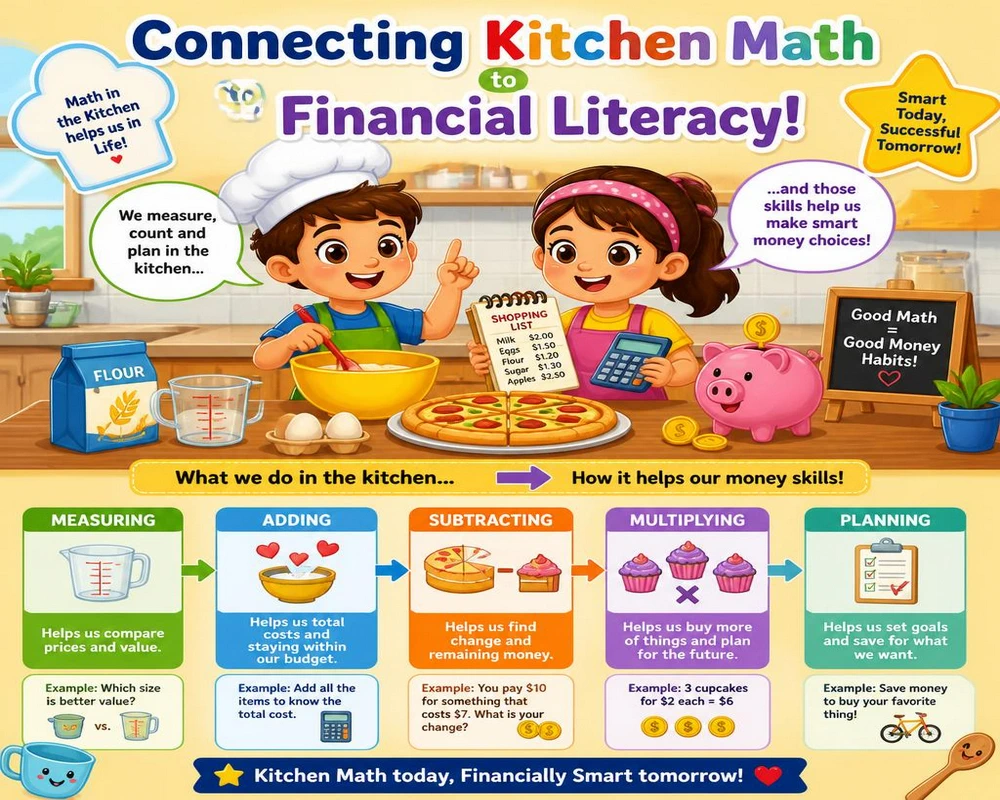
Connecting Kitchen Math to Financial Literacy
Ontario’s 2020 curriculum update added a dedicated financial literacy strand, and the kitchen happens to be one of the easiest places to practice it. Comparing the cost per serving of a homemade meal versus a takeout equivalent, calculating how much a recipe costs based on grocery receipt prices, or figuring out whether buying ingredients in bulk saves money are all genuine financial literacy exercises that grow naturally out of Teaching Kids Math Through Cooking and Baking activities already happening in your kitchen. This dual benefit — reinforcing both number sense and money sense in one activity — makes cooking one of the highest-value informal learning opportunities available at home.
The Growing Role of Recipe Apps and Digital Tools
By 2025 and 2026, many families use recipe apps and smart kitchen devices that automatically scale recipes or convert units at the tap of a button. While convenient, relying entirely on automatic scaling can remove the very math practice that makes cooking valuable as a learning tool. A useful compromise: let your child do the calculation manually first, then use the app to check their answer — turning the technology into a verification tool rather than a replacement for the thinking.

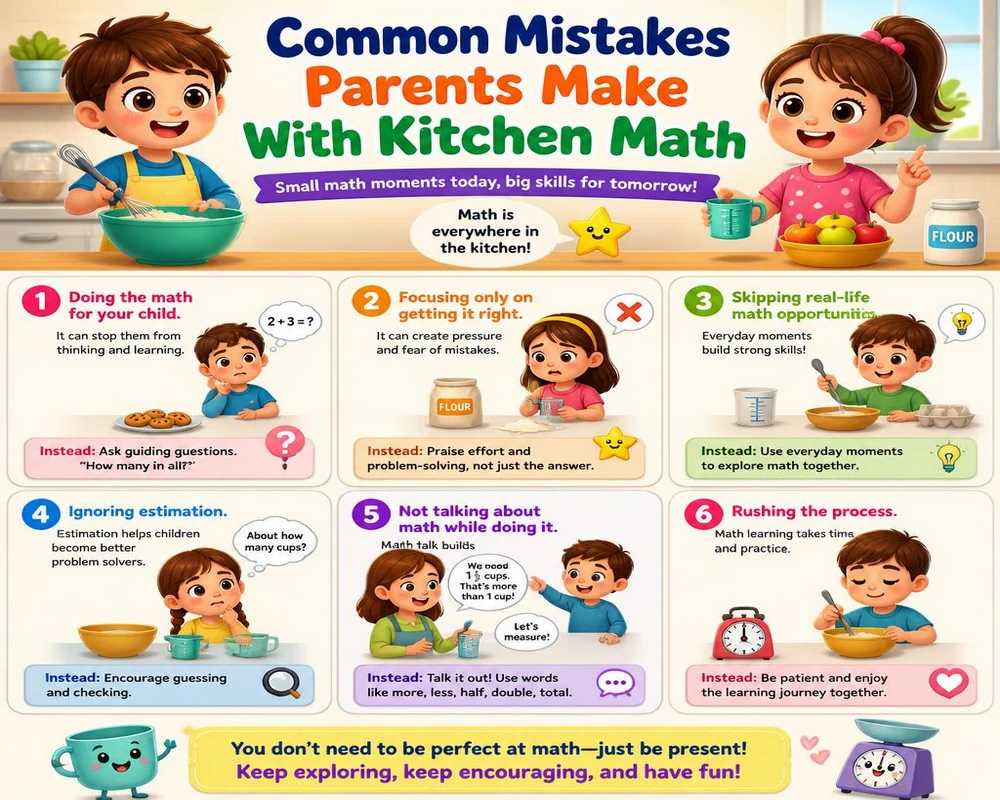
Common Mistakes Parents Make With Kitchen Math
- Doing the math for the child instead of with them. The learning happens in the calculation, not in the final dish — resist the urge to just measure it yourself to save time.
- Choosing recipes that are too complex for the child’s current skill level. Start with simple fraction amounts before attempting recipes with multiple simultaneous conversions.
- Treating mistakes as failures rather than learning moments. A recipe that didn’t turn out right because of a measurement error is actually a more powerful lesson than a perfect result — talk through what happened together.
- Skipping the “why” behind a technique. Explaining why a recipe is scaled a certain way (why you can’t always just double baking powder, for example) adds genuine conceptual depth beyond rote calculation.
These small troubleshooting adjustments matter — they’re often the difference between a family that tries Teaching Kids Math Through Cooking and Baking once and gives up, and one that builds it into a genuinely sustainable weekly habit.
Expert Tips for Making Kitchen Math Stick
- Let your child fail safely. A slightly too-salty dish is a low-stakes way to learn that measurement precision matters.
- Use a kitchen scale for an extra layer of practice. Weighing ingredients in grams introduces decimal practice naturally, especially useful for Grade 5 and 6 students.
- Keep a “recipe math journal.” Have your child write down the original recipe, their scaled version, and what actually happened — a genuinely useful record that builds both math and literacy skills.
- Rotate who’s “head chef.” Giving your child ownership over recipe decisions (including the math) increases engagement far more than being a passive assistant.
Frequently Asked Questions
What age can kids start learning math through cooking?
Even preschool and Kindergarten-age children can start with simple counting and sorting tasks in the kitchen; more precise fraction and measurement tasks become appropriate around Grade 2 or 3, once formal fraction instruction has begun at school.
Do I need special equipment to teach kitchen math?
No — a standard set of measuring cups and spoons, and ideally a kitchen scale, covers nearly every activity in this guide. No specialized educational tools are required.
How often should we do cooking math activities?
Once a week is a reasonable, sustainable target for most families — enough to build consistent skill without turning every meal into a lesson, which can create resistance over time.
What if my child isn’t interested in cooking or baking?
Not every child will love the kitchen, and that’s fine — cooking math is one option among many hands-on approaches, alongside sports statistics, building projects, or games, for reinforcing the same underlying math skills.
Can cooking math activities replace regular math homework?
No — kitchen activities are an excellent supplement that reinforces and contextualizes classroom learning, but they don’t replace the structured, sequential instruction and practice a child gets through the regular curriculum and homework.
What’s the best recipe to start with for fraction practice?
Simple baked goods like pancakes, muffins, or cookies work well because they typically use common fractions (1/2, 1/3, 1/4 cup) and are forgiving of small measurement variations, making them low-stress starting points.
How does metric versus imperial measurement affect kitchen math in Canada?
Canadian recipes and kitchens often mix both systems — cups and teaspoons (imperial) alongside grams and millilitres (metric) — which actually creates a valuable, real-world opportunity to practice basic unit conversion, a skill increasingly emphasized in Ontario’s updated math curriculum.
Is baking or cooking better for teaching math?
Baking generally offers more precise, structured math practice because measurement accuracy matters more for chemical reactions like rising dough, while savory cooking offers more flexible, estimation-based math practice — both have genuine value, and alternating between them exposes kids to different math skills.
Should I let my child use a recipe app instead of doing the math themselves?
Apps are fine as a checking tool after your child has attempted the calculation manually — the actual learning in Teaching Kids Math Through Cooking and Baking comes from doing the thinking, not from tapping a button that does it automatically.
What’s a good first recipe for teaching multiplication through doubling?
A simple pancake or muffin recipe with whole-number ingredient amounts (2 eggs, 1 cup of flour) is ideal for a first doubling exercise, since it avoids combining multiplication with fraction conversion until your child is ready for both at once.
Building a Weekly Kitchen Math Routine
Consistency matters more than intensity when it comes to Teaching Kids Math Through Cooking and Baking. Rather than an occasional elaborate baking project, consider building one small, repeatable kitchen math moment into your week:
- Sunday meal prep: Have your child help calculate ingredient quantities for the week’s planned meals.
- One weekend bake: Pick a simple recipe each weekend and rotate who does the “math” role.
- Grocery list math: Before shopping, have your child estimate the total cost of ingredients based on typical prices, then compare to the actual receipt.
Over a school year, this kind of low-key, repeated practice adds up to dozens of genuine, hands-on math sessions — far more consistent exposure than most families realize they’re capable of building into an already busy week.
Conclusion: Your Kitchen Is Already a Math Classroom
Teaching Kids Math Through Cooking and Baking doesn’t require a curriculum, a special program, or extra time carved out of a busy week — it just requires noticing the math that’s already happening every time you cook a meal or bake something together, and inviting your child to do the calculating instead of doing it for them.
Start with one simple activity this week — maybe just having your child measure out an ingredient and predict the total — and build from there as their confidence grows. The payoff isn’t just a stronger grasp of fractions and measurement; it’s a genuinely positive, low-pressure association with math that can shift how a reluctant learner feels about the subject at school.
For more ways to connect math to everyday life, see InukMath’s guide on Careers That Use Elementary Math Skills, and explore our grade-specific worksheets from Grade 1 Math Ontario through Grade 6 Math Ontario.