
Grade 2 Word Problems: 7 Amazing Strategies That Work
Grade 2 word problems have a habit of turning a confident young mathematician into a hesitant one within a single sentence. A student who breezes through 47 + 25 on its own might completely stall the moment that same equation shows up wrapped inside a story about a bake sale. Having spent years supporting Ontario’s Primary Division classrooms, I’ve watched this exact moment play out constantly, and it’s rarely about math skill. Grade 2 word problems ask for something different — translating a real situation into the right operation — and that translation step deserves its own dedicated practice.
This guide walks through what Ontario’s Grade 2 curriculum expects around word problems, why the reading and reasoning matter as much as the calculation, and seven strategies that genuinely work.
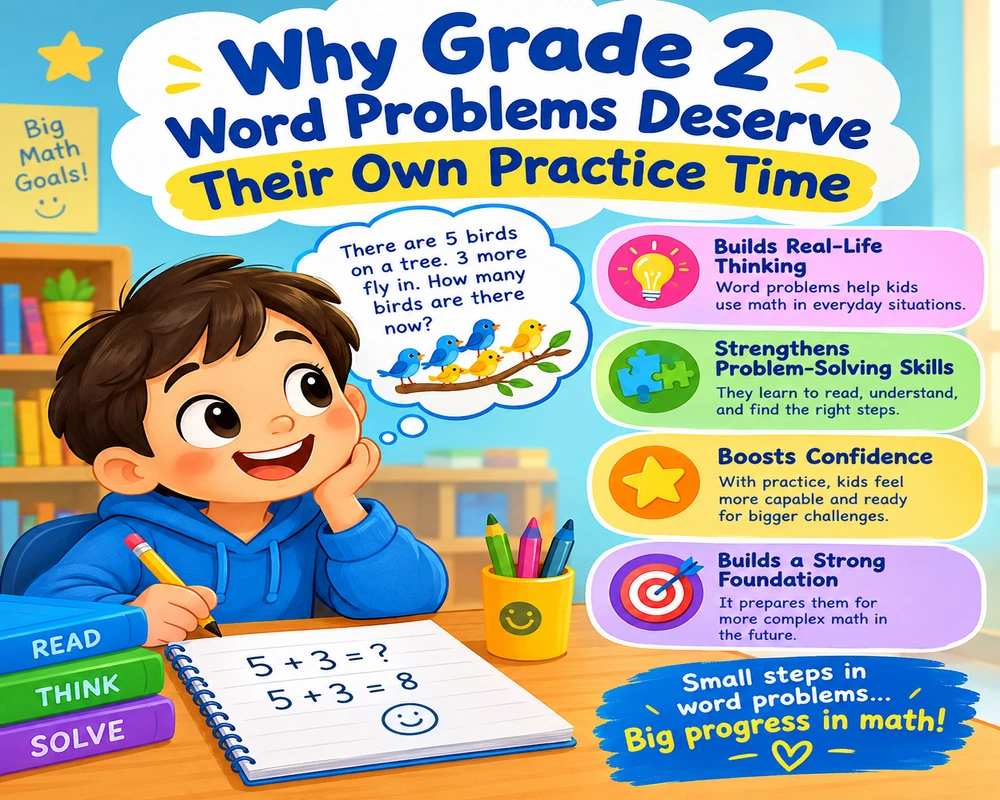
Why Grade 2 Word Problems Deserve Their Own Practice Time
Ontario’s math curriculum treats problem solving as a process expectation running through every strand, and Grade 2 word problems are where that shows up most clearly. A child has to read the situation, identify the relevant numbers, choose the correct operation, and only then actually calculate. That’s several distinct steps hiding inside what looks like one simple question.
This matters because Grade 2 word problems aren’t really testing pure calculation. They’re testing whether a child can connect everyday language — “in total,” “how many more,” “left over” — to the operations they already know well. A student can have strong number facts and still struggle here if that translation step hasn’t been practiced directly.
What the Ontario Curriculum Expects in Grade 2
By the end of Grade 2, students are generally expected to:
- Solve one- and two-step addition and subtraction word problems within 100
- Model a word problem using objects, drawings, or number lines
- Identify the key numbers and the actual question within a story
- Explain their reasoning, even informally, about how they solved the problem
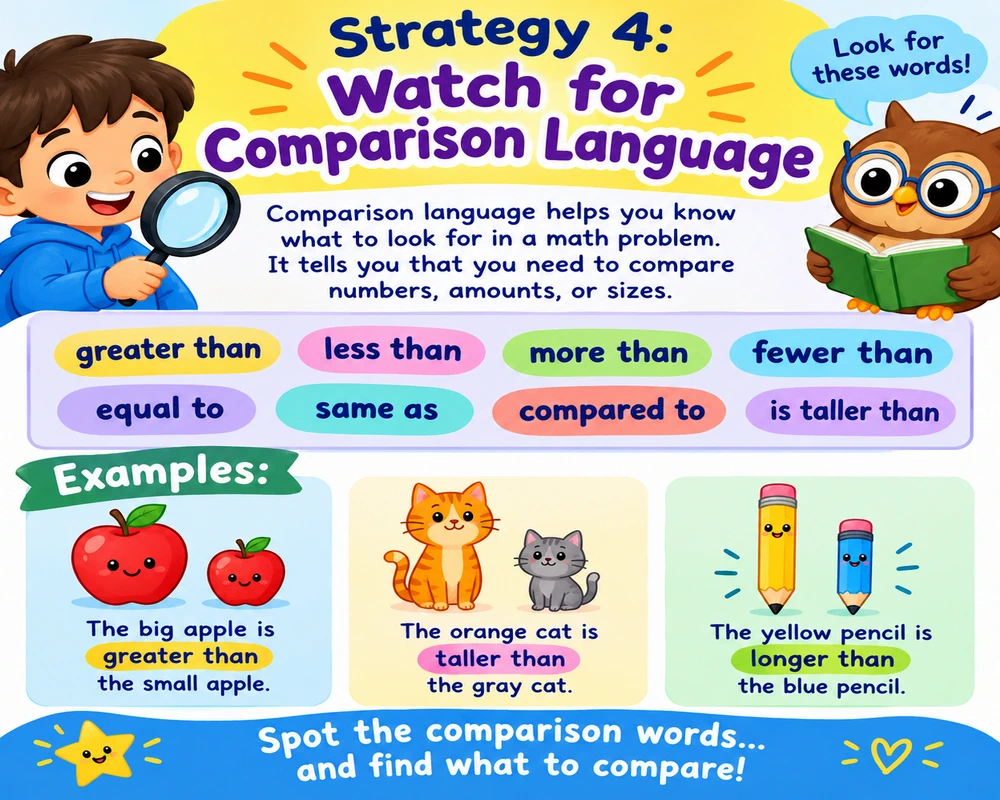
- Recognize comparison language like “more than” and “fewer than”
Notice that two-step problems now enter the picture, a genuine step up from the single-step stories typical in Grade 1. Grade 2 word problems are built specifically to stretch that reasoning muscle a little further each time.
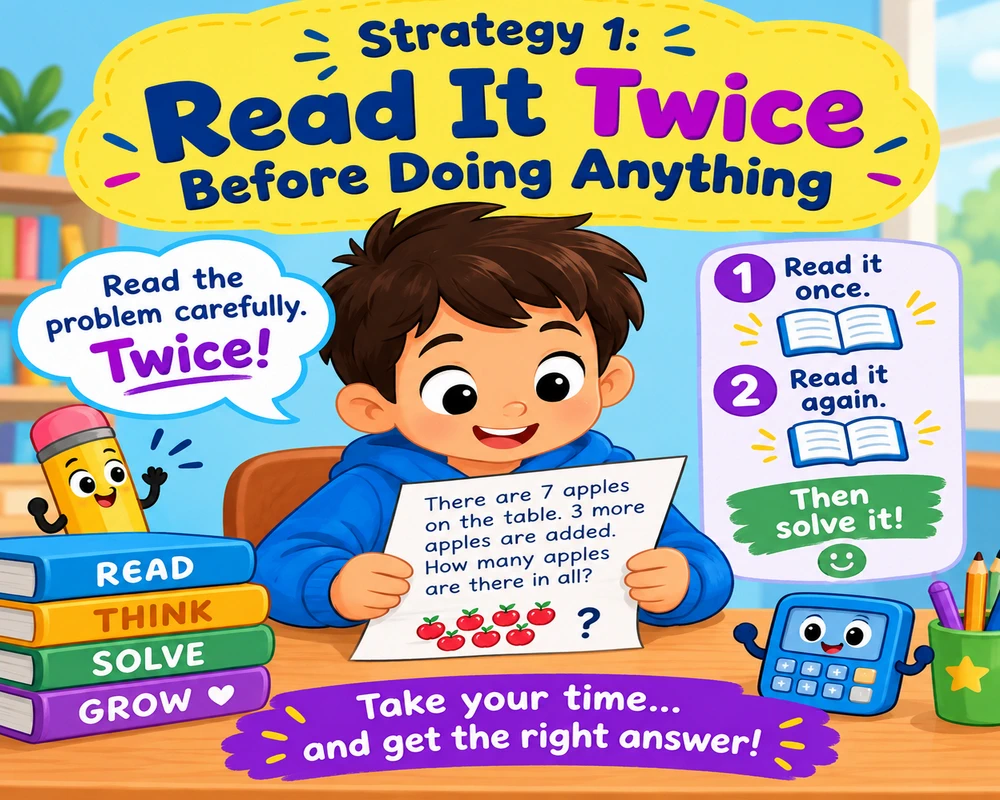
Strategy 1: Read It Twice Before Doing Anything
The first read is for understanding the story. The second read is for spotting the actual numbers and the specific question being asked. Skipping straight to numbers after a single read is one of the most common sources of careless errors.
Strategy 2: Draw or Model Before Calculating
Grade 2 word problems become far more manageable once a child draws a quick picture or uses small objects to represent the story. This step slows things down just enough for real understanding to happen.
Practice Questions: Single-Step Problems
- A baker made 34 cookies in the morning and 28 more in the afternoon. How many cookies did she make in total?
- Malik had 56 marbles. He gave 19 to his friend. How many marbles does he have left?
Answers: 1) 62 cookies 2) 37 marbles

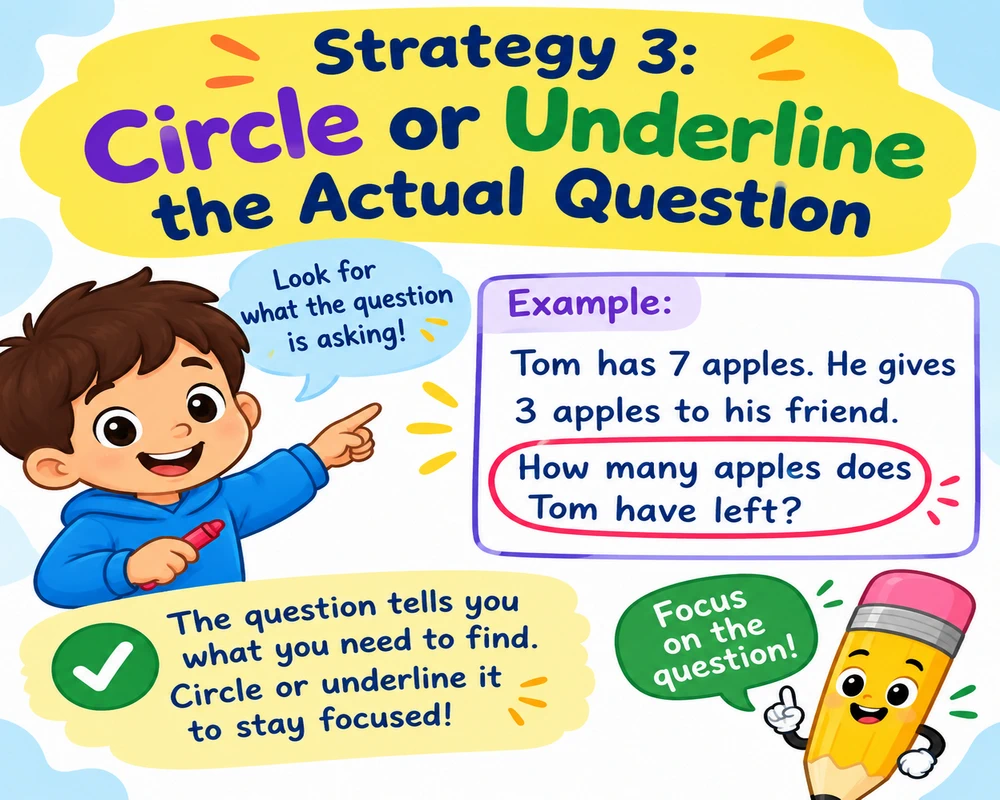
Strategy 3: Circle or Underline the Actual Question
Many mistakes on Grade 2 word problems happen simply because a child solves a different question than the one actually being asked. Physically marking the question helps keep attention focused where it belongs.
Strategy 4: Watch for Comparison Language
Comparison problems trip up more students than straightforward addition or subtraction stories, since the correct operation isn’t always obvious from the wording.
Practice Questions: Comparison Problems
- Priya has 45 stickers. Her sister has 29 stickers. How many more stickers does Priya have?
- A school has 62 boys and 48 girls. How many fewer girls are there than boys?
Answers: 1) 16 more stickers 2) 14 fewer girls
Strategy 5: Break Two-Step Problems Into Smaller Pieces
Two-step Grade 2 word problems feel overwhelming until a child learns to solve them one small step at a time, treating the first answer as the input for the second step.
Practice Questions: Two-Step Problems
- Sam had 38 hockey cards. He bought 15 more, then gave 12 to his friend. How many cards does he have now?
- A store had 60 apples. They sold 25 in the morning and 18 more in the afternoon. How many apples are left?
Answers: 1) 41 cards 2) 17 apples

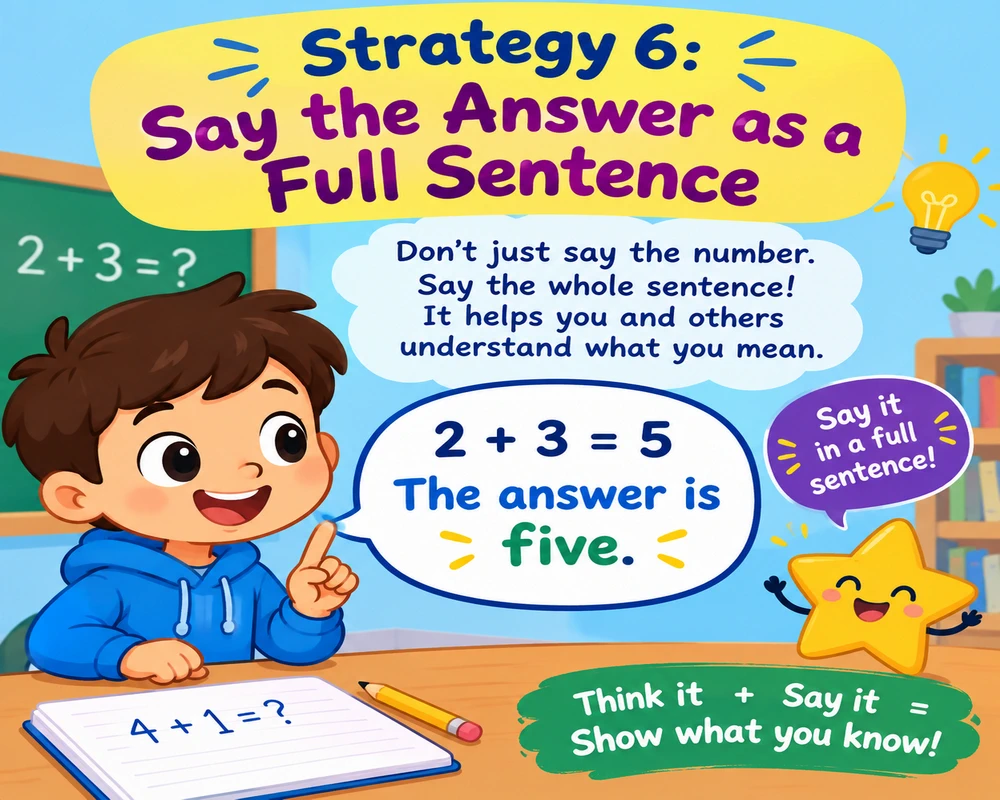
Strategy 6: Say the Answer as a Full Sentence
Instead of just writing a number, encouraging a full response like “the baker made 62 cookies in total” reinforces that the number connects to something real, not just an abstract result.
Strategy 7: Let Your Child Invent Their Own Story Problems
Once a child feels comfortable solving Grade 2 word problems, flip the exercise and have them write their own for you to solve. This reveals a lot about whether the underlying structure genuinely makes sense to them.

Real-Life Word Problems for Extra Practice
- A garden has 27 red flowers and 34 yellow flowers. How many flowers are there altogether?
- Aisha read 18 pages on Monday and 24 pages on Tuesday. How many more pages did she read on Tuesday?
- A class of 32 students split into two groups for a project, with 14 students in the first group. How many students are in the second group?
Answers: 1) 61 flowers 2) 6 more pages 3) 18 students

Common Mistakes With Grade 2 Word Problems
Adding Automatically Without Checking the Question
A very common shortcut: a child sees two numbers and adds them without checking whether the story actually calls for addition. Comparison and subtraction problems especially reveal this habit.
Losing Track During Two-Step Problems
Students sometimes solve only the first step and stop, forgetting the problem asked for a second calculation. Encouraging a quick reread of the full question after the first step helps catch this.
Getting Distracted by Irrelevant Details
A story detail that’s interesting but unimportant (like the colour of an object) can pull focus away from the actual numbers and question. Gently redirecting back to “what does the question ask?” helps refocus attention.
Practical Tips for Practicing at Home
Use Real-Life Situations
Snack time, allowance money, or car trips all offer natural opportunities for casual Grade 2 word problems that feel like conversation rather than homework.
Mix Problem Types in Every Session
Combining addition, subtraction, comparison, and two-step problems in the same short session builds far more flexible thinking than repeating one type over and over.
Keep Sessions Short and Consistent
Ten to fifteen minutes of focused Grade 2 word problems practice, three or four times a week, tends to build stronger, more lasting skill than infrequent long sessions.
Conclusion: Turning Stories Into Confident Math Thinking
Grade 2 word problems ask young learners to do something genuinely sophisticated — translate everyday language into the right math operation, then solve it accurately, sometimes across multiple steps. That’s a real skill worth its own dedicated practice, not just a byproduct of general math fluency. With a mix of story types, drawing, and real-life examples, most students build genuine confidence within just a few weeks.
Turn one small moment from today into a word problem tonight — snack sharing, allowance, or a car ride all work well. A few minutes of practice like this builds understanding no worksheet alone can match.
Frequently Asked Questions
1. What types of word problems should a Grade 2 student practice?
A strong mix includes single-step addition and subtraction, comparison problems, and two-step problems, since each type builds a slightly different reasoning skill.
2. Why does my child solve equations fine but struggle with word problems?
This is extremely common and usually reflects a gap in translating language into math, not a gap in actual calculation ability. Practicing the read-draw-solve process helps close it.
3. What makes two-step word problems harder than one-step problems?
They require holding an intermediate answer in mind and using it for a second calculation, which is a genuine cognitive step up appropriate for Grade 2.
4. How can I tell if my child understands comparison language?
Ask them to explain, in their own words, why they chose to add or subtract for a “how many more” question. If they can explain the reasoning, understanding is genuine.
5. How many word problems should we practice each session?
Two or three varied problems tend to build more flexible thinking than ten repetitive ones of the same type.
6. Is it normal for my child to add automatically without thinking?
Yes, this is a common shortcut. Practicing comparison and two-step problems specifically helps break the habit of automatically adding whatever numbers appear.
7. How does this connect to later grades?
Word problem skills build directly into more complex multi-step problem solving in Grade 3 and beyond, where operations and story complexity both increase further.
Word problems draw on everything else your child is learning in Grade 2 — addition, subtraction, money, and measurement. For the complete picture, our Grade 2 math practice hub brings every topic together in one place.
Reading comprehension plays a bigger role in word problems than most parents expect. EduGains, Ontario’s dedicated math resource hub, offers free strategies for building the reading-to-math connection these problems require.