
Catholic School Math Curriculum Ontario Differences: The Complete Parent Guide
Short answer: No — Catholic school math curriculum in Ontario is not different from public school math curriculum. Both publicly funded Catholic school boards and public school boards in Ontario are legally required to teach the exact same Ontario math curriculum, set by the Ministry of Education. The real Catholic School Math Curriculum Ontario Differences that families notice come from faith integration, school culture, board funding structure, and sometimes class composition — not from a separate set of math expectations.
If you’re a parent trying to decide between an Ontario Catholic school board and a public school board, and math specifically is on your mind, this guide covers everything: what’s actually the same, what genuinely differs, how EQAO and report cards work identically across both systems, and the practical questions worth asking before you enroll.
Key takeaways on Catholic School Math Curriculum Ontario Differences:
- Math curriculum content is legally identical between Ontario Catholic and public school boards — both follow the 2020 Ontario Mathematics Curriculum.
- EQAO testing, report card format, and achievement levels are the same across both systems.
- Real differences involve admission priority, religious instruction, governance, and school-level culture — not math content.
- School-to-school variation within each system is typically larger than the average difference between the two systems.
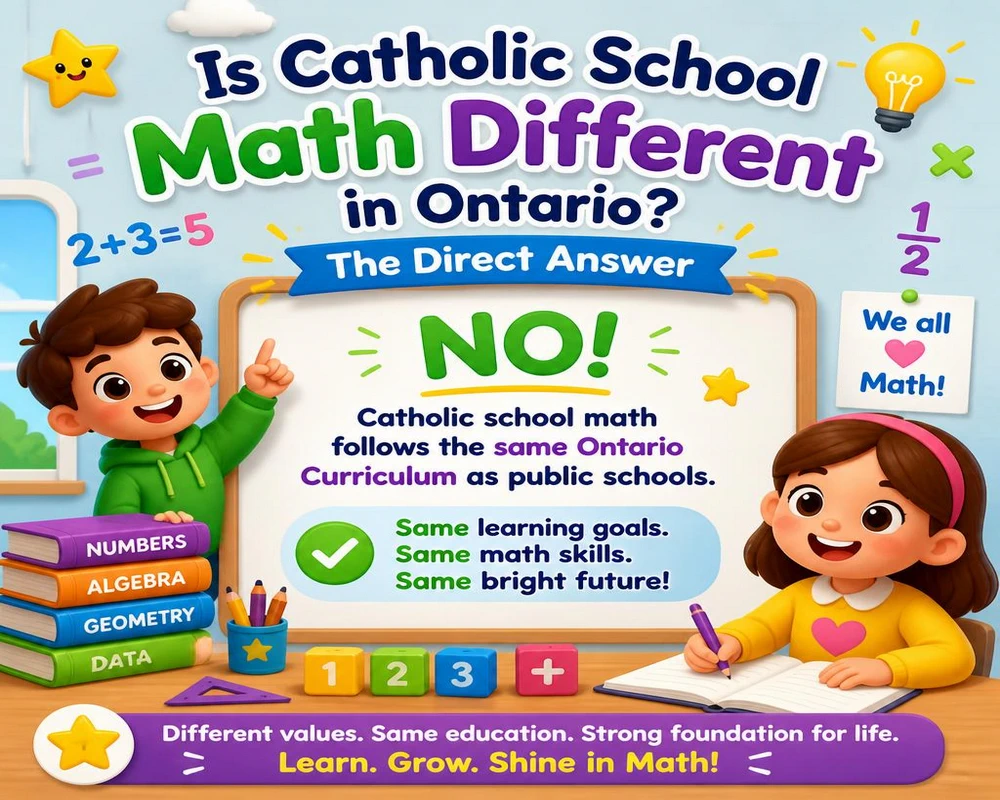
Is Catholic School Math Different in Ontario? The Direct Answer
Is Catholic school math different Ontario families ask constantly, and the direct answer is no — not in content. Ontario has a unique, constitutionally protected dual public education system: English public school boards, English Catholic school boards, French public school boards, and French Catholic school boards. All four systems are publicly funded, and all four are required by the Ministry of Education to deliver the same provincial curriculum, including math, from Grade 1 through Grade 12.
This means a Grade 5 student at a Toronto Catholic District School Board school and a Grade 5 student at the Toronto District School Board are learning the same decimal place value, the same fraction concepts, and the same geometry expectations, in the same school year, from the same Ministry curriculum document. The textbooks, workbooks, and specific classroom resources may differ by school or teacher, but the underlying learning expectations do not.
Why Ontario Has Publicly Funded Catholic Schools
Ontario’s Catholic school system dates back to constitutional protections established at Confederation in 1867 and reinforced in the Constitution Act, 1982, guaranteeing funding for Catholic (separate) schools alongside the public system. This is a historical and legal arrangement unique among most Canadian provinces — only Ontario, Saskatchewan, and Alberta maintain fully or partially publicly funded Catholic school systems today. Understanding this history helps explain why Catholic boards exist as a parallel, equally funded option rather than a private alternative.
Catholic vs Public School Curriculum: What’s Actually the Same
The Catholic vs public school curriculum comparison starts with a simple fact: curriculum documents are identical. Both systems use the same Ministry of Education curriculum for mathematics, updated most recently in 2020 with a stronger emphasis on financial literacy, coding, and data literacy across all grades.
| Feature | Ontario Public School Boards | Ontario Catholic School Boards |
|---|---|---|
| Math curriculum document | Ontario Mathematics Curriculum (2020) | Same Ontario Mathematics Curriculum (2020) |
| Public funding | Yes, fully funded | Yes, fully funded |
| EQAO participation | Mandatory (Grades 3, 6, 9) | Mandatory (Grades 3, 6, 9) |
| Report card format | Provincial report card template | Same provincial report card template |
| Religious instruction | Not included | Included (Family Life, Religious Education) |
| Admission requirements | Open to all residents | May require baptismal certificate for priority admission |
| Governance | Public school trustees | Catholic school trustees, often with local parish ties |
As the table shows, the math-specific columns are identical. The differences cluster entirely around governance, admission, and the addition of religious content — none of which changes what a student learns in math class.

Ontario Catholic School Board Math: How It’s Delivered Day to Day
Ontario Catholic school board math instruction follows the same scope and sequence as public boards — the same expectations for number sense, algebra, geometry, data, and financial literacy at every grade level. Where a genuine day-to-day difference can emerge is in how math is occasionally framed within a faith-based context — for example, a word problem might reference a parish fundraiser or a school Mass collection rather than a generic scenario — but the underlying mathematical skill being taught and assessed is unchanged.
Same Curriculum, Different School Board: What That Really Means
The phrase same curriculum different school board captures the core truth of Ontario’s four-system structure. A student who transfers from a Catholic board to a public board mid-year (or vice versa) should not experience a math curriculum gap, because both boards are teaching from the identical Ministry document, typically at a similar pace within a given term. Minor differences in unit sequencing between individual schools exist within both systems — this is a school-level and teacher-level variable, not a public-versus-Catholic variable.

The 2020 Ontario Math Curriculum: What Both Systems Actually Teach
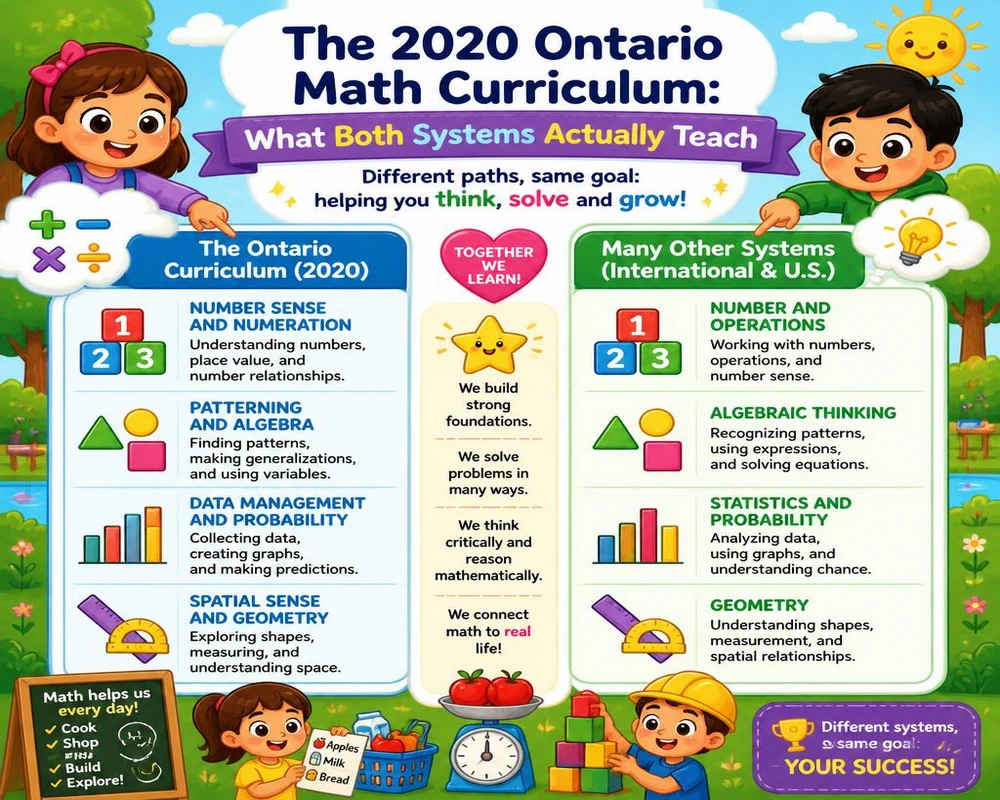
Understanding the substance of what’s shared helps clarify why Catholic School Math Curriculum Ontario Differences are so minimal at the content level. Ontario’s 2020 Mathematics Curriculum, the most significant revision in over a decade, introduced a mandatory standalone financial literacy strand for the first time, added explicit coding and computational thinking expectations starting in Grade 1, and restructured the reporting strands into number, algebra, data, spatial sense, and financial literacy. Every publicly funded school in Ontario — Catholic and public alike — implemented these exact same changes on the exact same timeline beginning in September 2020.
This matters for parents specifically because it means a Catholic school student and a public school student are equally exposed to newer curriculum priorities like budgeting, simple interest, and coding logic — there’s no lag or variation in adoption based on school system.
What Genuinely Differs Between Catholic and Public Boards
While math content is identical, several real, practical differences do exist and are worth understanding before choosing a board.
1. Admission Priority and Eligibility
Catholic school boards in Ontario generally prioritize admission for children who have been baptized Catholic, though most boards will admit non-Catholic students where space allows, sometimes at a fee for non-resident or non-Catholic families in certain circumstances. Public boards have no religious admission criteria.
2. Religious Education and School Culture
Catholic schools include religious education, sacramental preparation (for younger grades), and school Masses or prayer as part of the regular school day. This affects the overall school culture and schedule but does not reduce instructional time allocated to math, which remains governed by the same Ministry-mandated minimums.
3. Governance and Trustee Structure
Catholic boards are governed by their own elected trustees, separate from public board trustees, and often maintain closer ties to local parishes and the Institute for Catholic Education, which supports Catholic teacher formation and curriculum resources that add a faith lens to existing Ministry expectations.
4. School Size and Community Feel
This varies enormously by location and isn’t a rule, but many Catholic schools in Ontario are smaller than nearby public schools, particularly in urban areas, which can translate into a different classroom dynamic. This is anecdotal and inconsistent across the province, so it shouldn’t be assumed for any specific school without checking directly.
Pros and Cons for Math-Focused Families
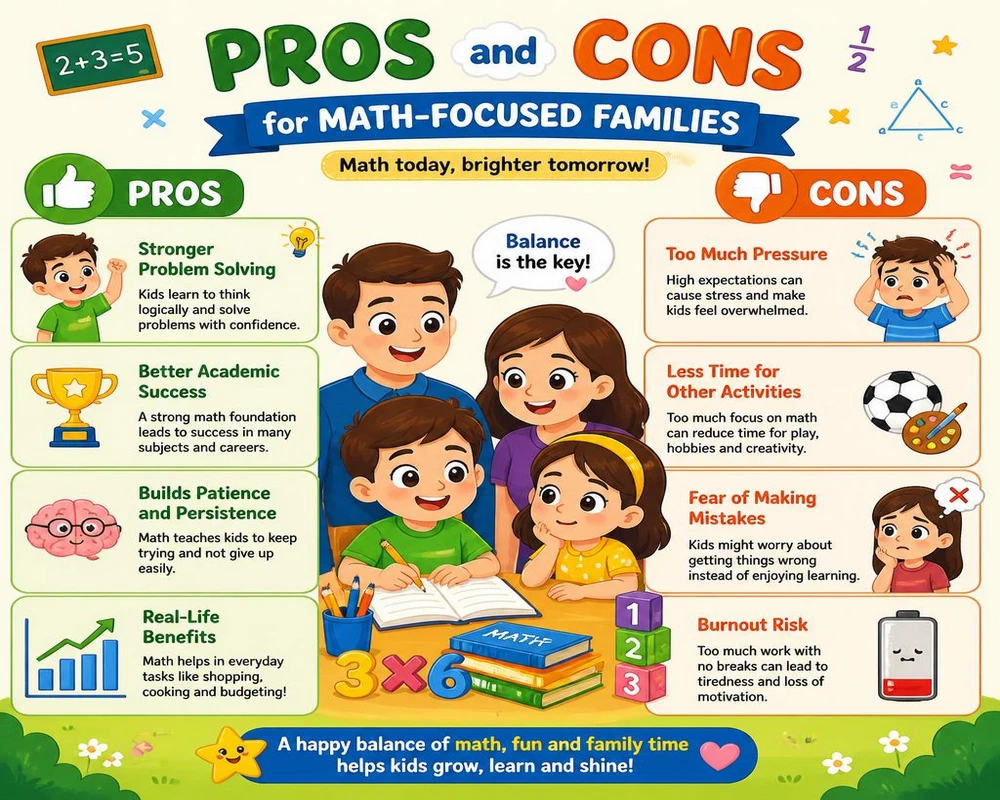
Weighing Catholic School Math Curriculum Ontario Differences from a purely math-outcomes perspective, here’s a balanced breakdown:
| Ontario Catholic School Board | Ontario Public School Board | |
|---|---|---|
| Pros | Often smaller community feel; values-based culture some families prefer; identical curriculum rigor | Open enrollment with no faith requirement; typically larger resource base in some boards; identical curriculum rigor |
| Cons | Admission priority for Catholic families; instructional time shared with religious programming | May have larger average class sizes in some high-growth areas; no faith-integrated option |
Notice that “identical curriculum rigor” appears as a pro for both — because it is. The pros and cons that actually differentiate the two systems are about values fit and admission access, not math outcomes.
Do Catholic School Students Write EQAO Tests?
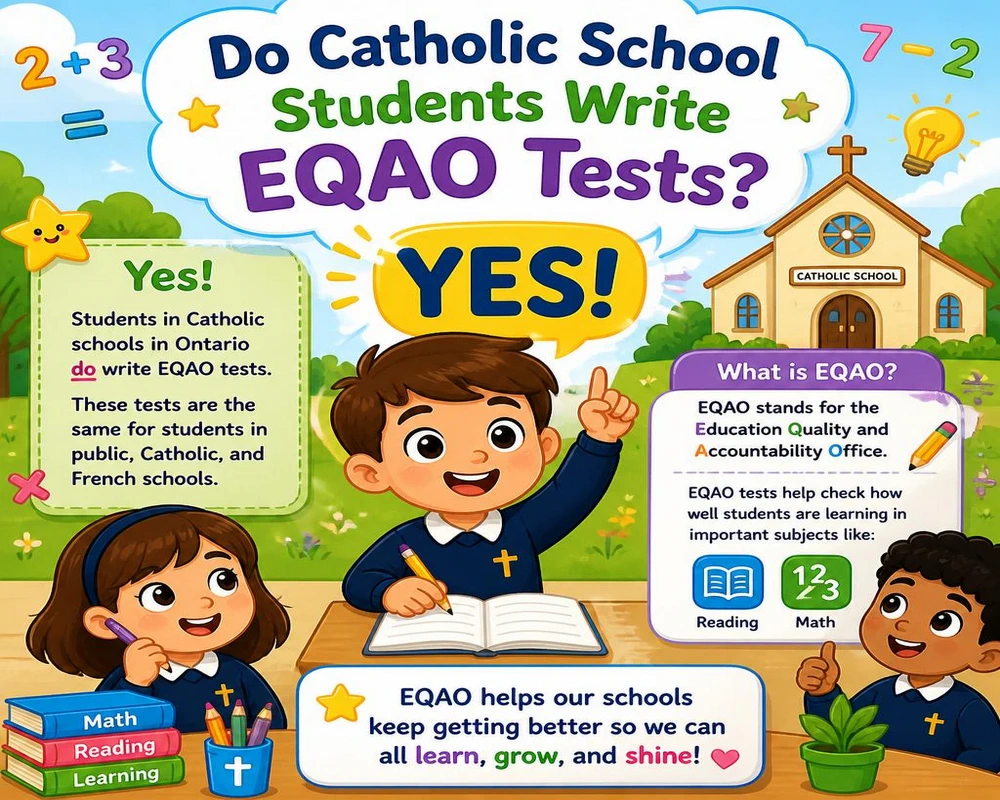
This is one of the most concrete, checkable facts in the whole Catholic School Math Curriculum Ontario Differences discussion, since EQAO publishes school-level data publicly.
Yes. Every publicly funded school in Ontario — Catholic and public alike — participates in EQAO (Education Quality and Accountability Office) assessments in Grade 3, Grade 6, and Grade 9 math, using the identical test administered on the identical schedule. EQAO results are reported separately by school and by board, which is how you can directly compare a specific Catholic school’s math results to a specific public school’s results in the same neighbourhood using the EQAO website’s public data tool.
Report Cards: Are They the Same?
Report card structure is another area where Catholic School Math Curriculum Ontario Differences turn out to be essentially nonexistent for the math section specifically.
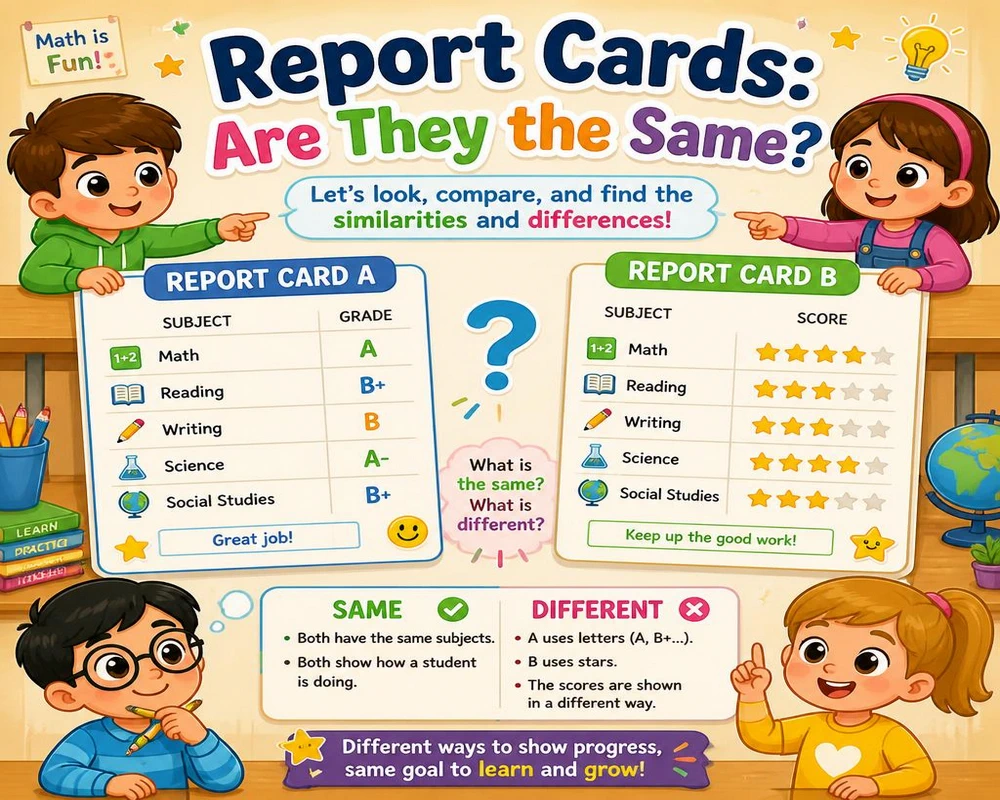
Yes — both Catholic and public elementary schools in Ontario use the identical Ministry-mandated provincial report card template, including the same four-level achievement scale (Level 1 through Level 4) and the same Learning Skills categories. A Catholic school report card may include an additional section for religious education, but the math section is structured and graded identically to a public school report card.
Making the Decision: A Practical Checklist
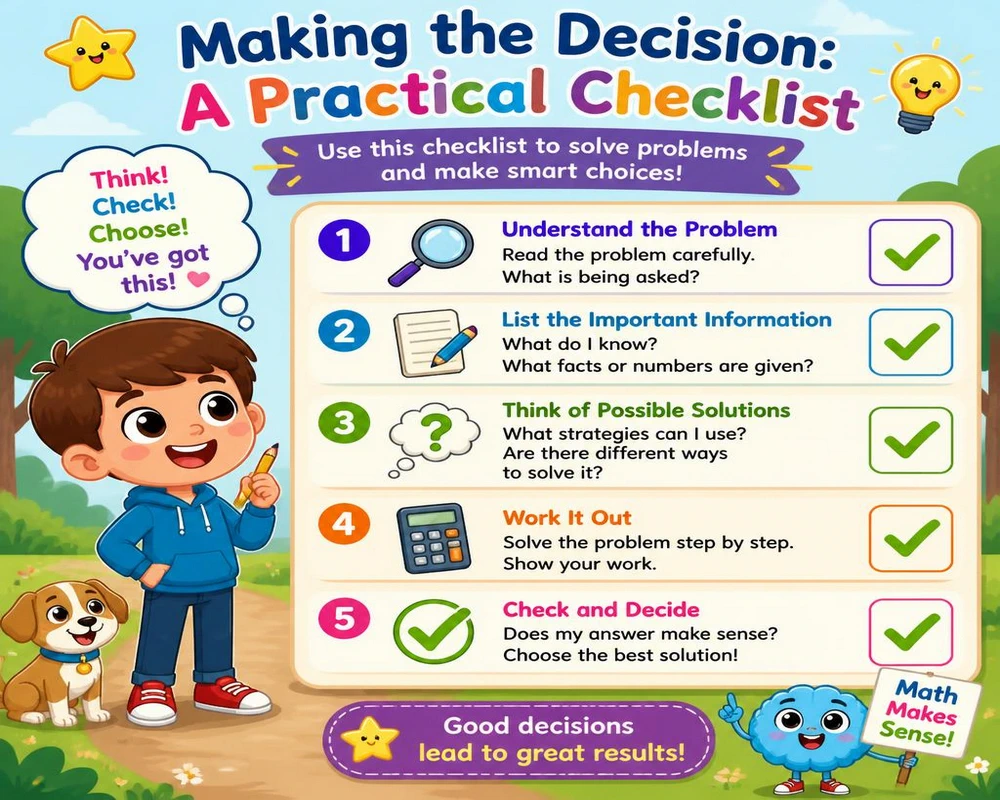
With the core Catholic School Math Curriculum Ontario Differences question settled — math content is identical — the decision checklist below focuses on the factors that actually vary.
If math performance specifically is a factor in choosing between an Ontario Catholic school board and a public board, here’s a practical decision checklist:
- Compare EQAO results directly. Look up both the specific Catholic school and specific public school you’re considering on the EQAO website — board-wide averages can mask significant school-to-school variation.
- Ask about class size and composition at the specific school, since this varies by location more than by system.
- Confirm admission eligibility if you’re not Catholic — some boards charge tuition for non-Catholic students or restrict enrollment during high-demand years.
- Visit both schools if possible to assess teaching style, resources, and classroom environment firsthand.
- Consider the whole-child fit — including religious education, extracurriculars, and community — since the math curriculum itself won’t be a differentiator.
The Future of Ontario’s Two-System Model
Ontario’s dual public-Catholic funding model has periodically faced calls for consolidation into a single public system, most notably raised in provincial policy discussions and by organizations advocating for one publicly funded system on cost and efficiency grounds. As of the most recent public discourse through 2025 and into 2026, no legislative change has been enacted, and both systems continue operating under their constitutionally protected funding. For families researching Catholic School Math Curriculum Ontario Differences today, this means the current dual-system structure — and the identical math curriculum requirement within it — remains the reliable baseline for planning your child’s education, though it’s worth staying aware of provincial education policy news given ongoing public debate.
Common Misconceptions About Catholic School Math in Ontario
Misunderstandings about Catholic School Math Curriculum Ontario Differences are common, largely because people assume a separate governance system must mean a separate curriculum.
- Misconception: Catholic schools teach a “stricter” or more traditional math curriculum. Reality: both systems follow the identical 2020 Ontario Mathematics Curriculum, including its emphasis on multiple problem-solving strategies.
- Misconception: Catholic school math scores are automatically higher. Reality: EQAO results vary by individual school and board, not systematically by public-versus-Catholic status — some Catholic boards outperform some public boards and vice versa, with wide variation within each system.
- Misconception: You must pay tuition for Catholic school in Ontario. Reality: Ontario’s Catholic schools are publicly funded and free for eligible Catholic residents; tuition may apply only in specific circumstances such as non-resident or non-Catholic enrollment at certain schools.

Frequently Asked Questions
Is Catholic school math harder than public school math in Ontario?
No. Both systems teach the identical Ontario Mathematics Curriculum at the same grade levels, so the difficulty level of the math content itself is the same. Any perceived difference in rigor usually reflects a specific school or teacher, not the Catholic-versus-public system.
Do Catholic schools in Ontario follow the same math textbooks as public schools?
Not necessarily the exact same textbook titles, but both systems select resources that align with the same Ministry curriculum expectations — another point that reinforces the broader Catholic School Math Curriculum Ontario Differences pattern. Textbook choice is typically made at the board or school level within both systems.
Can a non-Catholic child attend a Catholic school in Ontario?
In many cases, yes, space and board policy permitting, though Catholic students generally receive admission priority. Some boards charge a fee for non-Catholic admission. Check directly with the specific Catholic District School Board for their current policy — admission is one of the few areas where genuine Catholic School Math Curriculum Ontario Differences actually show up.
Does Catholic school affect EQAO math scores?
There’s no systematic difference tied to Catholic versus public status — EQAO results vary primarily by individual school, community demographics, and instructional practices, which exist independently of which of the two publicly funded systems a school belongs to.
What is the Institute for Catholic Education?
The Institute for Catholic Education is an Ontario organization that supports Catholic teacher formation and develops faith-integrated resources used alongside the standard Ministry curriculum in Catholic schools, including supplementary materials that connect math and other subjects to Catholic social teaching.
Are Catholic school report cards different from public school report cards in Ontario?
The core academic sections, including math, use the identical provincial report card template and four-level achievement scale. Catholic report cards typically add a religious education component not present on public report cards.
Why does Ontario fund both Catholic and public school systems?
This dates to constitutional guarantees established at Confederation in 1867 and reaffirmed in the Constitution Act, 1982, which protect denominational school rights that existed at the time Ontario joined Confederation — a legal backdrop worth knowing when researching Catholic School Math Curriculum Ontario Differences.
How do I compare a specific Catholic school’s math performance to a public school?
Use the EQAO website’s public results tool, which lists Grade 3 and Grade 6 math results by individual school name for both Catholic and public boards, allowing a direct, school-specific comparison rather than relying on system-wide assumptions.
Do Catholic school teachers need special math certification in Ontario?
No additional math-specific certification is required. Catholic school teachers hold the same Ontario College of Teachers certification as public school teachers, plus in most Catholic boards a Religious Education Certificate, which relates to faith instruction, not math qualifications.
What is the single biggest Catholic School Math Curriculum Ontario Differences takeaway for parents?
The single biggest takeaway is that math content, rigor, and assessment are identical between the two systems — so the decision should be based on faith values, school culture, and specific school performance data, not an assumption about which system teaches “better” or “different” math.
Conclusion: Choosing Based on What Actually Matters
When it comes to Catholic School Math Curriculum Ontario Differences, the honest, well-researched answer is that the math your child will learn is identical whether they attend an Ontario Catholic school board or a public school board — same curriculum, same EQAO tests, same report card scale.
The decision between the two systems is better made on fit: faith and values alignment, school culture, community, and the specific results and reputation of the individual school you’re considering, rather than an assumption that one system offers superior or different math instruction. Before enrolling, take the time to check EQAO data for your specific schools, visit if you can, and ask direct questions about class size and support — that’s where the real, actionable differences live.
For more grade-specific math resources as you plan your child’s education, explore InukMath’s guides for Grade 1 Math Ontario through Grade 6 Math Ontario, or read our related comparison on Private School vs Public School Math Curriculum Ontario.