
Careers That Use Elementary Math Skills: Real Jobs, Real Examples
Short answer: Nearly every career uses elementary math skills in some form — nurses calculate medication dosages using ratios, chefs scale recipes using fractions, carpenters measure using geometry, and even social media managers analyze engagement data using percentages. Careers That Use Elementary Math Skills span every industry, which is exactly the answer to give a child who asks “when will I ever use this?”
Key takeaways:
- Elementary math skills — fractions, percentages, measurement, and basic data — show up daily in dozens of common careers.
- Concrete career examples motivate kids more effectively than abstract explanations of “math is important.”
- Ontario’s 2020 curriculum added a financial literacy strand specifically because of how often adults use basic money math professionally and personally.
- Connecting math homework to a specific job a child admires can meaningfully shift their motivation.
Why Does My Child Need Math? The Honest Answer
Why does my child need math is one of the most common questions parents field from frustrated kids, and the honest answer is that math is quietly embedded in almost every profession, even ones that don’t look “mathy” on the surface. The goal of this guide is to make that concrete with specific job examples rather than a vague appeal to “math is everywhere.”
Every parent has heard some version of the complaint: “I’m never going to use fractions in real life.” It’s a fair challenge, and it deserves a real answer rather than a dismissive one. The truth is that most adults use elementary-level math dozens of times a week without labeling it “math” — splitting a bill, doubling a recipe, estimating drive time, or comparing unit prices at the grocery store. This guide to Careers That Use Elementary Math Skills goes one step further than everyday examples, connecting specific school math topics to specific, nameable jobs kids can picture themselves doing one day.

Real Jobs That Use Math Skills: A Career-by-Career Breakdown
This breakdown of Careers That Use Elementary Math Skills is deliberately built around jobs kids already recognize and admire, rather than abstract professional categories.
Here’s a breakdown of real jobs that use math skills children can actually picture themselves doing, organized by the specific elementary math concept each one relies on.
| Career | Elementary Math Skill Used | Real Example |
|---|---|---|
| Nurse | Ratios and proportions | Calculating medication dosage based on a patient’s weight |
| Chef / Baker | Fractions and multiplication | Scaling a recipe up or down for a different number of servings |
| Carpenter | Measurement and geometry | Measuring angles and lengths to cut materials precisely |
| Video Game Designer | Coordinate geometry and patterns | Placing objects on a grid-based game map |
| Professional Athlete / Coach | Statistics and data management | Tracking shooting percentage or batting average |
| Retail Manager | Percentages and decimals | Calculating a sale discount or profit margin |
| Pilot | Speed, distance, and time calculations | Estimating flight time and fuel needs |
| Veterinarian | Ratios and measurement | Determining medication dosage by animal weight |
| Social Media Manager | Percentages and data analysis | Calculating engagement rate on a post |
| Farmer | Area, ratio, and measurement | Calculating seed or fertilizer needs per acre |
Why This Table Works Better Than “Math Is Important”
Telling a child “math is important” is abstract and easy to dismiss. Showing them that their favorite chef, athlete, or game designer uses the exact fraction or percentage skill they’re struggling with right now makes the connection concrete and personal — which is a genuinely effective motivational tool backed by educational research on relevance and student engagement.

Math Careers for Kids Explained: STEM and Beyond
Math careers for kids explained often focuses narrowly on STEM fields like engineering and computer science, but the honest picture is broader — math shows up meaningfully in creative, trades, and service careers too.
STEM Careers
Engineers, computer programmers, data scientists, and architects use advanced math daily, but their foundation is built on the same elementary skills — fractions, measurement, and number sense — introduced in Grades 1 through 6. According to Statistics Canada’s labour force data, STEM occupations have grown steadily and continue to represent a significant and growing share of the Canadian job market through the mid-2020s.
Trades Careers
Electricians, plumbers, and construction workers rely heavily on measurement, geometry, and ratio calculations daily — an electrician calculating voltage drop or a plumber calculating pipe slope both use math skills first introduced in elementary school.
Creative Careers
Photographers use ratios (aspect ratios, rule of thirds composition), musicians use fractions (note values and time signatures), and interior designers use measurement and spatial reasoning — math appears even in fields that feel purely creative on the surface.

When Will I Use This Math? Answering Specific Homework Complaints
The question when will I use this math deserves a specific answer tied to the exact skill being taught, not a generic one. Here’s a quick-reference guide for common elementary math topics:
- Fractions: Used by chefs, bakers, contractors measuring materials, and musicians reading sheet music.
- Percentages: Used constantly in retail (sales, discounts), finance (interest rates), and marketing (engagement rates, conversion rates).
- Ratios and rates: Used in cooking (recipe scaling), nursing (dosage), and any job involving speed or fuel efficiency calculations.
- Area and perimeter: Used by contractors, landscapers, interior designers, and farmers.
- Data management: Used in virtually every modern career, from sports analytics to social media marketing to public health reporting.

The Financial Literacy Connection
Ontario’s 2020 math curriculum update added a dedicated financial literacy strand starting in Grade 1, directly because of how universally adults use basic money math regardless of career — budgeting, understanding interest, and comparing prices are skills every working adult needs, not just those in finance-specific careers. This curriculum change reflects a broader recognition, echoed by organizations like the Conference Board of Canada in workforce readiness reports, that basic numeracy is a foundational employability skill across virtually every sector of the economy.

From Grade 1 to Grade 6: How Elementary Math Builds Toward Real Careers
Each grade in Ontario’s elementary math curriculum adds a specific building block that eventually supports one or more of the Careers That Use Elementary Math Skills covered above. Seeing the whole progression can help both parents and kids understand why each grade’s content matters, not just the flashy end result.
| Grade | Core Skill Introduced | Career Connection |
|---|---|---|
| Grade 1 | Counting and number sense | Cashiers, inventory clerks, basic bookkeeping |
| Grade 2 | Addition and subtraction fluency | Retail, basic accounting, everyday budgeting |
| Grade 3 | Multiplication, division, and fractions | Bakers, chefs, small business owners |
| Grade 4 | Area and perimeter | Contractors, landscapers, interior designers |
| Grade 5 | Decimals | Cashiers, financial services, measurement-based trades |
| Grade 6 | Ratios and rates | Nurses, pilots, data analysts, coaches |
This progression is exactly why skipping or rushing through any single grade’s math content can create gaps that show up later — each step genuinely builds toward the next, and toward real, applicable skill.

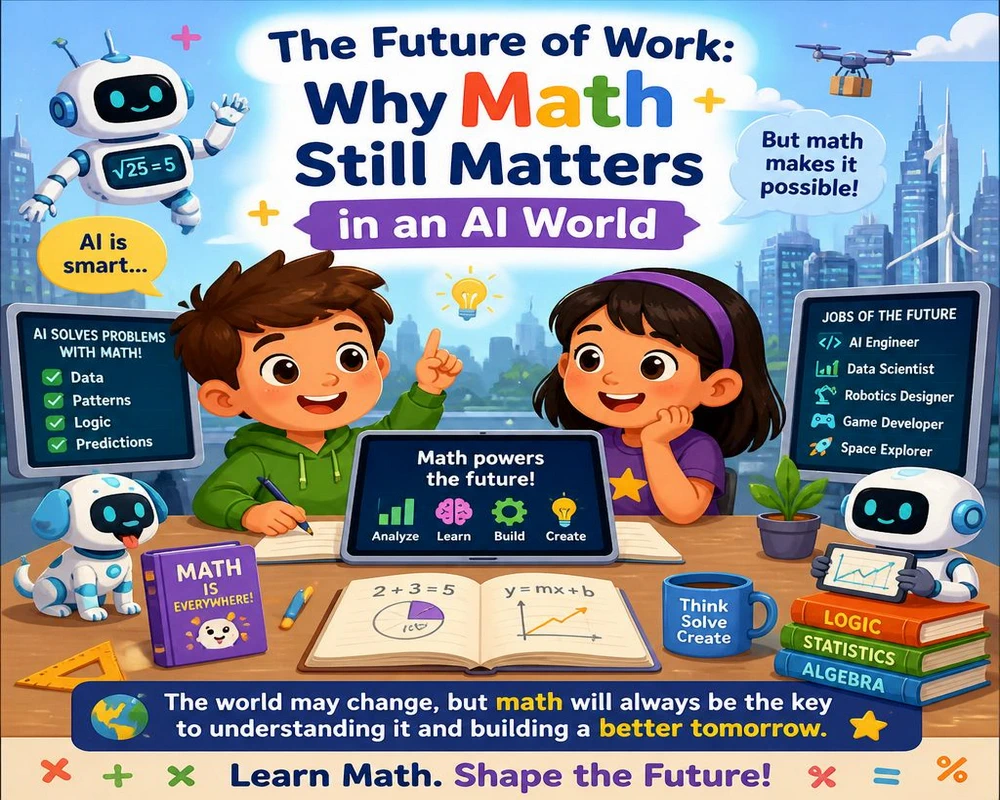
The Future of Work: Why Math Still Matters in an AI World
A question increasingly on parents’ minds by 2025 and 2026 is whether artificial intelligence and automation are making math skills less important.
The evidence points the other way. Reports from organizations studying the future of work, including analyses from the World Economic Forum’s Future of Jobs series, consistently identify analytical thinking and numeracy as increasingly valuable skills precisely because AI tools handle raw calculation — leaving humans responsible for framing problems, interpreting results, and catching errors, all of which require genuine number sense rather than just calculator operation.
In other words, the rise of calculators, spreadsheets, and now AI tools hasn’t eliminated the need for the Careers That Use Elementary Math Skills discussed here — it has shifted the emphasis toward understanding what the numbers mean rather than computing them by hand.
How to Talk to Your Child About Math and Careers
A few practical conversation strategies that work well when a child questions the relevance of math homework:
- Ask what job they’re currently interested in and find the specific math connection to that job using the table above as a starting point.
- Point out math in their own hobbies — sports statistics, video game mechanics, or crafting all involve real math.
- Show, don’t just tell — if possible, let them see you using math in your own work or daily life (budgeting, cooking, home projects).
- Avoid overselling it — not every math topic connects to an obvious dream job, and that’s fine; some math is foundational for later topics rather than immediately “useful” on its own, and that’s a reasonable answer too.

Best Practices: Building Career Awareness Into Everyday Math Practice
Beyond a single conversation, a few ongoing habits help keep the connection between math class and real careers alive throughout the school year:
- Career day recaps: If your child’s school hosts a career day or guest speaker, ask specifically what math that person’s job involves — it often surprises kids how much comes up.
- Job shadowing moments: Even brief, informal exposure — watching a parent balance a budget, or a family friend measure a room for renovation — reinforces that math is a lived skill, not just a school subject.
- Career-based word problems: When helping with homework, occasionally reframe a generic word problem using a career your child finds interesting (turn a generic “recipe” problem into a “you’re the head chef” problem).
- Documentaries and books about careers: Age-appropriate media about professions — from cooking shows to sports documentaries — naturally surface math in action without it feeling like a lesson.
Small, repeated exposure to Careers That Use Elementary Math Skills tends to be more effective long-term than a single big conversation, since it normalizes math as a practical, everyday tool rather than a one-time pep talk.

Common Misconceptions About Math and Careers
- Misconception: Only STEM careers use math. Reality: trades, creative fields, healthcare, retail, and hospitality all rely on daily math skills.
- Misconception: Calculators and computers have made math skills obsolete. Reality: technology handles calculation, but understanding what calculation to perform, interpreting results, and catching errors still requires genuine number sense.
- Misconception: A child who dislikes math now won’t need it later. Reality: even careers that don’t feel “mathy” during school (like culinary arts or personal training) turn out to require daily math once someone is actually working in the field.
Frequently Asked Questions
What careers use fractions the most?
Chefs and bakers use fractions constantly when scaling recipes, construction workers use them for measurements, and musicians use fractions to read time signatures and note values.
Do I need to be good at math to become a nurse?
Yes, nursing requires solid ratio and proportion skills for medication dosage calculations, though the level of math needed is generally at an elementary-to-middle-school level of ratios and basic algebra, not advanced mathematics.
What jobs use percentages every day?
Retail managers, financial advisors, social media marketers, and real estate agents all use percentage calculations daily — for discounts, interest rates, engagement metrics, and commission calculations respectively.
How can I motivate my child who says they’ll never use math?
Connect the specific math skill they’re learning right now to a career or hobby they already care about, using concrete real-world examples rather than a general statement about math’s importance.
Are there careers that use almost no math at all?
Very few careers use zero math — even fields that seem math-light, like writing or counseling, involve basic scheduling, budgeting, or data interpretation at some point.
What elementary math skill is most useful across the widest range of careers?
Percentages and basic ratios tend to be the most universally applied elementary math skills, showing up in finance, retail, healthcare, sports, and marketing alike.
Does Ontario’s curriculum specifically teach career connections in math class?
The 2020 Ontario math curriculum encourages teachers to connect math learning to real-world and career contexts, and the added financial literacy strand specifically ties classroom learning to practical adult money skills.
Why do employers care about basic numeracy skills?
Workforce reports from organizations like the Conference Board of Canada consistently identify numeracy as a foundational employability skill valued across industries, even in roles that aren’t explicitly math-focused, because it supports problem-solving and data interpretation broadly.
Will AI and calculators make elementary math skills unnecessary?
No — while technology handles calculation, understanding what to calculate, checking whether an answer makes sense, and interpreting results still requires the number sense built through elementary math, which is why analytical and numeracy skills remain highly valued even as automation increases.
What’s the single best way to show a child real Careers That Use Elementary Math Skills?
Pick one career your child already admires, find its specific math connection using a resource like the table in this guide, and let them see or try that specific math task themselves — hands-on relevance beats abstract explanation every time.
A Quick Reference for Busy Parents
If you only remember one thing from this guide to Careers That Use Elementary Math Skills, make it this: the next time your child questions why a math topic matters, ask them what job they’re curious about right now, and work backward from there. The answer is almost always closer and more concrete than either of you expects — from a favorite YouTuber tracking view counts (percentages and data) to a beloved athlete’s stats (ratios and averages) to the local bakery’s daily recipe scaling (fractions). Relevance, shown rather than told, is what actually changes a child’s relationship with math homework.
Conclusion: Making Math Feel Relevant
Understanding the wide range of Careers That Use Elementary Math Skills is one of the most effective tools a parent has for turning “I’ll never use this” into genuine engagement. Whether your child dreams of being a chef, an athlete, a nurse, or a video game designer, there’s a real, concrete math connection waiting to be pointed out — and making that connection explicit, rather than assuming it’s obvious, is often what shifts a reluctant learner into a motivated one. Next time homework frustration hits, try pulling up the table in this guide and asking your child which career on it sounds interesting — then work backward to the math skill together.
For grade-specific practice tied to these real-world skills, explore InukMath’s guides for Grade 1 Math Ontario through Grade 6 Math Ontario, or see our related guide on Teaching Kids Math Through Cooking and Baking.