
Grade 1 Measurement Practice Ontario: 6 Easy Activities
Grade 1 measurement practice Ontario lessons usually start with a question that seems almost too simple: “Which pencil is longer?” But watch a six-year-old actually try to compare two objects without a ruler, and you’ll notice something interesting — they often guess by weight, or by which one looks “bigger” overall, rather than length specifically. Having spent years supporting Ontario’s Primary Division classrooms, I’ve found measurement is one of those units that looks effortless on paper but actually asks kids to separate ideas (length, size, weight) that feel tangled together at this age.
This guide walks through exactly what Ontario’s Grade 1 curriculum expects around measurement, why it’s trickier than it looks, and how to build genuine understanding through everyday activities at home.
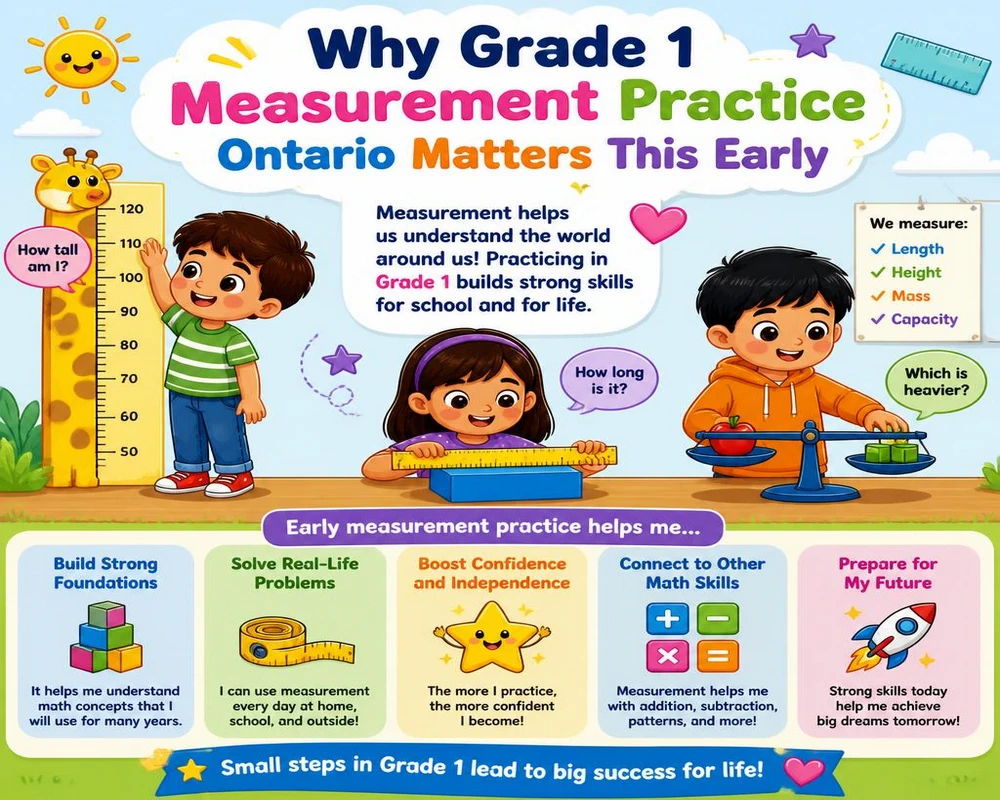
Why Grade 1 Measurement Practice Ontario Matters This Early
Measurement falls under Ontario’s Spatial Sense strand, and Grade 1 is where students take their first real steps beyond simply looking at objects and start comparing them using consistent methods. At this stage, formal units like centimetres aren’t the focus yet — the real goal is understanding what it even means to measure something, and that comparisons need a fair, consistent method to be meaningful.
This distinction matters because a child who skips straight to memorizing “a metre is 100 centimetres” without first grasping why consistent measurement matters often struggles later when real unit conversion shows up in Grade 3 and 4.
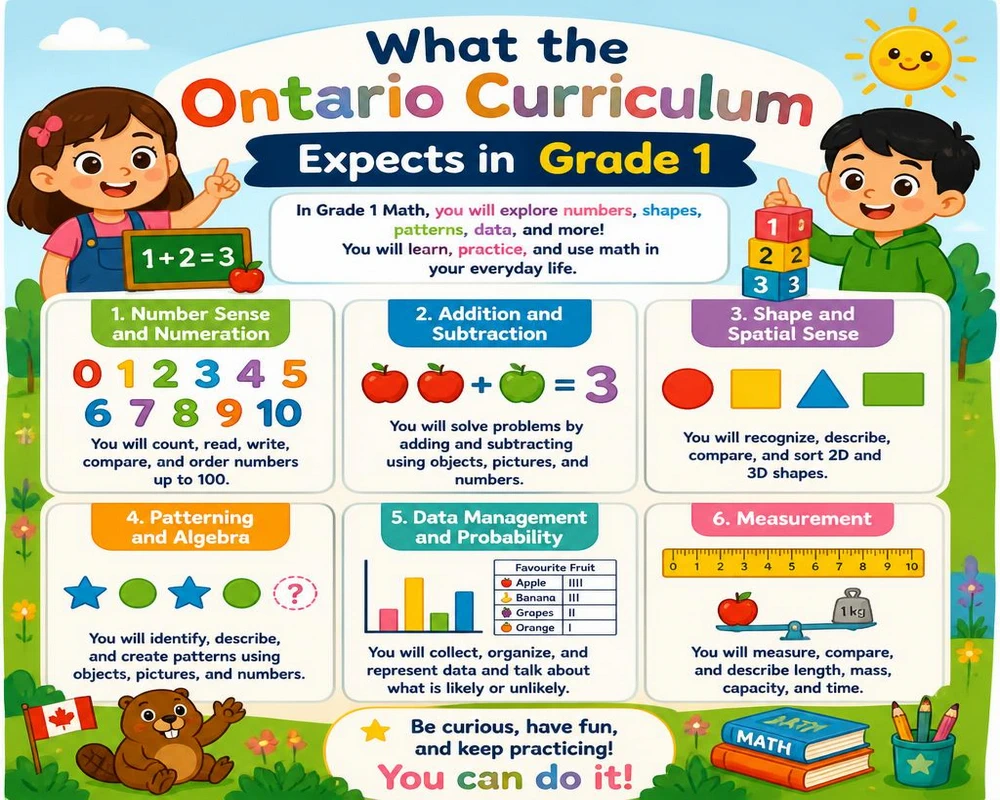
What the Ontario Curriculum Expects in Grade 1
By the end of Grade 1, students are generally expected to:
- Compare two or more objects directly by length, height, or size
- Use non-standard units (paper clips, blocks, hand spans) to measure length
- Compare objects by mass, recognizing “heavier” and “lighter”
- Compare objects by capacity, recognizing which container holds more
- Understand the concept of area informally, comparing which surface is bigger
- Begin to understand the passage of time using familiar routines (morning, afternoon, days of the week)
Notice that standard units like centimetres or kilograms aren’t required yet. Grade 1 measurement practice Ontario work is really about building the concept of measuring fairly, using whatever consistent unit is available — even if that unit is a shoe or a paperclip.
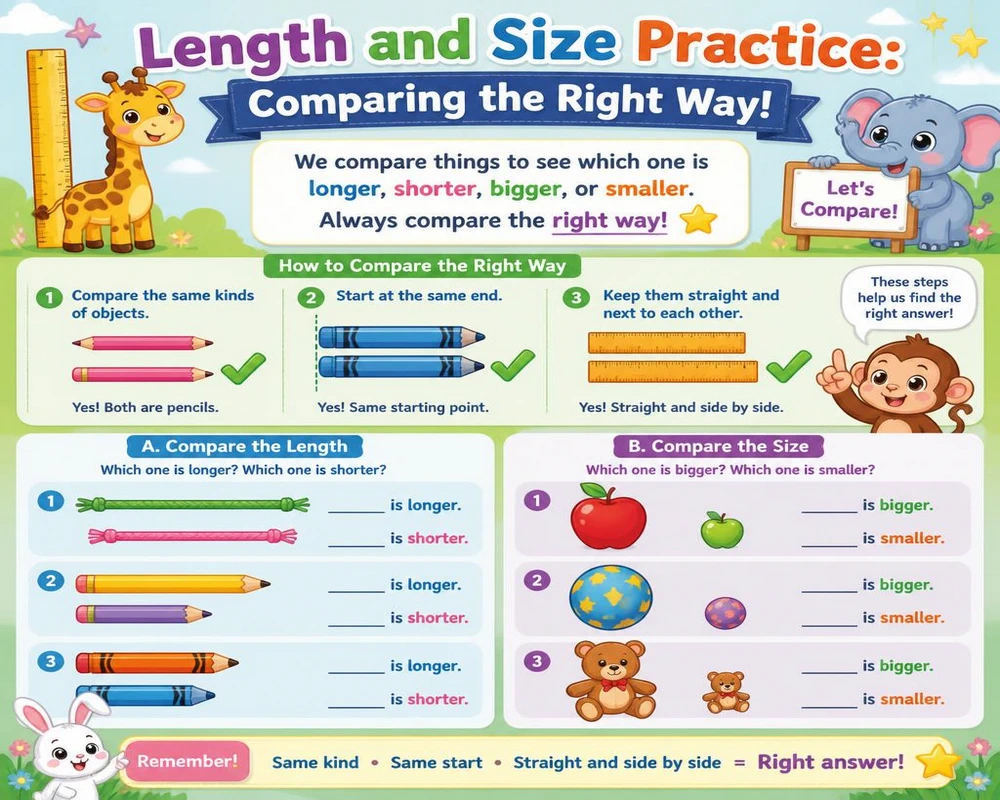
Length and Size Practice: Comparing the Right Way
Direct Comparison First
Before introducing any measuring tool, Grade 1 students should be comfortable placing two objects side by side and stating which is longer, shorter, taller, or shorter — using a fair starting point (lining up one end).
A simple home check: hand your child two spoons of slightly different lengths and ask them to show you, without guessing, which one is longer. Watch whether they line up the ends fairly or just eyeball it.
Measuring With Non-Standard Units
This is where Grade 1 measurement activities get genuinely fun. Using consistent objects — paperclips, blocks, or even footsteps — to measure length teaches the core idea behind all measurement: using a repeated, consistent unit to describe size.
| Object Measured | Unit Used | Result |
|---|---|---|
| Kitchen table | Hand spans | About 8 hand spans |
| Hallway | Footsteps | About 12 footsteps |
| Book | Paperclips | About 6 paperclips |
Ask your child to measure the same object twice using two different units (paperclips, then blocks) and compare the results. This naturally introduces the idea that the unit you choose changes the number, even though the object’s actual length never changed.
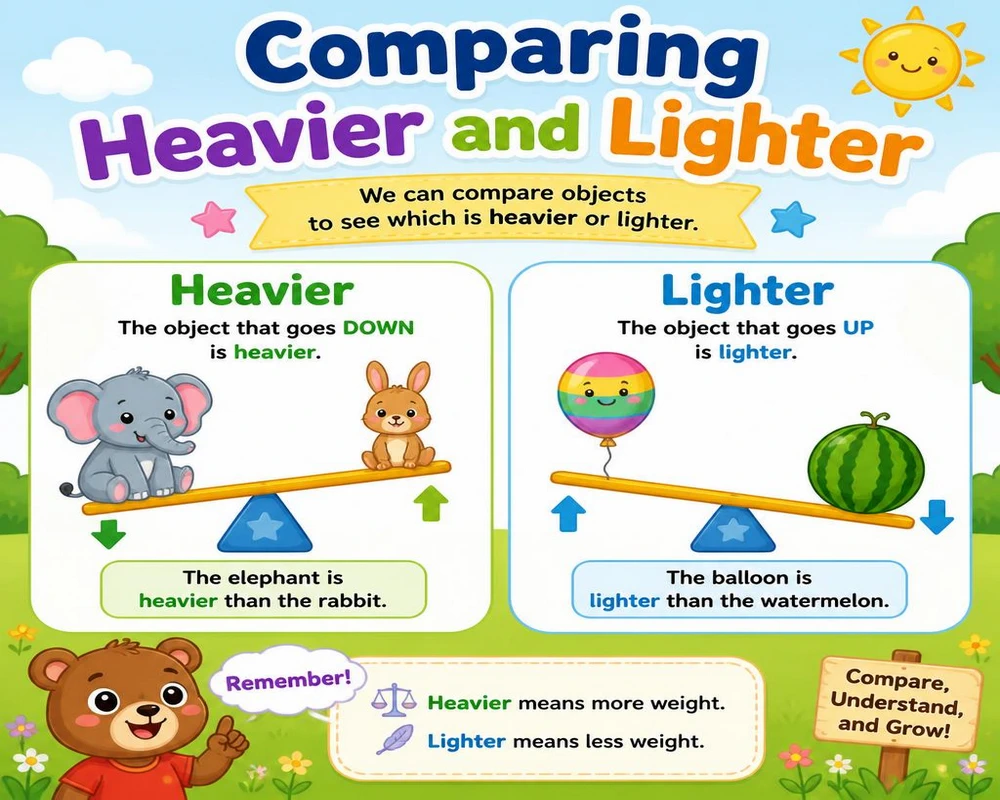
Mass and Capacity Practice
Comparing Heavier and Lighter
Without a scale, most Grade 1 students rely on their hands to judge weight — literally holding two objects, one in each hand, to feel which is heavier. This is a completely valid strategy at this stage.
- Which is heavier: a full water bottle or an empty one?
- Which is lighter: a pillow or a shoe?
- Hold a book and a pencil. Which feels heavier?
Answers: 1) Full water bottle 2) Pillow 3) Book
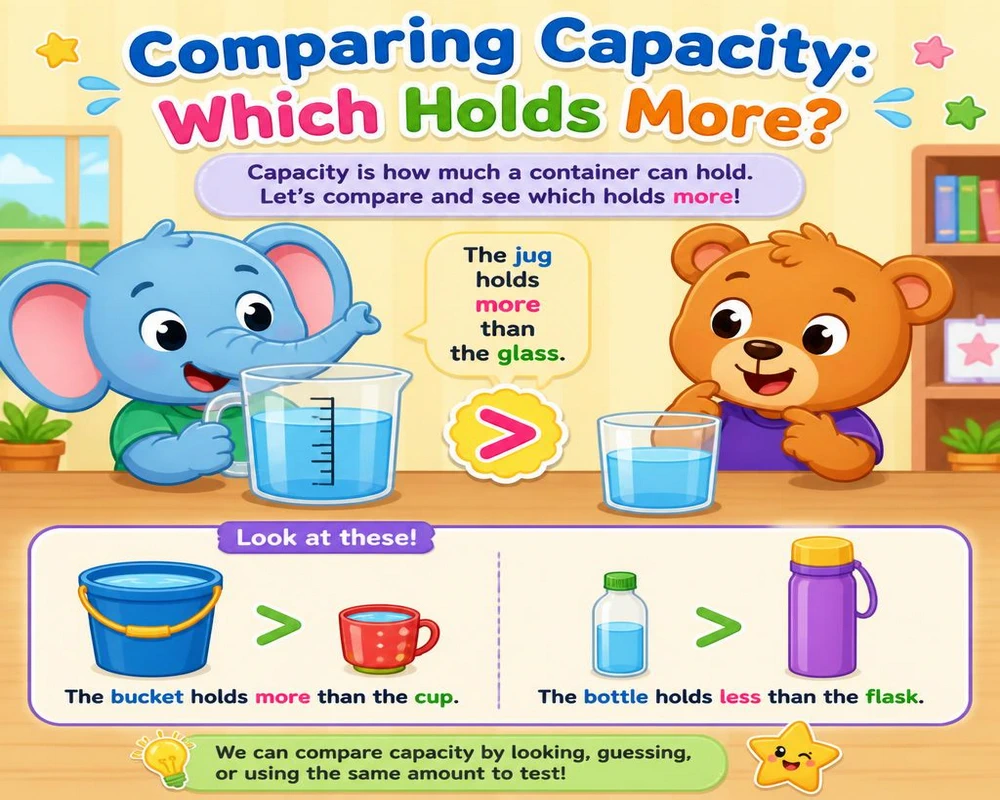
Comparing Capacity: Which Holds More?
Capacity comparisons work best with real containers and water (or dry rice/sand for a mess-free version indoors).
- Fill a small cup and a large cup with water. Which one holds more?
- If you pour water from a tall, thin glass into a short, wide bowl, does the amount of water change?
Answers: 1) The large cup 2) No — the amount stays the same, only the shape of the container changes
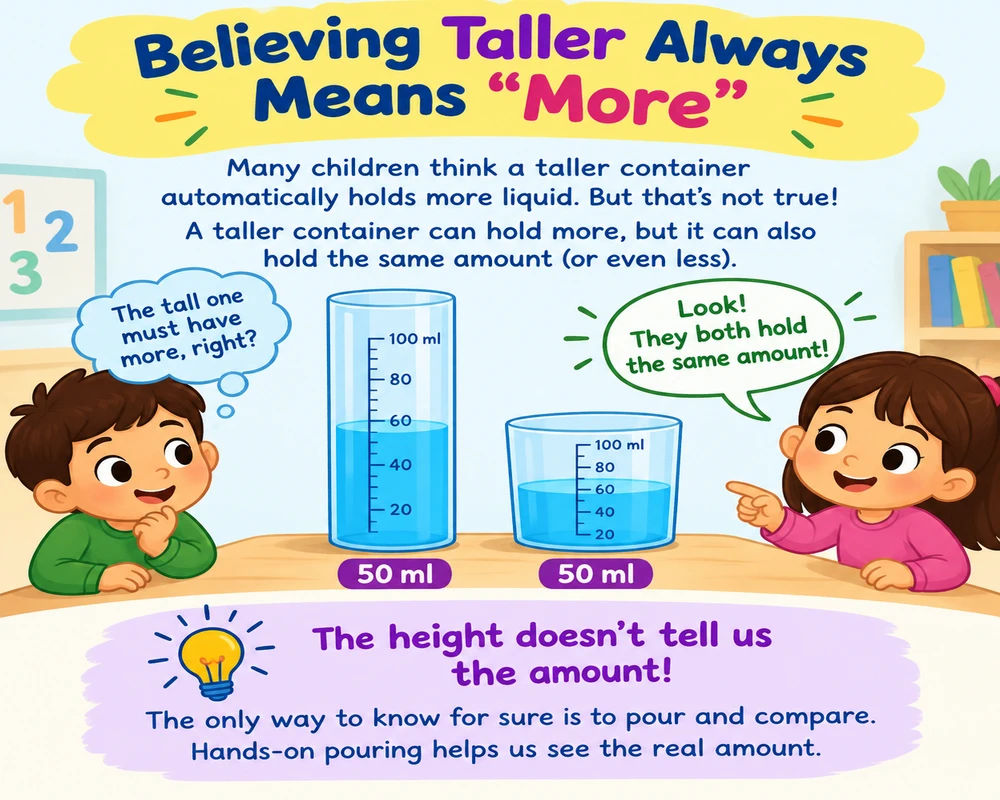
This second question is genuinely important. Many young children believe a taller container automatically holds more water, even when it clearly doesn’t — this activity helps correct that misconception through direct observation rather than explanation alone.
Grade 1 Measurement Activities for Everyday Life
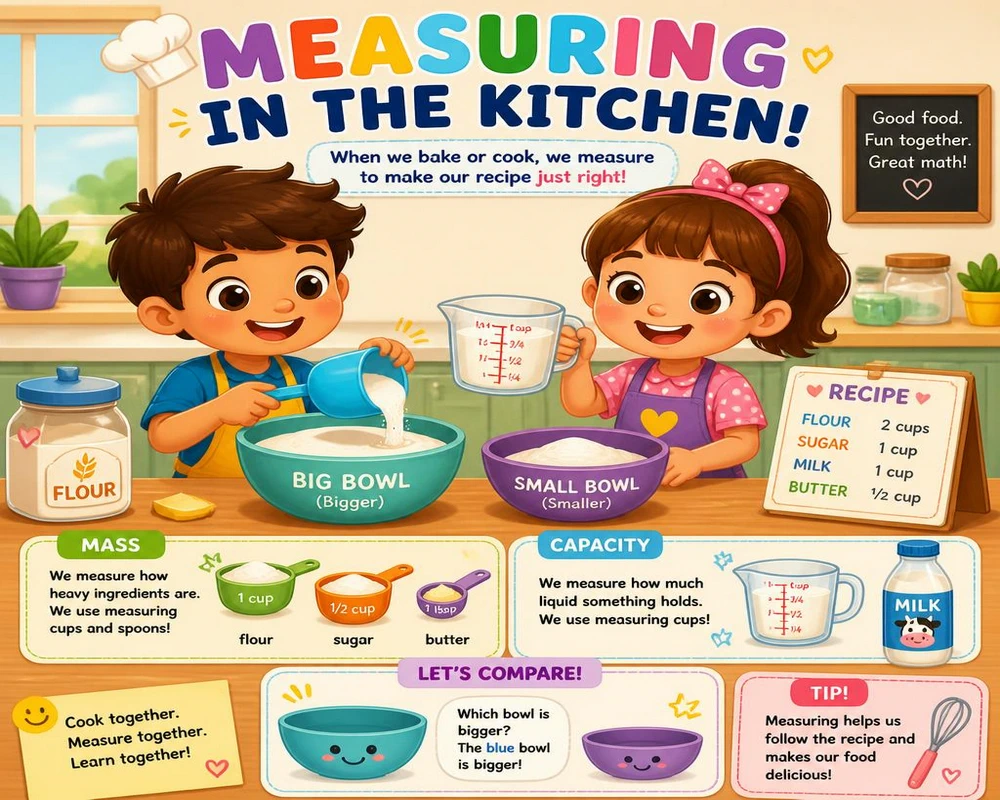
Kitchen Measuring
Baking or cooking together naturally introduces both mass and capacity concepts — measuring cups, comparing ingredient amounts, and noticing which bowl is bigger.
A Backyard or Living Room Measuring Hunt
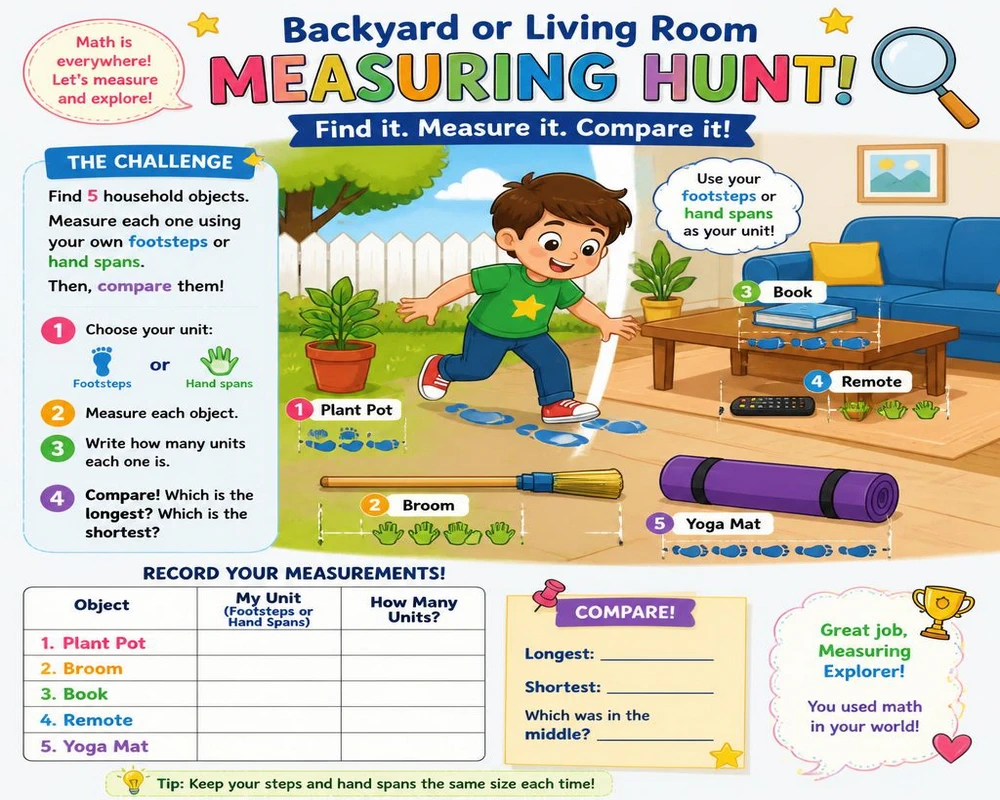
Challenge your child to find and compare five household objects by length using their own footsteps or hand spans as the unit. This turns Grade 1 measurement practice Ontario expectations into an active, physical game rather than a worksheet.
Building a Simple Height Chart
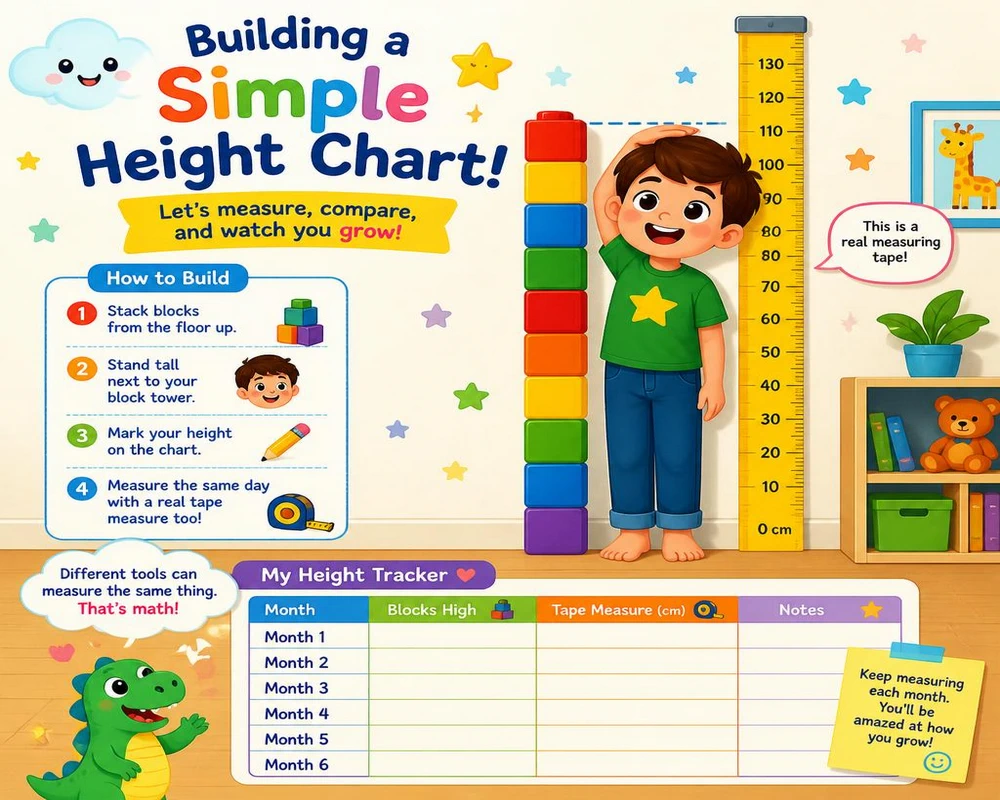
Track your child’s height over several months using a consistent non-standard unit (like stacked blocks) alongside an actual measuring tape. This introduces the idea that formal units exist, without forcing memorization before it’s developmentally useful.
Real-Life Word Problems for Measurement
- Malik’s pencil is 5 paperclips long. His sister’s pencil is 7 paperclips long. Whose pencil is longer?
- A small bowl holds less rice than a big pot. If you fill both with rice, which one would need to be poured out more times to empty using a small cup?
- Which weighs more: a bag of 10 apples or a single apple?
Answers: 1) His sister’s pencil 2) The big pot 3) A bag of 10 apples
Common Mistakes in Grade 1 Measurement Practice
Not Lining Up the Starting Point
A very common early error: comparing two objects without lining up one end first, which makes an actually-shorter object look longer. Reinforce placing objects against a straight edge, like the side of a table, before comparing.
Believing Taller Always Means “More”
As mentioned with the capacity activity above, children often assume a taller container automatically holds more liquid. Repeated hands-on pouring, not verbal explanation, is what usually corrects this.
Leaving Gaps Between Non-Standard Units
When measuring with paperclips or blocks, kids sometimes leave small gaps between each unit, throwing off the count. Encourage placing each unit snugly against the last one, with no spaces.
Practical Tips for Practicing at Home
Keep a “Measuring Toolkit” Handy
A small bag with paperclips, small blocks, and a piece of string turns any moment into an opportunity for quick Grade 1 measurement practice Ontario families can fit into a busy week.
Compare, Don’t Just Measure
Whenever possible, frame activities as comparisons (“which is longer?”) rather than pure measurement (“how long is it?”). Comparison is closer to what Grade 1 curriculum actually emphasizes at this stage.
Involve Measurement in Daily Routines
Cooking, gardening, and even folding laundry (comparing sock sizes, towel sizes) all offer natural, low-effort measurement practice without needing a dedicated “lesson time.”
Keep Sessions Short and Physical
Ten to fifteen minutes of hands-on Grade 1 measurement activities, a few times a week, tends to work far better than a single long session — especially since this unit benefits so much from physical, tactile engagement.
Hands-on measurement activities work especially well when paired with visual, interactive tools. Mathies, Ontario’s free digital math resource, includes measurement tools designed specifically for young learners, making a natural follow-up once your child has practiced with real objects at home.
Conclusion: Building a Real Sense of Size and Scale
Grade 1 measurement practice Ontario lessons ask more of young learners than they first appear to — separating length from weight, understanding that containers can trick the eye, and learning that a fair comparison needs a consistent starting point. These aren’t small ideas, even if the activities themselves feel playful. Give your child plenty of hands-on, physical practice with real objects, and this foundation will support formal unit conversion smoothly when it arrives in later grades.
Grab a handful of paperclips or blocks tonight and measure a few objects around the house together. A few minutes of playful comparison like this builds understanding no worksheet alone can match.
Measurement is just one part of a full Grade 1 year that also covers shapes, patterns, counting, and early money skills. For the complete picture, our Grade 1 math practice hub brings every topic together in one place.
Frequently Asked Questions
1. Does my Grade 1 child need to learn centimetres and metres yet?
Not formally. Grade 1 focuses on comparison and using non-standard units like paperclips or hand spans; standard units become the focus starting around Grade 3.
2. Why does my child think a taller cup always holds more?
This is a common developmental misconception. Repeated hands-on pouring between differently shaped containers, not explanation, usually resolves it.
3. What are non-standard units, and why does Grade 1 use them?
Non-standard units are everyday objects like paperclips, blocks, or footsteps used to measure. They build the core concept of consistent measurement before introducing formal units like centimetres.
4. How can I practice measurement without buying special tools?
Almost anything works — paperclips, blocks, shoes, or hand spans are all valid non-standard units for Grade 1 measurement practice Ontario activities.
5. Is it normal for my child to measure the same object differently each time?
Yes, especially if they’re leaving gaps between units or not lining up the starting point. This is a common, easily corrected early skill gap.
6. How much time should we spend on measurement activities at home?
Around 10-15 minutes, a few times a week, tends to be enough, especially when built into everyday routines like cooking or tidying up.
7. How does Grade 1 measurement connect to later grades?
It builds the conceptual foundation for formal unit conversion, area, and perimeter work that begins in Grade 3 and deepens through Grade 4 and beyond.