
Grade 4 Multiplication Worksheets Ontario: The Truth
Print out fifty multiplication questions, hand them to a nine-year-old, and watch what happens. Some kids power through in ten minutes. Others stare at question seven for a full minute, erase, guess, and move on with a knot in their stomach that lasts the rest of the page. The worksheet is identical for both kids. The gap between them isn’t effort. It’s that one of them has a mental strategy for reconstructing a forgotten fact, and the other doesn’t — and no amount of extra worksheets fixes that on its own.
I’ve spent years watching Ontario’s Junior Division classrooms work through exactly this problem, and here’s the uncomfortable truth: Grade 4 multiplication worksheets Ontario teachers and parents lean on heavily are a fine way to practice a skill a child already has. They’re a terrible way to build one from scratch. This article covers what actually needs to happen before the worksheets do any good, and how to know which category your child falls into.
Three Things Grade 4 Multiplication Actually Requires
Ontario’s curriculum expects Grade 4 students to move well past the basic facts introduced in Grade 3, working toward genuine fluency with facts up to 10 × 10 and applying those facts to multiply larger numbers — a two-digit number by a one-digit number, for instance. That’s not one skill. It’s three, stacked on top of each other.

Skill One: Instant Recall of Basic Facts
Not “can figure out eventually.” Instant. If 7 × 8 takes fifteen seconds of mental scrambling, that’s a sign the fact was never truly consolidated, only performed correctly under favourable conditions once or twice.
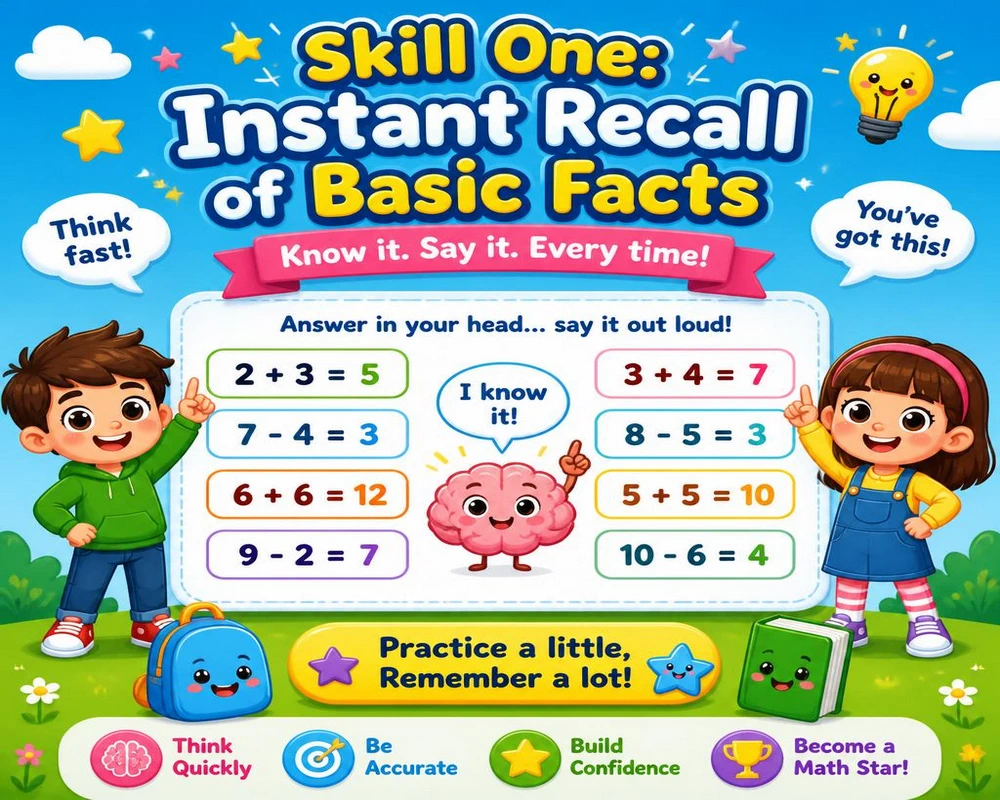
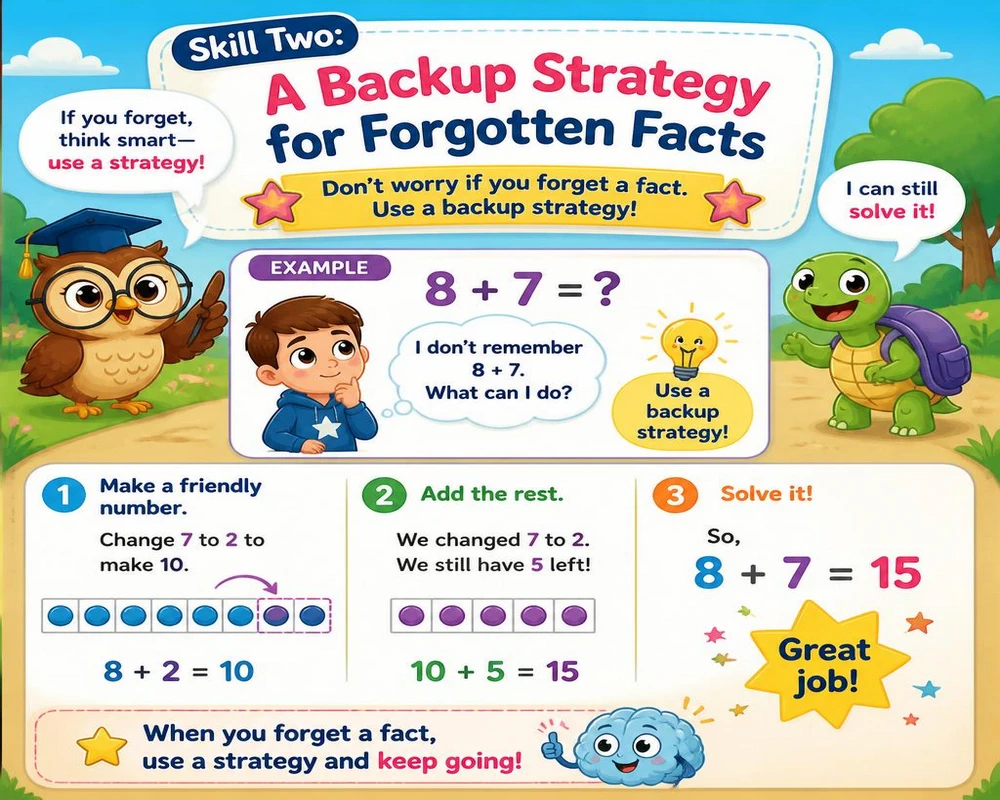
Skill Two: A Backup Strategy for Forgotten Facts
Even strong students blank on a fact occasionally. The difference between a confident student and an anxious one is what happens in that moment — does the child have a way to rebuild 6 × 7 from something they do know (like 6 × 6, plus one more 6), or does the whole process just stop?
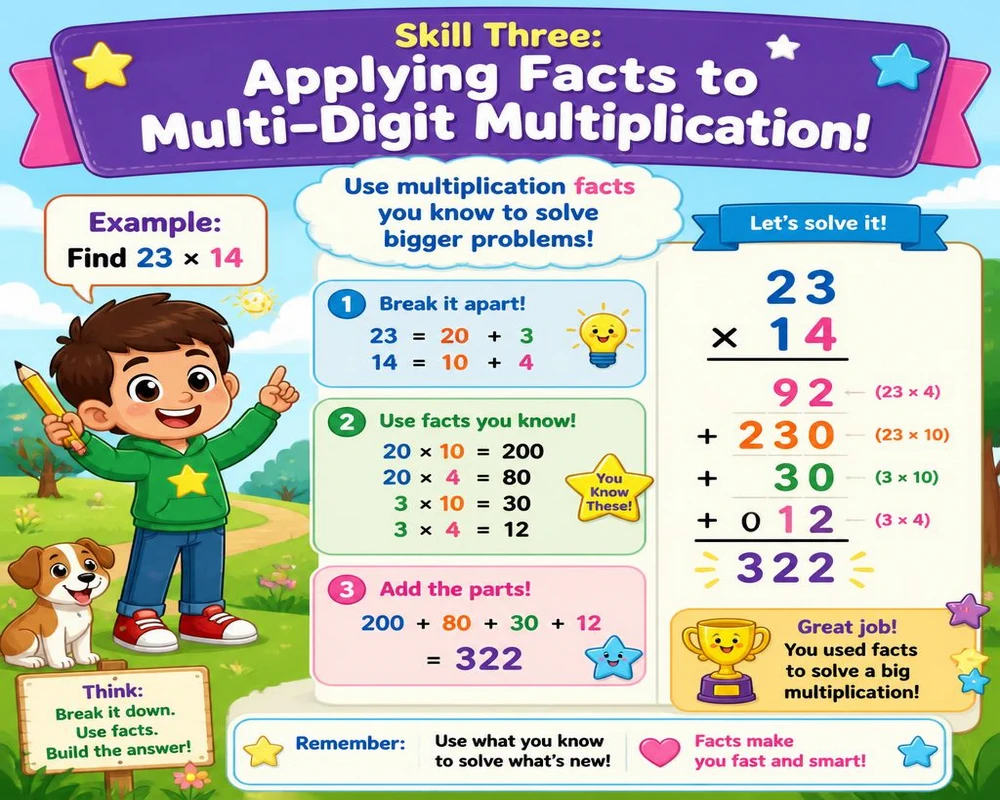
Skill Three: Applying Facts to Multi-Digit Multiplication
Multiplying 34 × 6 isn’t a new operation — it’s basic facts applied twice, with a regrouping step in between. Students who haven’t fully automated the basic facts from Skill One find this step exhausting, because they’re solving two hard problems (recall, then regrouping) instead of one easy one plus a familiar procedure.
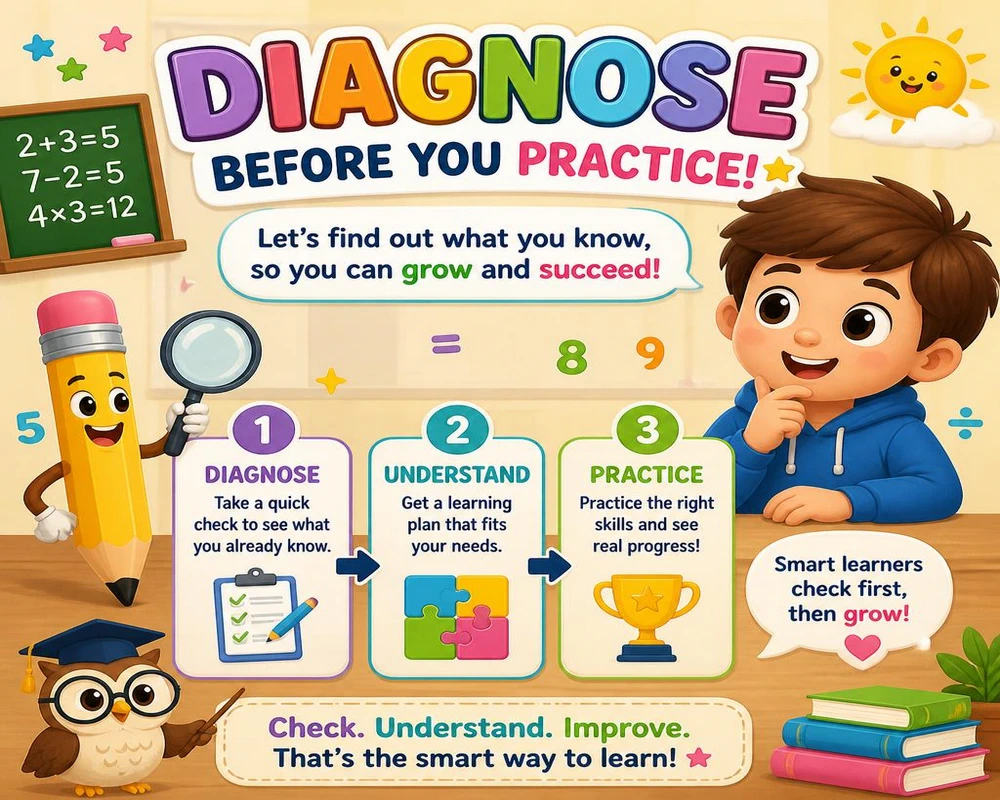
Diagnose Before You Practice
Most Grade 4 multiplication worksheets Ontario families print out skip this diagnostic step entirely, jumping straight to fifty repetitive questions without first figuring out which of the three skills is actually missing.
Before assigning a stack of Grade 4 multiplication worksheets Ontario curriculum aligns with, spend five minutes finding out which of the three skills above is actually missing. Ask your child to solve these without writing anything down:
| Question | What a Correct, Fast Answer Tells You |
|---|---|
| 6 × 7 | Recall is solid for mid-range facts |
| 9 × 8 | Recall holds up even for harder facts |
| 4 × 34 (mentally, or on paper) | Facts transfer to multi-digit problems |
Answers: 42, 72, 136
If your child solves the first two instantly but stumbles on the third, the gap is in applying facts, not knowing them — a targeted, thirty-minute conversation about regrouping fixes far more than another week of basic fact drills.
Practice Questions by Skill
Basic Facts (Should Feel Automatic)
8 × 6 = ___ 7 × 9 = ___ 6 × 6 = ___ 9 × 4 = ___
Answers: 48, 63, 36, 36
Two-Digit by One-Digit Multiplication
- 23 × 4 = ___
- 36 × 5 = ___
- 47 × 3 = ___
- 58 × 6 = ___
Answers: 1) 92 2) 180 3) 141 4) 348

Word Problems That Combine Both Skills
- A school orders 6 boxes of pencils, with 24 pencils in each box. How many pencils in total?
- A theatre has 8 rows with 15 seats in each row. How many seats are there?
Answers: 1) 144 pencils 2) 120 seats
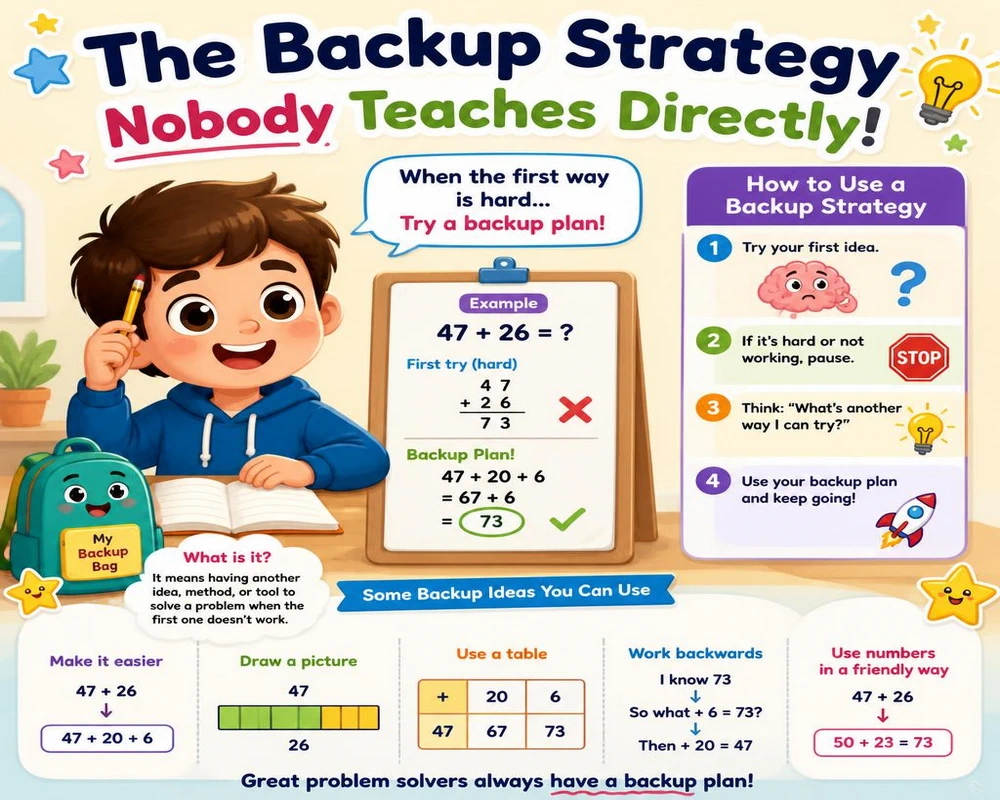
The Backup Strategy Nobody Teaches Directly
Here’s the piece most Grade 4 multiplication worksheets Ontario families use never actually address: what to do the moment a fact is forgotten mid-problem. This is a teachable skill, not a personality trait.
Doubling a known fact: Don’t know 8 × 6? Double 4 × 6 (24), which gives 48.
Using a nearby fact: Don’t know 9 × 7? Use 10 × 7 (70), then subtract one group of 7, landing on 63.
Breaking the number apart: Don’t know 6 × 12? Break 12 into 10 + 2. Multiply 6 × 10 (60), then 6 × 2 (12), then add them together for 72.
Teach one of these strategies explicitly, then watch for it the next time your child hits a blank. Most kids adopt whichever strategy gets modelled for them repeatedly — they don’t invent one independently just from staring at flashcards.
What to Skip Entirely
Not everything marketed as multiplication practice is worth the time. A few things worth avoiding:
- Timed drills before facts are secure. Speed pressure on shaky recall just teaches anxiety, not multiplication.
- Worksheets with zero variety. Fifty questions of the same difficulty level, in the same format, stop teaching anything new after question ten.
- Skipping straight to two-digit multiplication before basic facts are automatic. This just stacks a new struggle on top of an old, unresolved one.

A Two-Week Plan That Actually Works
This structured approach gets more done in two weeks than an open-ended stack of Grade 4 multiplication worksheets Ontario classrooms hand out ever manages on its own.
Rather than an open-ended pile of Grade 4 multiplication worksheets Ontario students might work through indefinitely, try something with a clear endpoint:
Days 1–5: Five minutes a day on basic facts specifically identified as weak from the diagnostic above, using one backup strategy explicitly.
Days 6–10: Shift to two-digit by one-digit problems, explicitly narrating each step (multiply ones, regroup, multiply tens, add).
Days 11–14: Mix both fact recall and multi-digit problems together, including a couple of word problems each session.
Re-run the same three diagnostic questions from earlier at the end of two weeks. Real, measurable progress usually shows up by then — and if it doesn’t, that’s useful information pointing toward where the actual gap still sits.
The right Grade 4 multiplication worksheets Ontario families use become genuinely effective the moment they’re paired with a clear diagnosis and a backup strategy, rather than handed out as practice for its own sake.

Frequently Asked Questions
1. How many multiplication facts should a Grade 4 student know by heart?
By the end of Grade 4, most students should have near-instant recall of facts up to 10 × 10, with continued practice reinforcing the harder facts (7s, 8s, and 9s) that tend to lag behind.
2. My child knows the facts but freezes on two-digit multiplication. What’s happening?
This usually means the multi-digit procedure itself — multiply, regroup, multiply again, add — hasn’t been practiced enough as its own distinct skill, separate from fact recall.
3. Are timed multiplication worksheets a good idea?
Only once basic recall is already solid. Timing a child whose facts aren’t yet automatic just adds pressure without building the underlying skill.
4. What’s the fastest way to fix a specific weak fact, like 7 × 8?
Teach a backup strategy tied to a fact your child already knows well — for 7 × 8, doubling 7 × 4 (28) gets to 56 reliably, every time.
5. Should multiplication practice happen every day?
Short, frequent sessions (five to ten minutes, most days) build stronger long-term recall than occasional long sessions once a week.
6. How is this different from just doing more worksheets?
Worksheets test whether a skill is already there. They don’t teach the strategy for building it. Diagnosing the specific gap first, then targeting it directly, gets results in a fraction of the time.
7. How does this connect to what comes next in Grade 5?
Grade 5 leans heavily on multiplication fluency for decimals, ratios, and early algebra. A shaky Grade 4 foundation tends to resurface as a much bigger struggle a year later.
Multiplication is one piece of a full Grade 4 year that also includes long division, geometry, and measurement. Our Grade 4 math practice hub covers every topic in one place.
For classroom-tested strategies behind exactly this kind of fact fluency, the Ontario Association for Mathematics Education publishes resources built specifically around how Ontario teachers approach multiplication instruction.