
Grade 2 Two-Digit Addition and Subtraction Practice
Grade 2 two-digit addition and subtraction practice is where a lot of confident little mathematicians hit their first real wall. Single-digit facts felt automatic by now, but the moment a problem like 47 + 25 shows up, something changes — suddenly there’s a step involving carrying a ten, and the whole process feels unfamiliar again. Having spent years supporting Ontario’s Primary Division classrooms, I’ve watched this exact moment happen over and over, and it almost never means a child is behind. It usually just means regrouping hasn’t clicked yet, and that’s a completely normal, very fixable gap.
This guide walks through what Ontario’s Grade 2 curriculum expects around two-digit addition and subtraction, why regrouping trips kids up, and five practical tips to build real confidence at home.
Why Grade 2 Two-Digit Addition and Subtraction Practice Matters
Single-digit addition and subtraction rely mostly on memorized facts. Two-digit work asks for something different — genuine place value understanding. A child has to recognize that the “4” in 47 represents four tens, not four ones, and that regrouping (carrying or borrowing) means physically trading ten ones for one ten, or the reverse.
This matters because Grade 2 two-digit addition and subtraction practice isn’t really a new operation — it’s the same addition and subtraction a child already knows, applied to a number system they’re still getting comfortable with. Skipping the place value piece and jumping straight to the algorithm is exactly where most confusion starts.
What the Ontario Curriculum Expects in Grade 2
By the end of Grade 2, students are generally expected to:
- Add and subtract two-digit numbers, with and without regrouping
- Understand regrouping as trading ten ones for one ten, or one ten for ten ones
- Use place value blocks or drawings to represent two-digit addition and subtraction
- Estimate a reasonable answer before calculating
- Solve simple word problems involving two-digit addition and subtraction
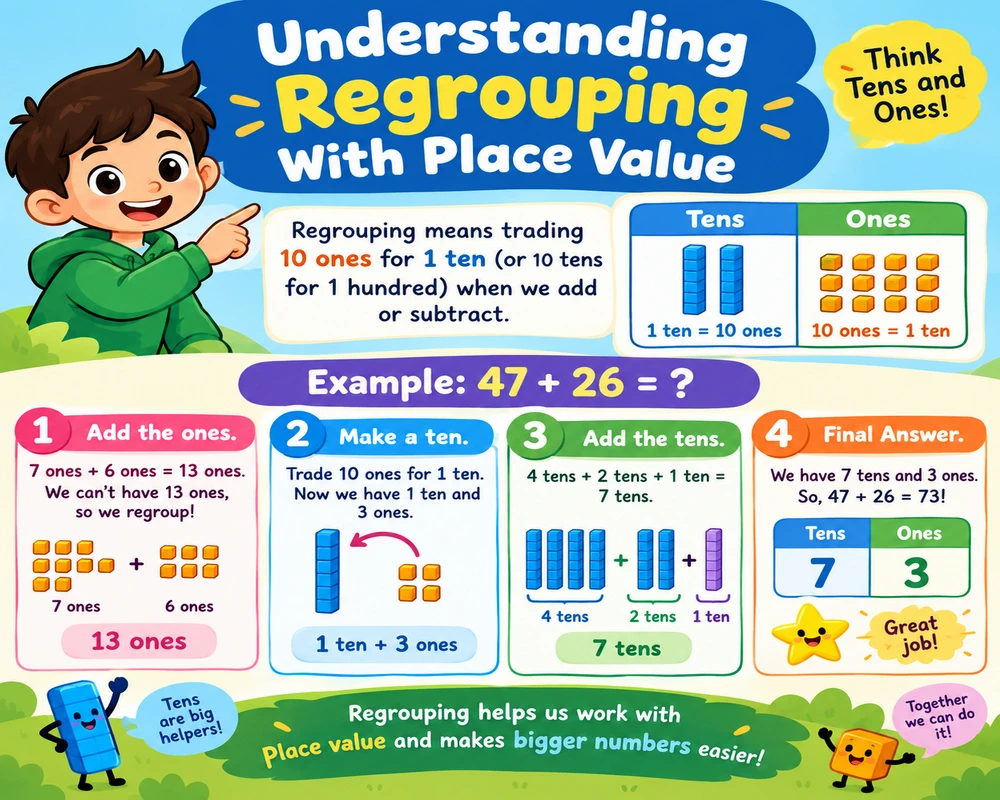
Understanding Regrouping With Place Value
What Regrouping Actually Means
Regrouping in addition happens when the ones column adds up to 10 or more — that extra group of ten gets “traded” and moved into the tens column. In subtraction, it’s the reverse: when there aren’t enough ones to subtract from, a ten gets broken apart into ten ones.
The clearest way to teach this isn’t through the written algorithm first — it’s through physical place value blocks, where a child can literally see and touch ten single blocks being exchanged for one ten-rod.
A Simple Home Activity: Trading Game
Give your child a pile of small objects (buttons, beans, or coins) and a rule: every time they collect 10 of one colour, they trade it for 1 of a different colour representing a “ten.” This mirrors regrouping directly and makes the abstract idea of “carrying a ten” feel like a natural, physical action rather than a mysterious rule.
Grade 2 Regrouping Practice Questions
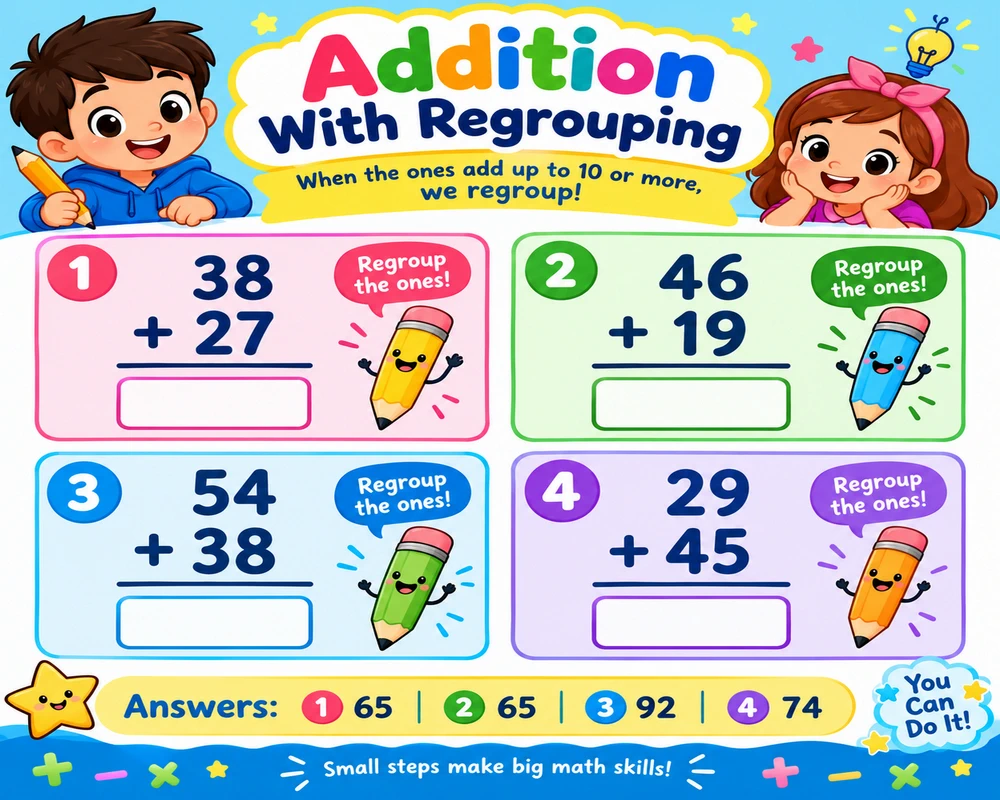
Addition With Regrouping
- 38 + 27 = ___
- 46 + 19 = ___
- 54 + 38 = ___
- 29 + 45 = ___
Answers: 1) 65 2) 65 3) 92 4) 74
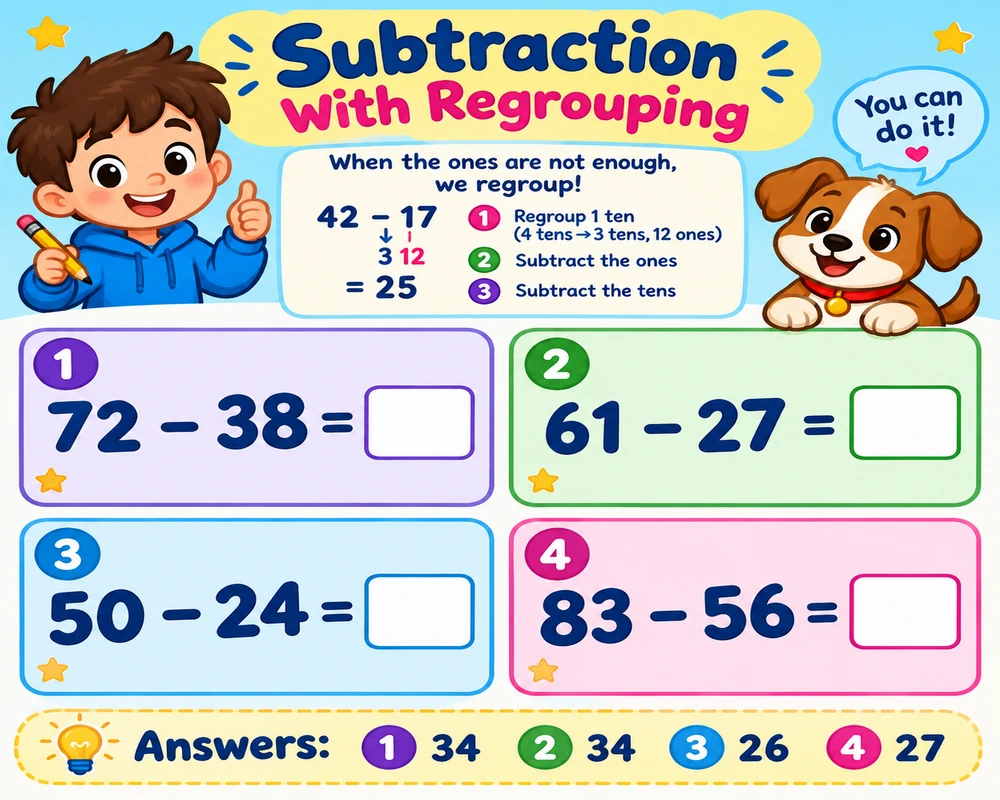
Subtraction With Regrouping
- 72 − 38 = ___
- 61 − 27 = ___
- 50 − 24 = ___
- 83 − 56 = ___
Answers: 1) 34 2) 34 3) 26 4) 27
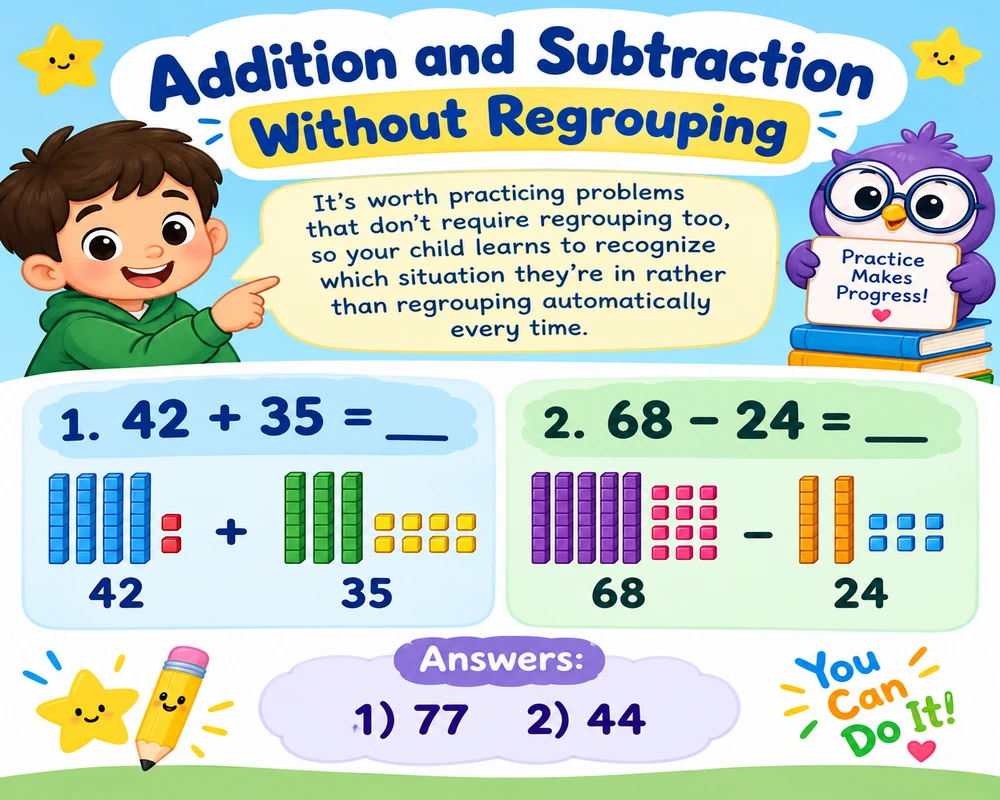
Addition and Subtraction Without Regrouping
It’s worth practicing problems that don’t require regrouping too, so your child learns to recognize which situation they’re in rather than regrouping automatically every time.
- 42 + 35 = ___
- 68 − 24 = ___
Answers: 1) 77 2) 44
5 Tips for Mastering Two-Digit Addition and Subtraction
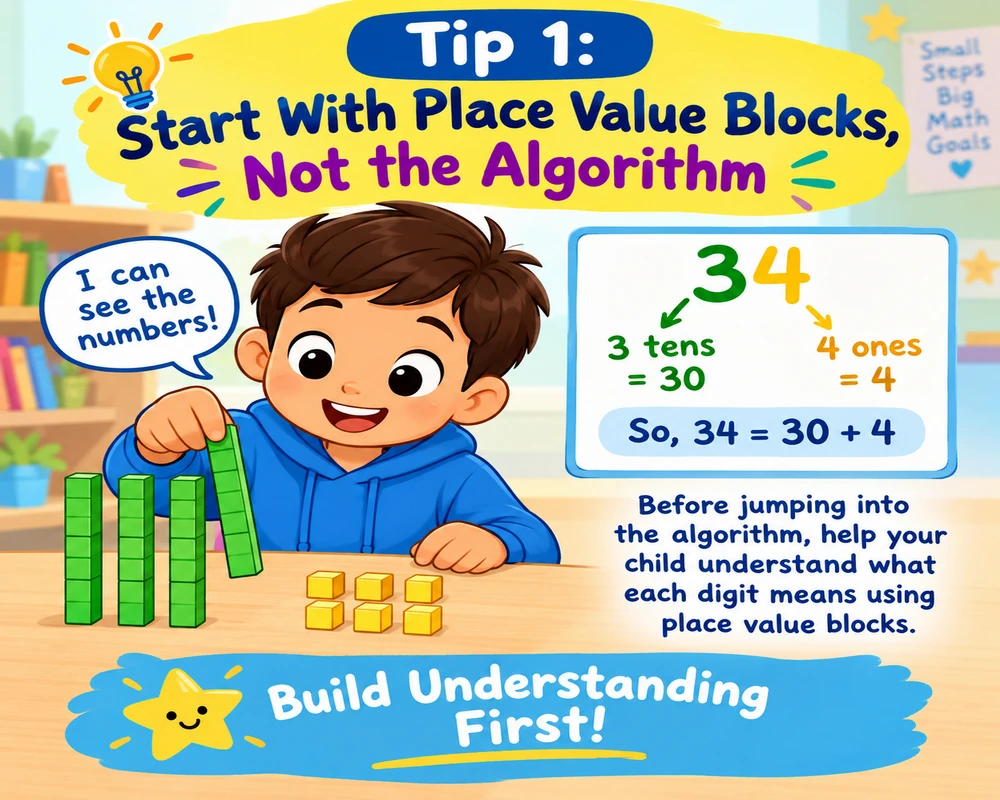
Tip 1: Start With Place Value Blocks, Not the Algorithm
Before introducing the written column method, let your child physically build both numbers with base-ten blocks. Watching ten ones become one ten right in front of them does more for understanding than any explanation.
Interactive place value tools make regrouping far easier to visualize than static worksheets alone. Mathies, Ontario’s free suite of digital math tools, includes virtual base-ten blocks that mirror exactly what many Grade 2 classrooms use to teach this concept.
Tip 2: Estimate Before Calculating
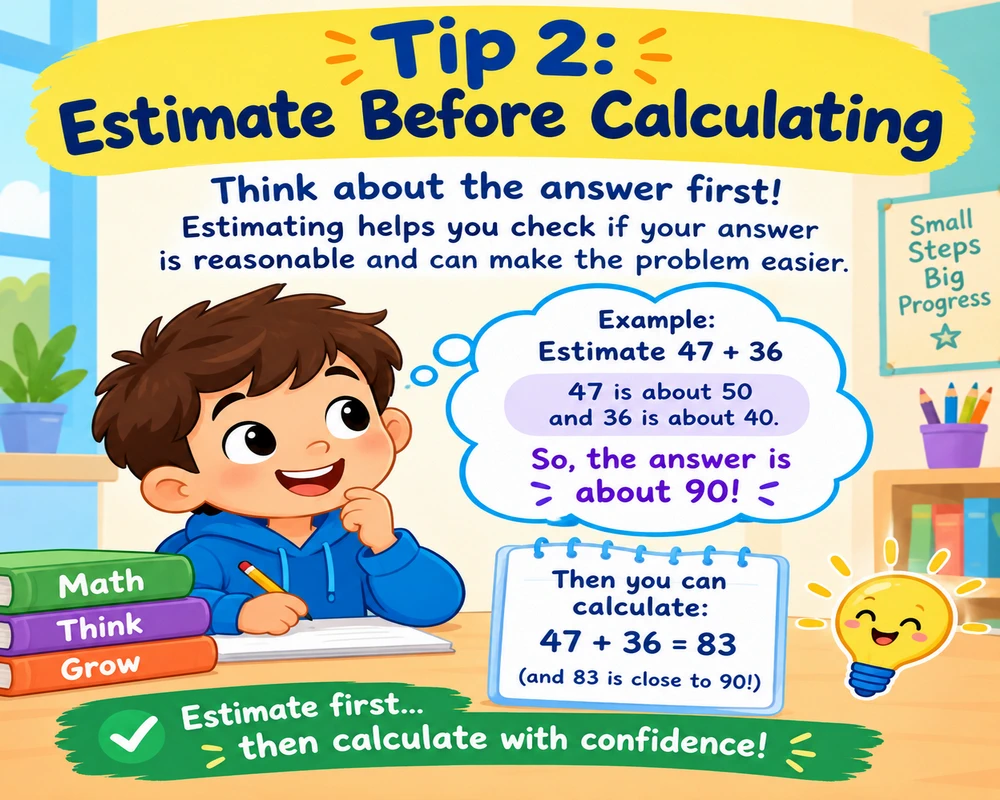
Ask your child to guess whether the answer will be closer to 50 or 100 before solving. This simple habit catches major errors immediately and builds genuine number sense alongside the calculation itself.
Tip 3: Line Up the Columns Carefully
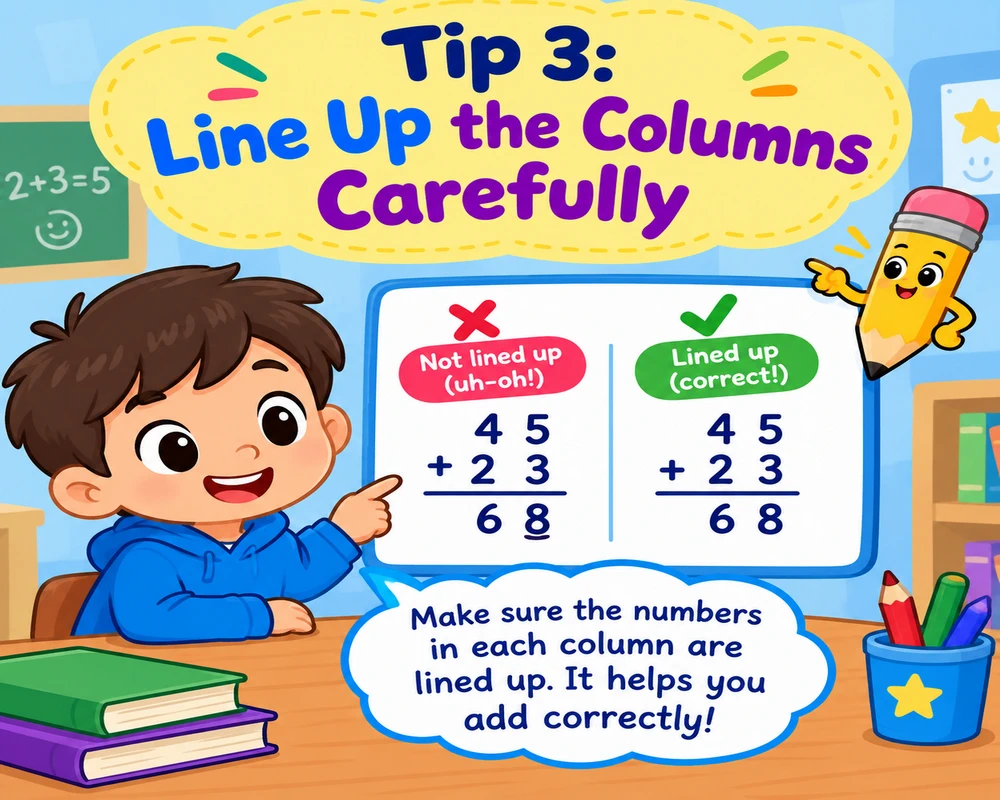
A very common error in Grade 2 two-digit addition and subtraction practice is misaligning the tens and ones columns, especially on plain paper without grid lines. Using graph paper, or even just drawing a simple line between the columns, prevents a lot of avoidable mistakes.
Tip 4: Say the Regrouping Step Out Loud
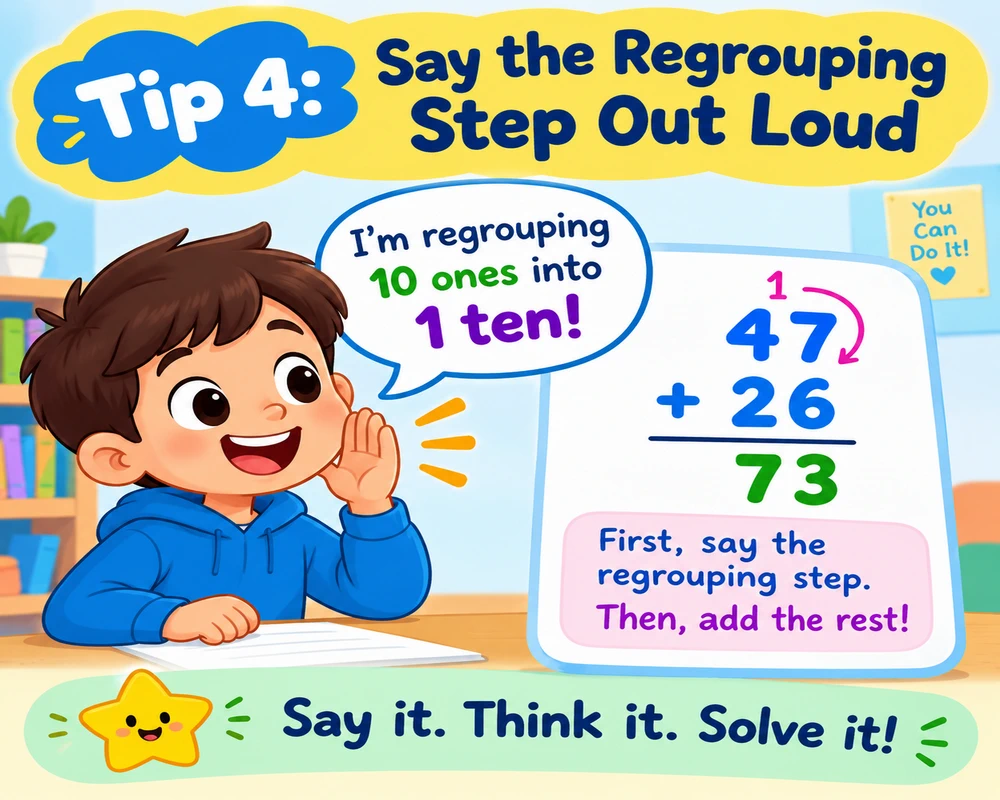
Having your child narrate what they’re doing (“I have 7 plus 5, that’s 12, so I write the 2 and carry the 1 ten”) slows the process down just enough to catch errors before they happen.
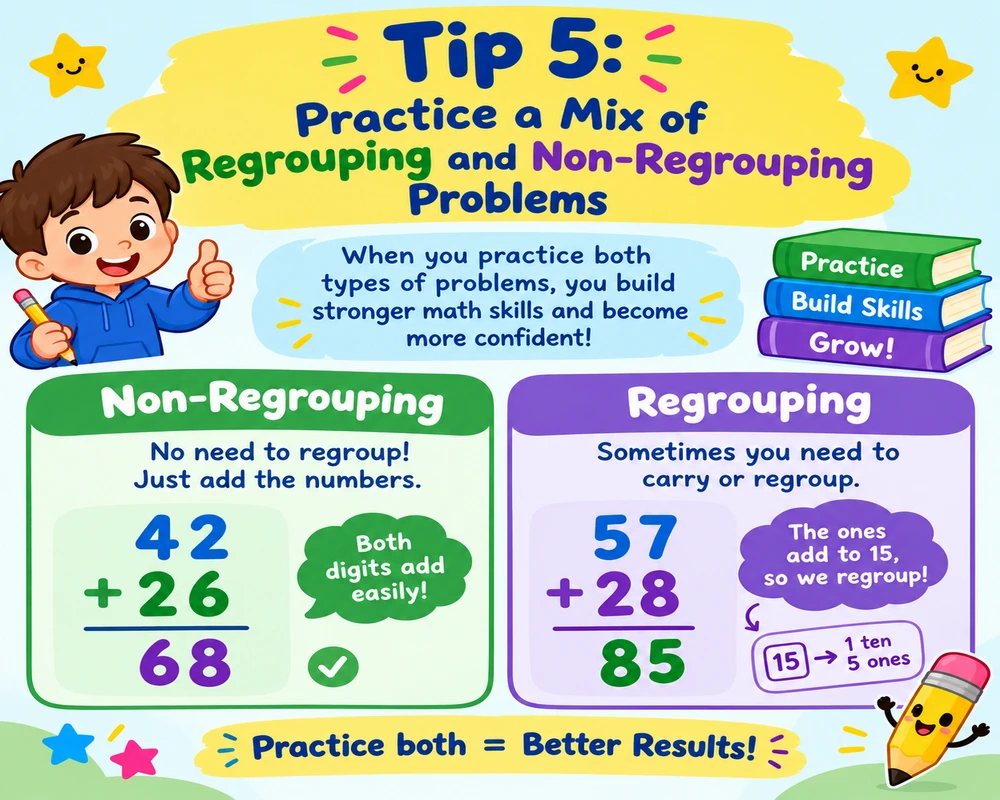
Tip 5: Practice a Mix of Regrouping and Non-Regrouping Problems
If every practice problem requires regrouping, kids can start regrouping automatically even when it isn’t needed. Mixing both types keeps the skill genuinely flexible rather than a memorized rule. This kind of hands-on Grade 2 two-digit addition and subtraction practice turns regrouping from a confusing rule into something your child can genuinely understand through repetition.
Real-Life Word Problems
- A school has 38 boys and 27 girls in Grade 2. How many students are there in total?
- Malik had 62 hockey cards. He gave 35 to his friend. How many cards does he have left?
- A bakery sold 46 muffins in the morning and 28 in the afternoon. How many muffins were sold in total?
Answers: 1) 65 students 2) 27 cards 3) 74 muffins
Common Mistakes in Grade 2 Addition and Subtraction
Forgetting to Regroup
A child adds the ones column, gets a number over 9, and simply writes both digits instead of carrying the ten. Returning to place value blocks usually resolves this faster than repeated verbal reminders.
Regrouping When It Isn’t Needed
Once regrouping becomes familiar, some kids apply it automatically to every problem, even ones that don’t require it. Estimating first, as mentioned in Tip 2, helps catch this kind of overcorrection.
Subtracting the Smaller Digit From the Larger One, Regardless of Position
A frequent subtraction error: when the top digit is smaller than the bottom digit, a child subtracts backward instead of regrouping. Physically modelling the problem with blocks makes it clear why borrowing is necessary.
Most errors in Grade 2 two-digit addition and subtraction practice trace back to a shaky grasp of place value, not a lack of effort.
Practical Tips for Practicing at Home
Use Real Money for Practice
Two-digit addition and subtraction map naturally onto money — combining or spending amounts in cents mirrors the exact regrouping process, using something tangible and familiar.
Keep Sessions Short and Consistent
Fifteen minutes of focused Grade 2 two-digit addition and subtraction practice, three or four times a week, tends to build stronger long-term fluency than occasional long sessions.
Two-digit addition and subtraction is just one part of a full Grade 2 year that also covers measurement, money, and shapes. For the complete picture, our Grade 2 math practice hub brings every topic together in one place.
Conclusion: Building Real Number Sense, Not Just a Procedure
Grade 2 two-digit addition and subtraction practice asks more of young learners than it first appears — genuine place value understanding, not just a memorized column procedure. With hands-on blocks, consistent estimation, and a healthy mix of regrouping and non-regrouping problems, most students move past this hurdle within a few weeks of steady practice.
Try the trading game with buttons or coins tonight, and watch how quickly regrouping starts to make sense once your child can see it happening with their own hands.
Consistent Grade 2 two-digit addition and subtraction practice, even in short sessions, builds the place value confidence your child needs for every math topic that follows.
Frequently Asked Questions
1. What is regrouping in addition and subtraction?
Regrouping means trading ten ones for one ten (in addition) or breaking one ten into ten ones (in subtraction) when a column doesn’t have enough to work with directly.
2. Why does my child forget to regroup?
This is extremely common and usually means the place value concept behind regrouping hasn’t fully clicked yet. Returning to physical blocks, rather than more written practice, tends to fix it fastest.
3. Should I teach the written algorithm or blocks first?
Blocks first, always. The written column method makes far more sense once a child has physically seen and handled the regrouping process.
4. How can I tell if my child understands regrouping or is just memorizing steps?
Ask them to explain what they’re doing in their own words, or have them solve the same problem using blocks instead of the written method. If both match, understanding is genuine.
5. How much should we practice at home each week?
About 15 minutes, three to four times a week, tends to work well, mixing regrouping and non-regrouping problems together.
6. Is it normal for my child to regroup even when it isn’t needed?
Yes, this is a common overcorrection once regrouping becomes familiar. Practicing estimation before solving helps students catch this on their own.
7. How does this skill connect to later grades?
Two-digit addition and subtraction with regrouping builds the exact place value understanding needed for three-digit operations in Grade 3 and beyond.