
Grade 2 Number Sense Questions: 7 Powerful Practice Sets
Grade 2 number sense questions have a funny way of exposing exactly where a child’s understanding is solid and where it’s still a bit shaky. A student might count flawlessly to 100 out loud, yet completely freeze when asked which number is bigger, 68 or 86 — two numbers built from the exact same digits. Having spent years supporting Ontario’s Primary Division classrooms, I’ve come to see this specific confusion as one of the clearest signs that place value, not counting itself, is the real skill worth focusing on this year.
This guide walks through what Ontario’s Grade 2 curriculum expects around number sense, why digit reversal trips up so many students, and seven practice sets to build genuine confidence at home.
Why Grade 2 Number Sense Questions Matter So Much
Grade 2 extends number sense from the Grade 1 focus on numbers to 50 into a much bigger range, up to 100 and sometimes beyond. But the real shift isn’t just about bigger numbers — it’s about genuinely understanding place value, recognizing that the “6” in 68 represents six tens, not just a digit that happens to come first.
This matters because Grade 2 number sense questions are designed to test understanding, not memorization. A child who has simply memorized the counting sequence without grasping place value tends to struggle the moment a question asks them to compare, order, or reason about numbers rather than just recite them.
What the Ontario Curriculum Expects in Grade 2
By the end of Grade 2, students are generally expected to:
- Count forward and backward within 100, starting from any number
- Read, write, and represent numbers to 100
- Understand place value, recognizing tens and ones within a two-digit number
- Compare and order numbers up to 100
- Skip count by 2s, 5s, and 10s
- Estimate quantities and check estimates through counting
Notice how much emphasis sits on understanding rather than just reciting numbers. Grade 2 number sense questions are built specifically to reveal whether a child genuinely grasps what a number represents, not just whether they can say it in order.
Place Value: The Real Foundation
Understanding Tens and Ones
Before comparing or ordering larger numbers, a child needs a rock-solid grasp of what each digit in a two-digit number actually represents.
| Number | Tens | Ones |
|---|---|---|
| 47 | 4 tens | 7 ones |
| 83 | 8 tens | 3 ones |
| 29 | 2 tens | 9 ones |
A simple home check: write a two-digit number on paper and ask your child to point to the tens digit, then the ones digit, then explain what each one means using real objects like base-ten blocks or bundled straws.
Place Value Practice Questions
- What is the value of the 5 in 52?
- How many tens and ones are in 74?
- Write the number that has 6 tens and 3 ones.
Answers: 1) 50 (five tens) 2) 7 tens, 4 ones 3) 63
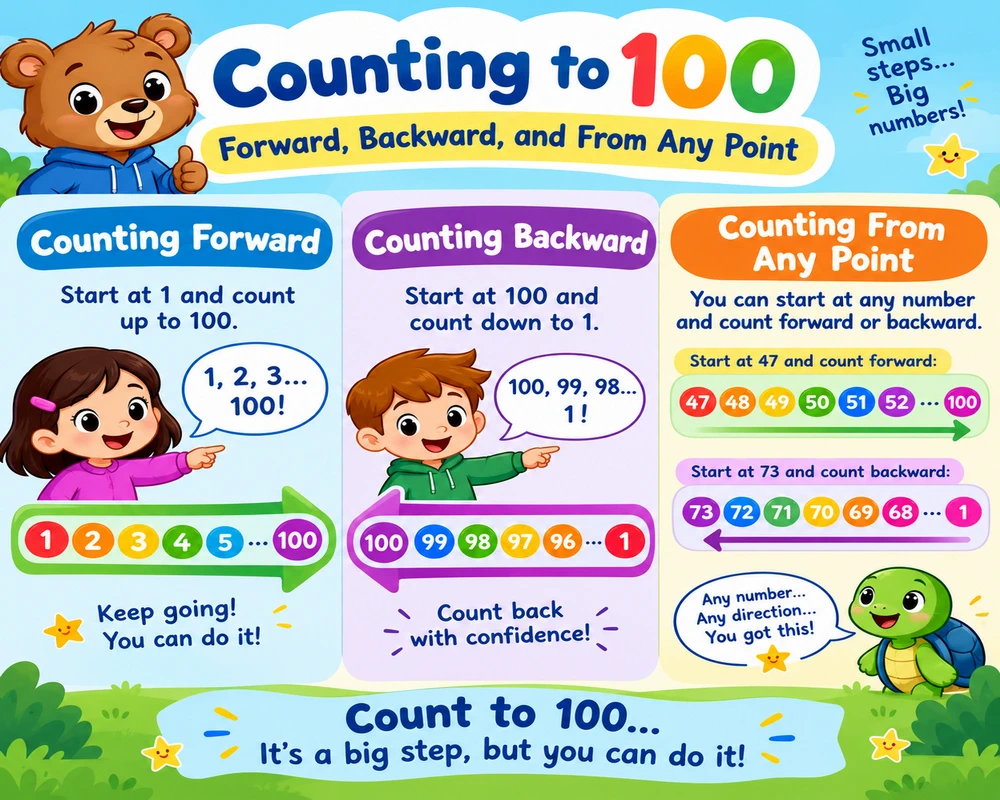
Counting to 100: Forward, Backward, and From Any Point
Counting Practice Questions
- Count forward starting at 47: 47, 48, ___, ___, ___
- Count backward starting at 62: 62, 61, ___, ___, ___
- Skip count by 5s starting at 20: 20, 25, ___, ___, ___
Answers: 1) 49, 50, 51 2) 60, 59, 58 3) 30, 35, 40
Comparing and Ordering Numbers
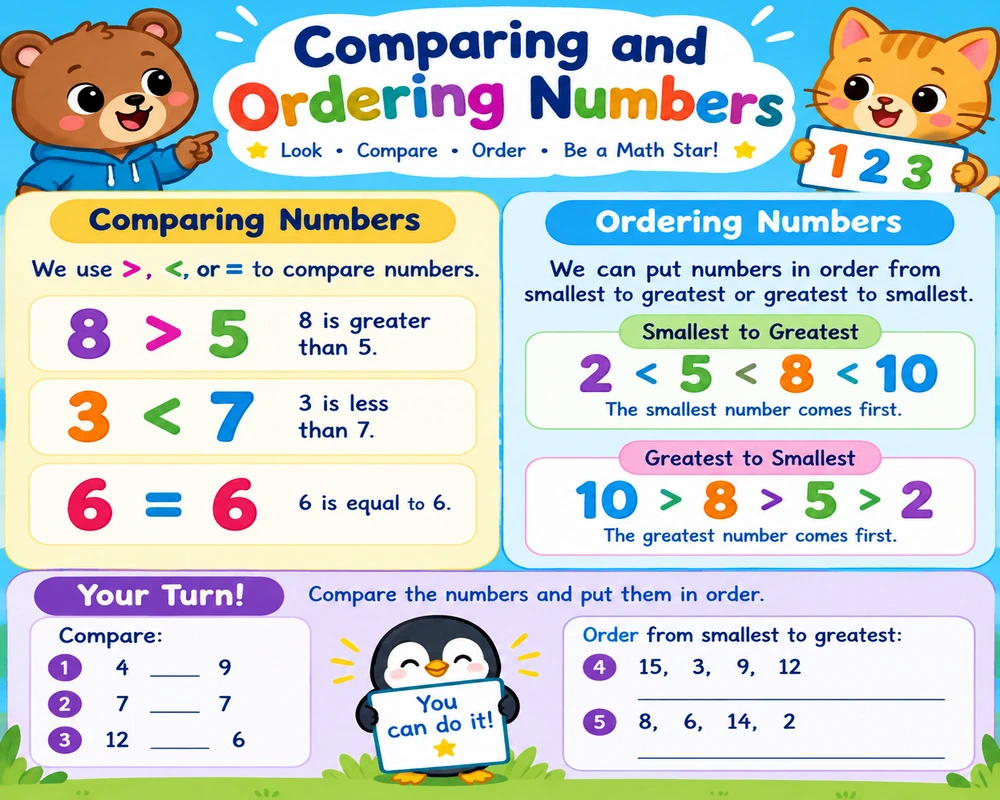
Why Digit Reversal Trips Kids Up
Numbers like 68 and 86 use the same two digits, and young students sometimes default to comparing digits left to right without fully understanding what each position means. This isn’t a sign of weak math ability — it’s a very normal place value gap that resolves quickly with the right kind of practice.
Comparing Practice Questions
- Which is greater: 68 or 86?
- Which is smaller: 45 or 54?
- Order these numbers from least to greatest: 71, 17, 91, 19
Answers: 1) 86 2) 45 3) 17, 19, 71, 91
7 Powerful Practice Sets for Grade 2 Number Sense
These Grade 2 number sense questions are organized to target each sub-skill separately, so you can focus practice exactly where your child needs it most.
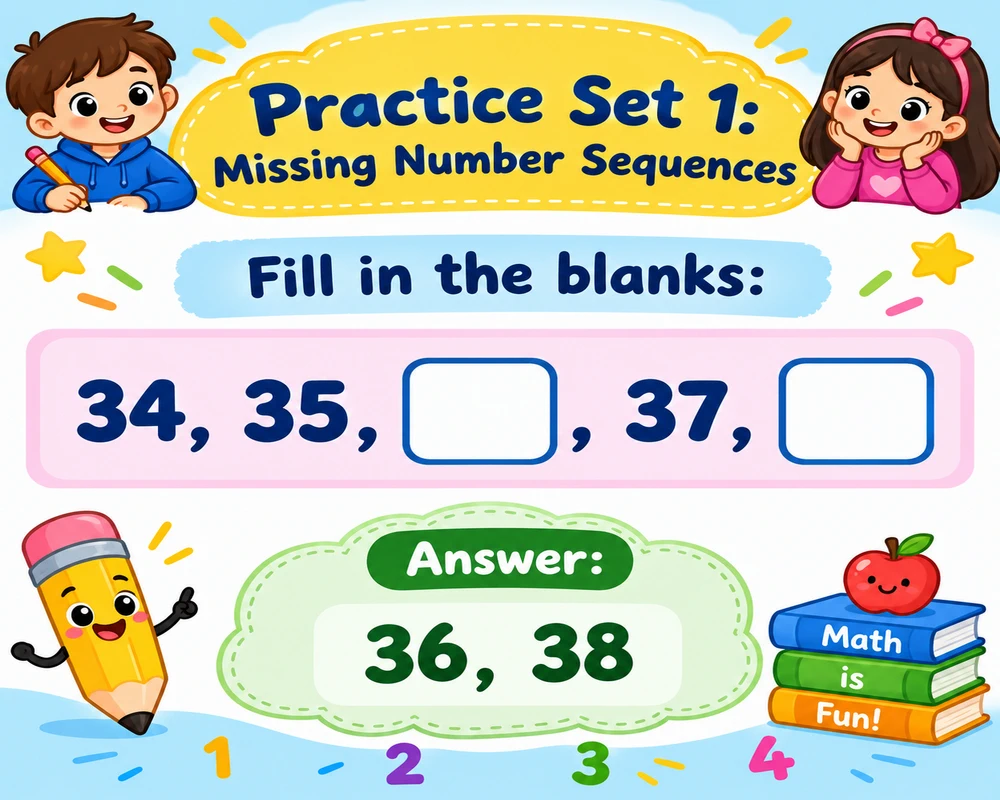
Practice Set 1: Missing Number Sequences
Fill in the blanks: 34, 35, ___, 37, ___
Answer: 36, 38
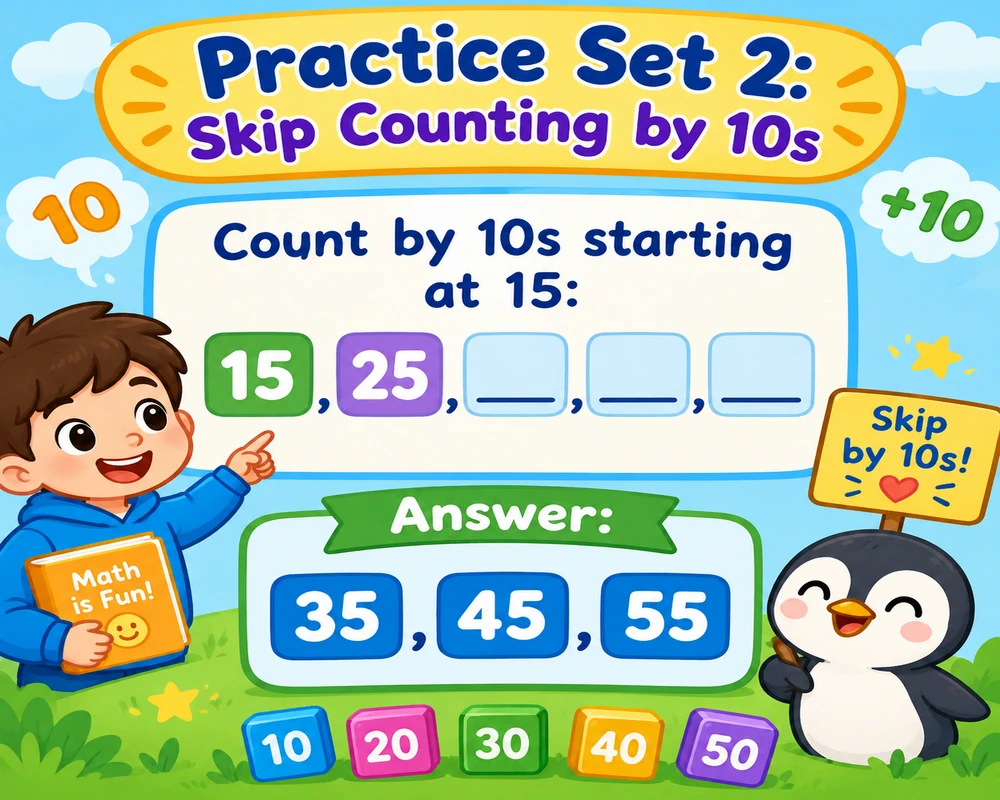
Practice Set 2: Skip Counting by 10s
Count by 10s starting at 15: 15, 25, ___, ___, ___
Answer: 35, 45, 55
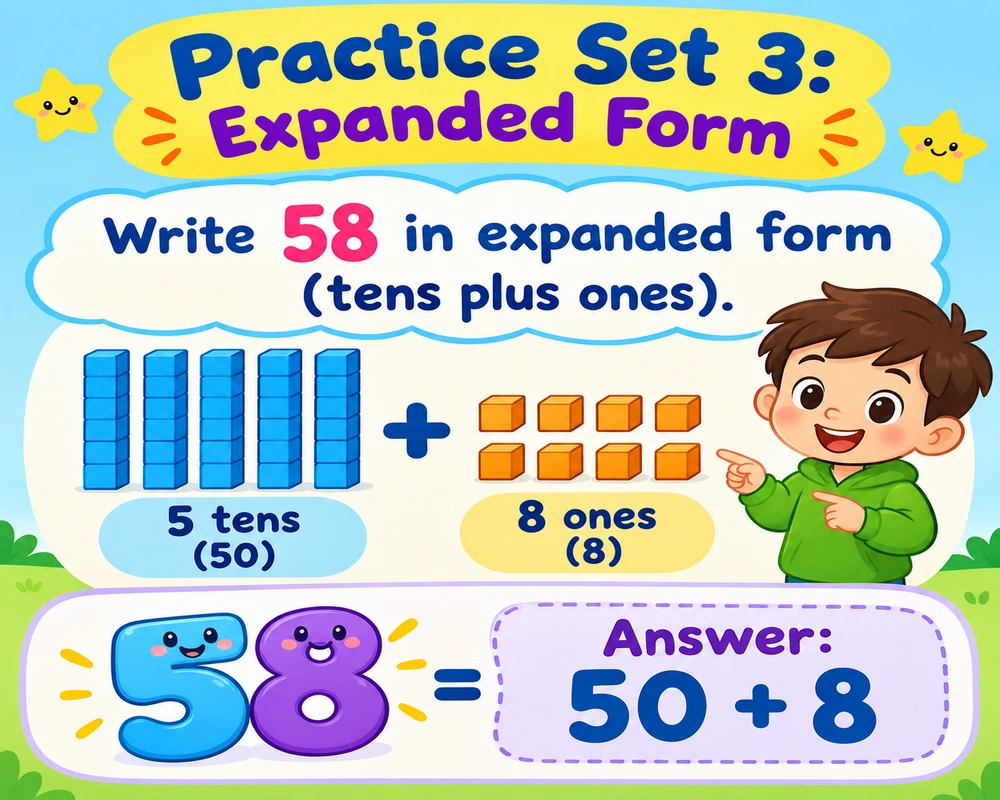
Practice Set 3: Expanded Form
Write 58 in expanded form (tens plus ones).
Answer: 50 + 8
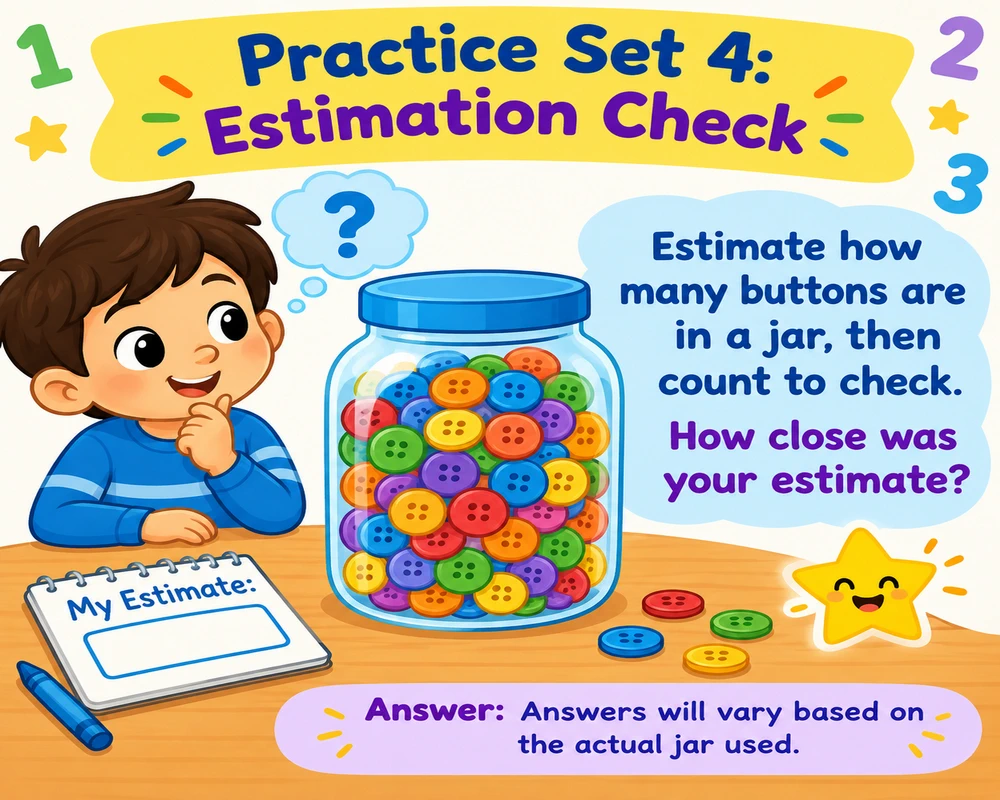
Practice Set 4: Estimation Check
Estimate how many buttons are in a jar, then count to check. How close was your estimate?
Answer: Answers will vary based on the actual jar used
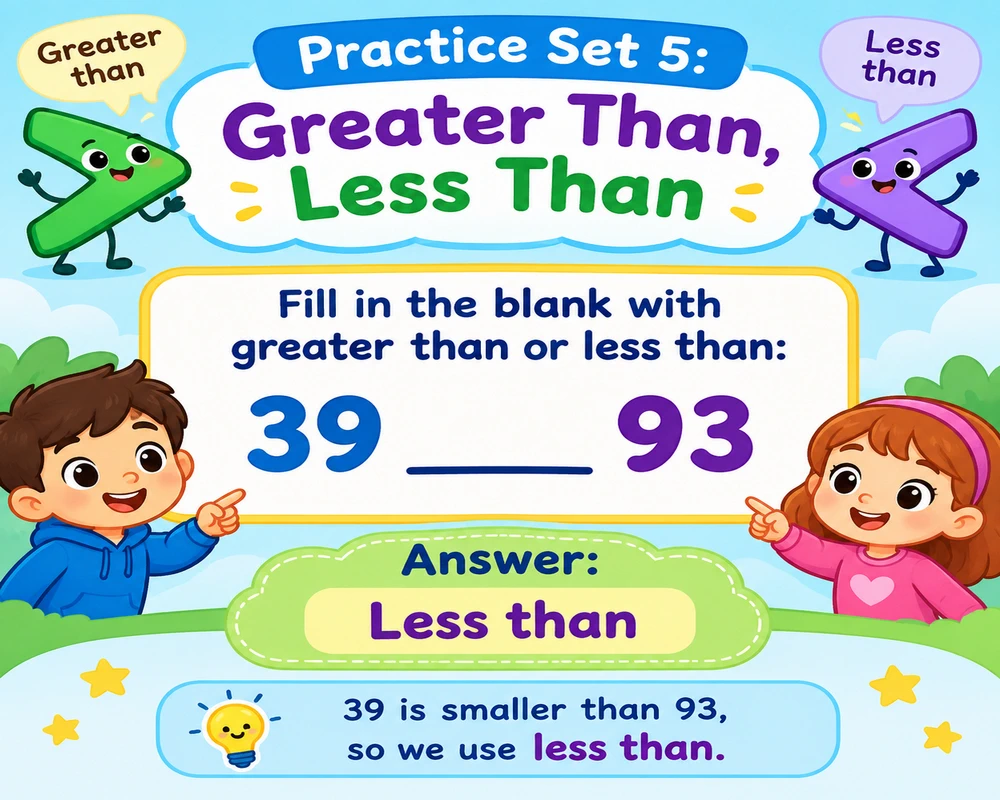
Practice Set 5: Greater Than, Less Than
Fill in the blank with greater than or less than: 39 ___ 93
Answer: Less than
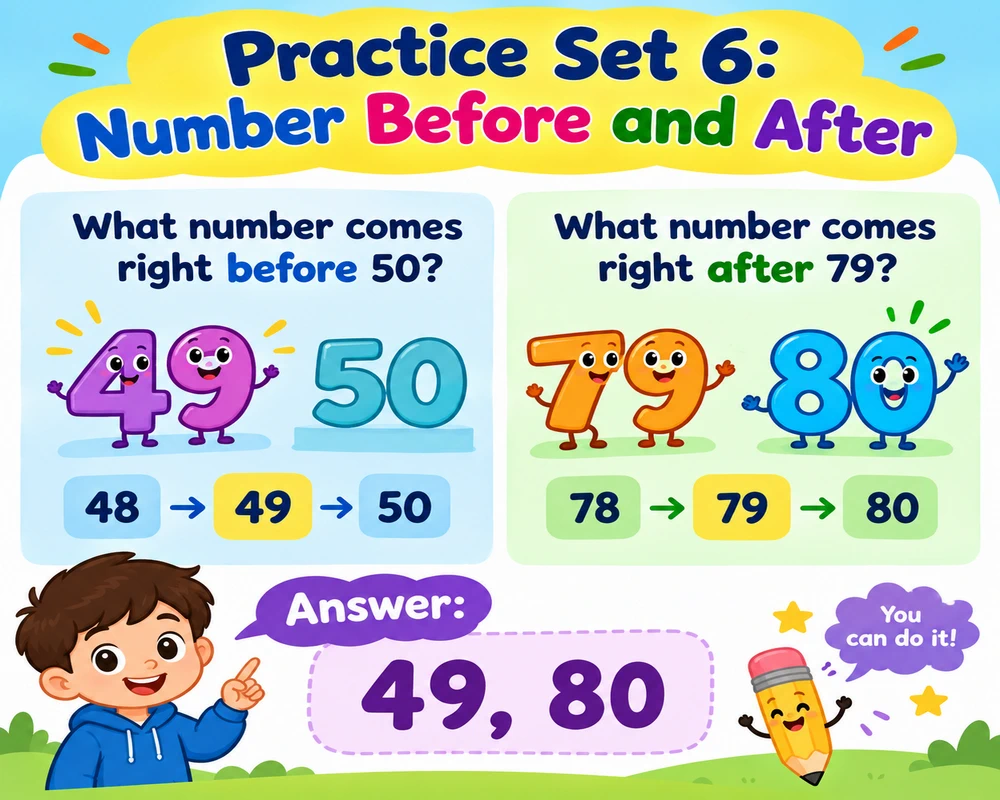
Practice Set 6: Number Before and After
What number comes right before 50? What number comes right after 79?
Answer: 49, 80
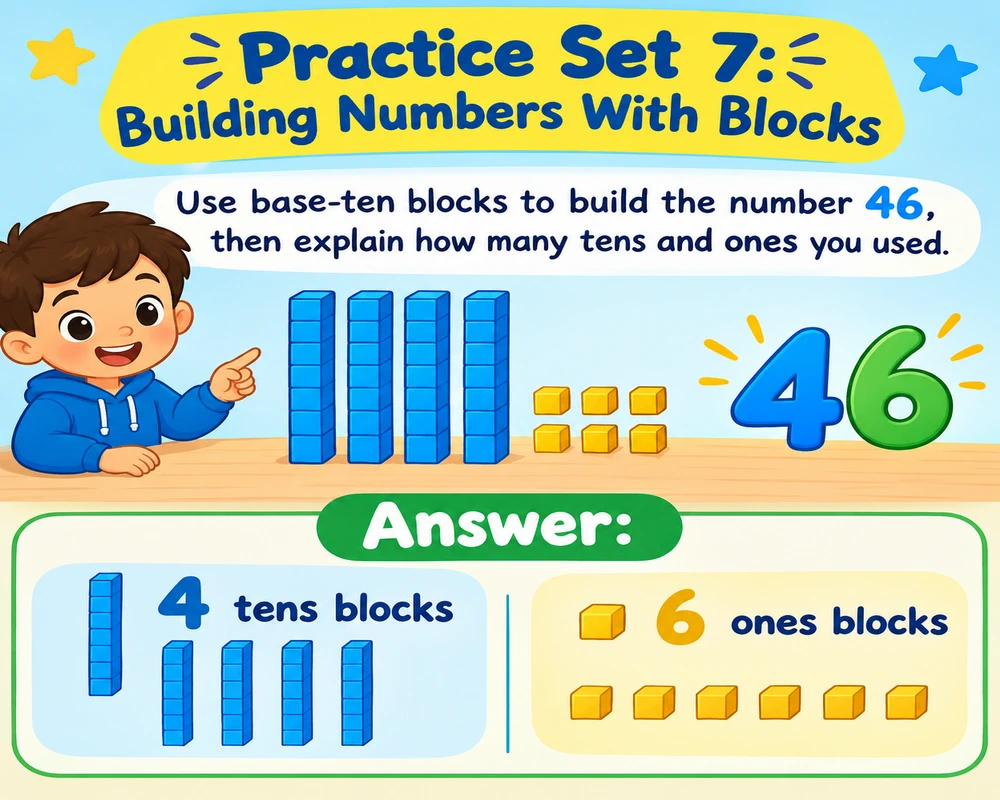
Practice Set 7: Building Numbers With Blocks
Use base-ten blocks to build the number 46, then explain how many tens and ones you used.
Answer: 4 tens blocks and 6 ones blocks
Common Mistakes in Grade 2 Number Sense
Comparing Digit by Digit Without Understanding Place Value
As mentioned above, this is the single most common error behind digit-reversal confusion. Returning to physical base-ten blocks resolves this faster than repeated verbal explanation.
Losing Track While Skip Counting
Skip counting by 5s or 10s asks a child to hold a pattern in mind rather than simply counting one by one. Practicing out loud, slowly, with a visual number line nearby helps prevent this.
Struggling With Numbers That Cross a Ten Boundary
Counting from 49 to 50, or from 29 to 30, trips up more students than counting within a single group of ten. Extra practice specifically at these boundary points pays off disproportionately.
Practical Tips for Practicing at Home
Use Real Objects for Place Value
Bundled straws, base-ten blocks, or even stacks of ten coins make the abstract idea of “tens and ones” something your child can physically see and touch.
Turn Counting Into a Game
Counting stairs, counting steps on a walk, or counting backward during a countdown game all reinforce Grade 2 number sense questions without ever feeling like schoolwork.
Keep Sessions Short and Frequent
Ten to fifteen minutes of focused practice, three or four times a week, tends to build stronger number sense than occasional long sessions.
Conclusion: Building Genuine Number Understanding
Working through these Grade 2 number sense questions consistently, even for just ten minutes a day, builds the place value foundation your child will lean on for years.
Grade 2 number sense questions ask for real understanding, not just the ability to recite numbers in order. Place value is the quiet foundation underneath nearly every other math topic your child will encounter this year and beyond, so it deserves real, hands-on attention now. With consistent practice using real objects, most students move past digit-reversal confusion within just a few weeks.
Grab some base-ten blocks or bundled straws tonight and build a few two-digit numbers together. A few minutes of hands-on practice like this build understanding no worksheet alone can match.
Frequently Asked Questions
1. What number range should a Grade 2 student be comfortable with?
Students should be able to count, read, write, and compare numbers up to 100 by the end of Grade 2.
2. Why does my child think 68 is bigger than 86?
This usually reflects a gap in place value understanding rather than weak math skills. Practicing with physical base-ten blocks tends to resolve it quickly.
3. What is skip counting, and why does Grade 2 focus on it?
Skip counting means counting by a fixed amount other than one, like 2s, 5s, or 10s. It builds number pattern recognition that supports multiplication in later grades.
4. How can I practice place value without special materials?
Bundled straws, stacked coins, or even grouped pasta pieces work just as well as store-bought base-ten blocks for building hands-on place value understanding.
5. Is it normal for my child to struggle counting across a ten boundary, like from 29 to 30?
Yes, this is a very common sticking point. Extra practice specifically at these transition points tends to resolve it faster than general counting practice alone.
6. How much number sense practice should we do at home each week?
About 10-15 minutes, three to four times a week, tends to work well, especially when mixed with real objects and games.
7. How does Grade 2 number sense connect to later grades?
It builds the place value foundation needed for three-digit numbers, regrouping in addition and subtraction, and eventually multiplication and division.
Number sense is just one part of a full Grade 2 year that also covers addition, subtraction, time, measurement, and money. For the complete picture, our Grade 2 math practice hub brings every topic together in one place.
Interactive place value tools make these concepts far easier to visualize than static worksheets alone. Mathies, Ontario’s free suite of digital math tools, includes virtual base-ten blocks and number lines that mirror exactly what many Grade 2 classrooms use for this unit.