
Summer Math Practice Ontario: 7 Ways to Beat the Slide
Two months without a single math problem can undo more progress than most parents expect, yet the idea of running a mini-school through July and August understandably makes everyone involved miserable. Summer math practice Ontario families actually stick with tends to look nothing like the school year version — shorter, looser, and built around things already happening during the break rather than a separate, dreaded block of time.
This guide walks through what summer learning loss actually looks like in math specifically, then covers seven realistic ways to build summer math practice Ontario kids won’t resist the moment it’s mentioned, without turning July and August into an extension of the school year.
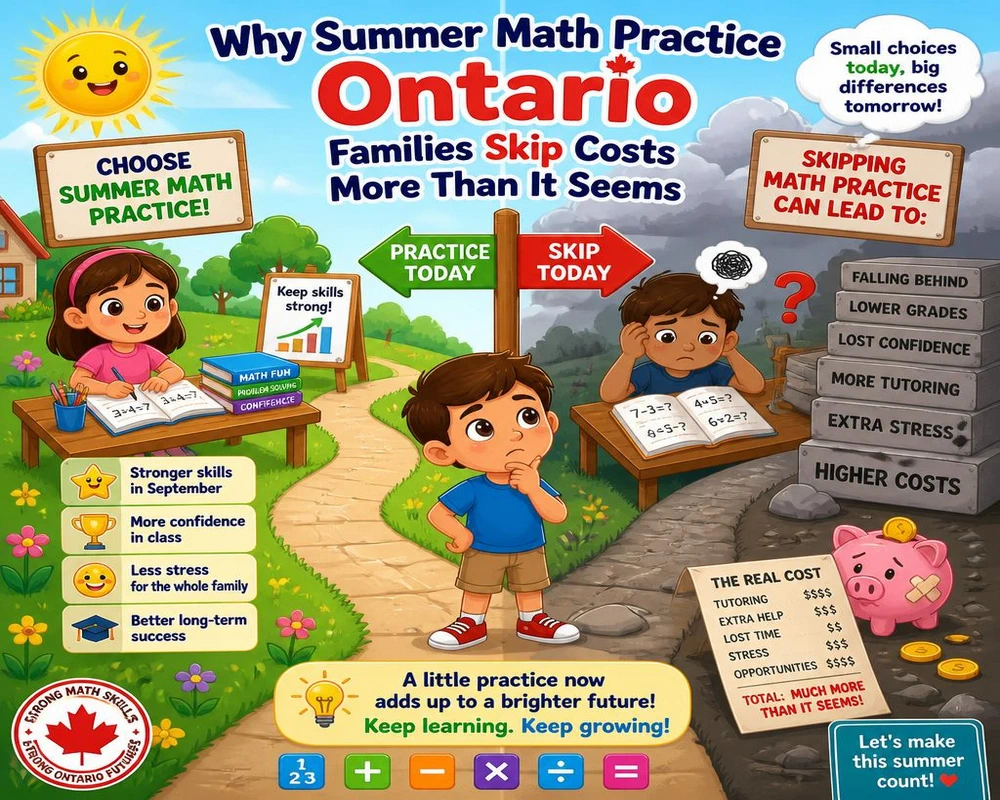
Why Summer Math Practice Ontario Families Skip Costs More Than It Seems
Research consistently shows math skills fade faster over a summer break than reading skills do, since math relies heavily on procedural fluency — the kind of automatic recall that genuinely needs regular use to stay sharp. A student who was comfortably solid on multiplication facts in June can find themselves noticeably slower in September without any summer math practice Ontario families work into the break at all.
This matters because the fix isn’t intensive daily drilling. It’s something far more sustainable: brief, occasional engagement spread across the summer, enough to keep numbers feeling familiar without turning vacation into extra school. Building genuine summer math practice Ontario families can actually sustain matters more than any single intensive session ever could.
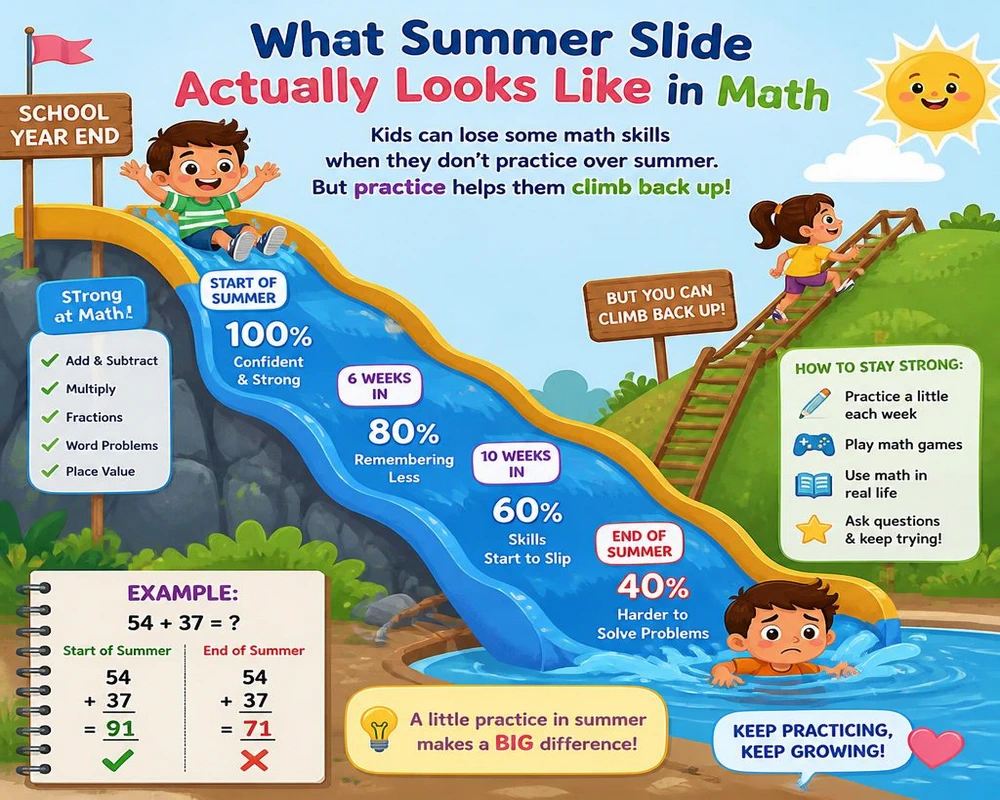
What Summer Slide Actually Looks Like in Math
Procedural Fluency Fades First
Multiplication facts, the steps of long division, fraction procedures — these skills rely on repetition to stay automatic, and they’re typically the first things to feel rusty after a break.
Conceptual Understanding Holds Up Better
A child who genuinely understood why long division works, rather than just memorizing steps, tends to reconstruct the procedure faster after a break than a child who only ever memorized the mechanics without the underlying reasoning.
Confidence Can Dip Even When Skill Doesn’t
Sometimes the real issue isn’t lost skill at all, but lost confidence — a child feels rusty and hesitant even when the underlying ability returns quickly with a little warm-up.
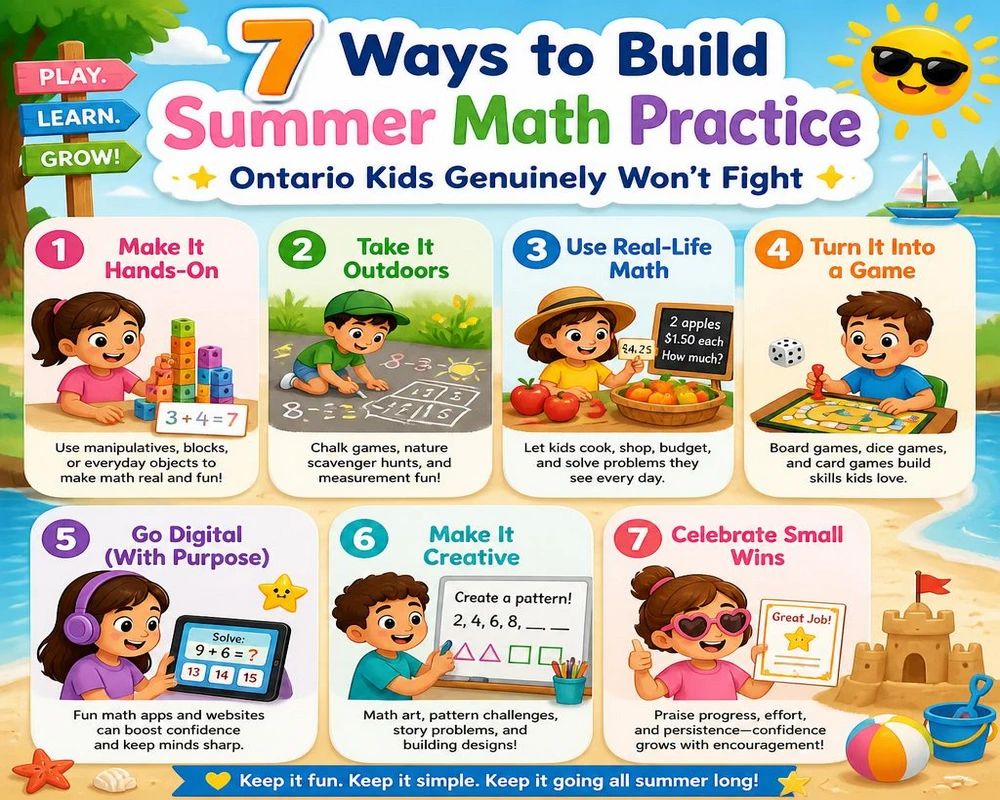
7 Ways to Build Summer Math Practice Ontario Kids Genuinely Won’t Fight
Way 1: Tie Practice to Something Already Happening
How It Works
Road trips, cottage weekends, and grocery runs all naturally involve numbers — distance, time, prices, quantities. Pointing these out casually turns an ordinary summer moment into genuine practice without ever announcing “math time.”
Why It Works for Summer Specifically
Summer is full of exactly these unstructured moments, making this the lowest-effort, highest-impact approach to summer math practice Ontario families can build into an already-busy season.
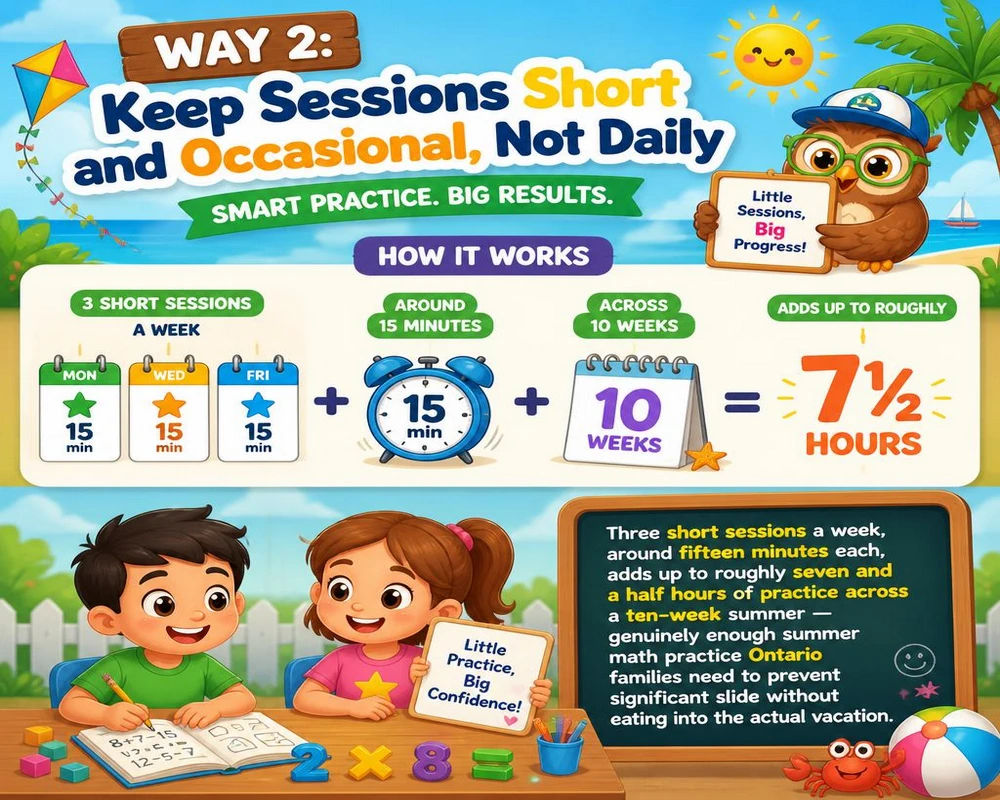
Way 2: Keep Sessions Short and Occasional, Not Daily
How It Works
Three short sessions a week, around fifteen minutes each, adds up to roughly seven and a half hours of practice across a ten-week summer — genuinely enough summer math practice Ontario families need to prevent significant slide without eating into the actual vacation.
Why It Works for Summer Specifically
Daily practice commitments tend to collapse the first time a busy week hits. A looser, more flexible rhythm survives actual summer chaos far better than a rigid daily schedule, which is exactly why the most sustainable summer math practice Ontario families manage tends to be the least structured on paper.
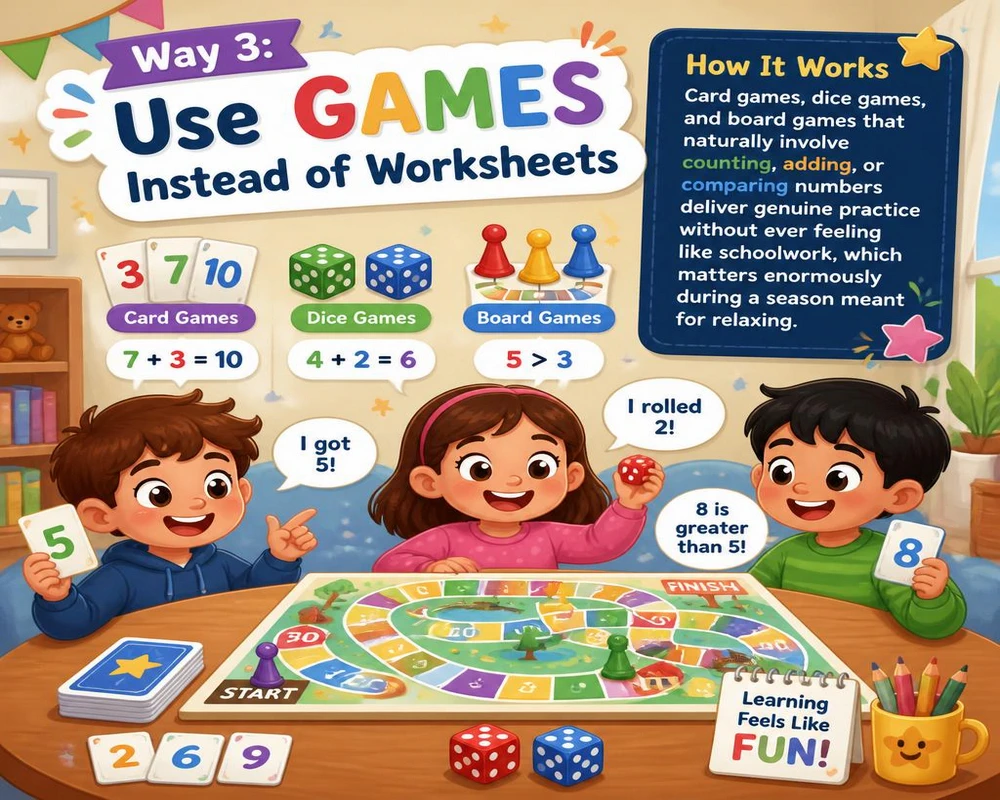
Way 3: Use Games Instead of Worksheets
How It Works
Card games, dice games, and board games that naturally involve counting, adding, or comparing numbers deliver genuine practice without ever feeling like schoolwork, which matters enormously during a season meant for relaxing.
Why It Works for Summer Specifically
Summer is when families have more unstructured time for games anyway, making this a natural fit rather than something competing with an already-packed school-year schedule.
Way 4: Target the Specific Gap From Last Year, Not Everything
How It Works
Rather than reviewing an entire year of material, focus summer math practice Ontario families do on whatever specific strand a report card or teacher comment flagged as needing continued support.
Why It Works for Summer Specifically
Limited summer time is better spent on a targeted, meaningful fix than spread thin across everything, most of which the child likely already has solid.
Way 5: Let a Rainy Day Become a Practice Day
How It Works
Rather than scheduling fixed practice days, use naturally slower, indoor days — a rainy afternoon, a lazy morning — as the built-in opportunity for a slightly longer session.
Why It Works for Summer Specifically
This removes the friction of protecting a fixed time slot against summer’s unpredictable schedule, letting practice happen when it fits naturally rather than fighting the calendar.
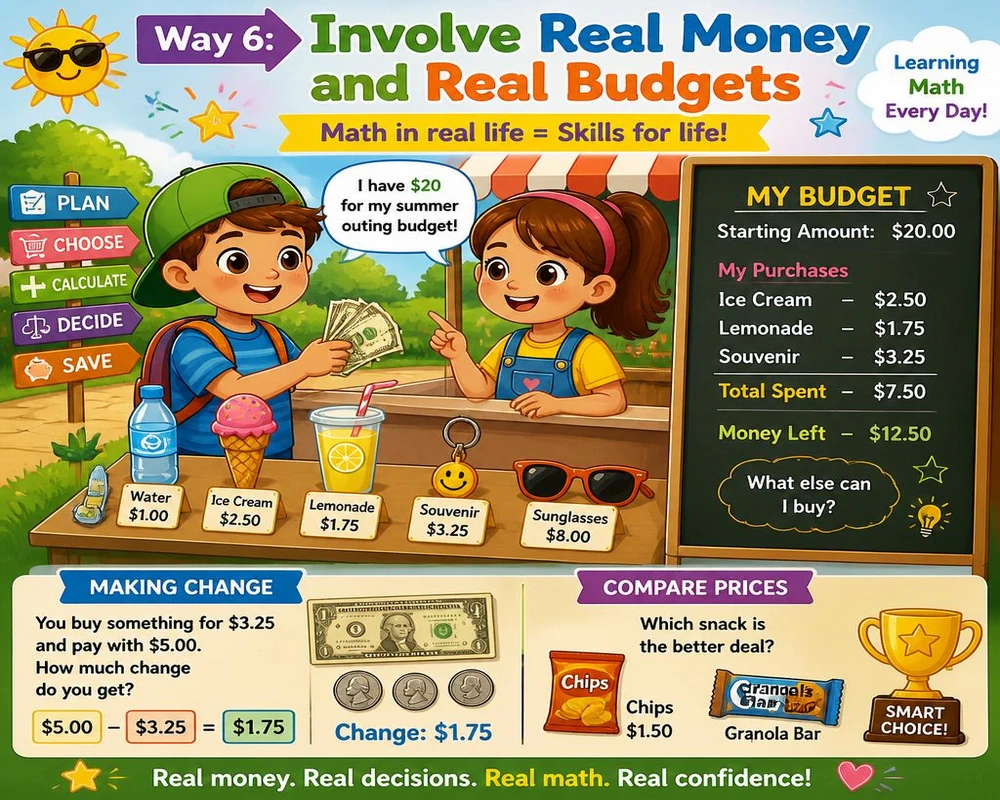
Way 6: Involve Real Money and Real Budgets
How It Works
Give a child a small allowance or spending budget for a summer outing, and let them handle the actual math of tracking it, making change, or comparing prices at a stand or shop.
Why It Works for Summer Specifically
Summer activities — a lemonade stand, a trip to the fair, an ice cream outing — naturally involve exactly this kind of real financial literacy practice, tying directly into Ontario’s curriculum without any extra setup.
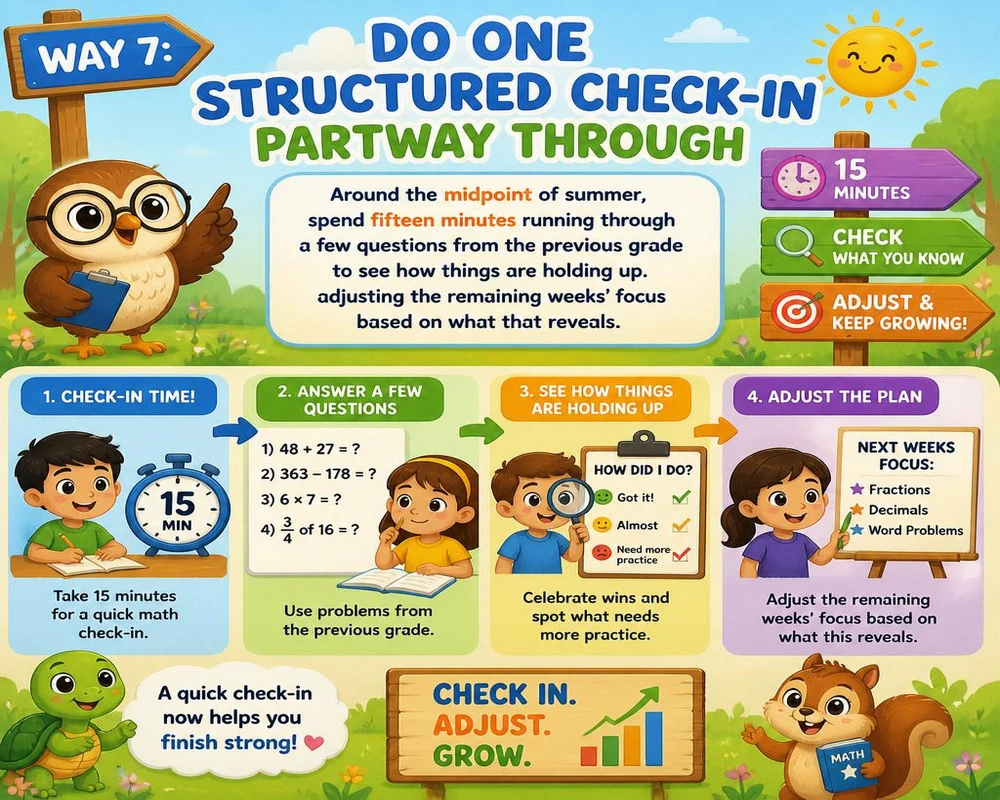
Way 7: Do One Structured Check-In Partway Through
How It Works
Around the midpoint of summer, spend fifteen minutes running through a few questions from the previous grade to see how things are holding up, adjusting the remaining weeks’ focus based on what that reveals.
Why It Works for Summer Specifically
This single check prevents an unpleasant surprise in September, catching any real slide with enough summer left to address it calmly rather than discovering it the first week of school.
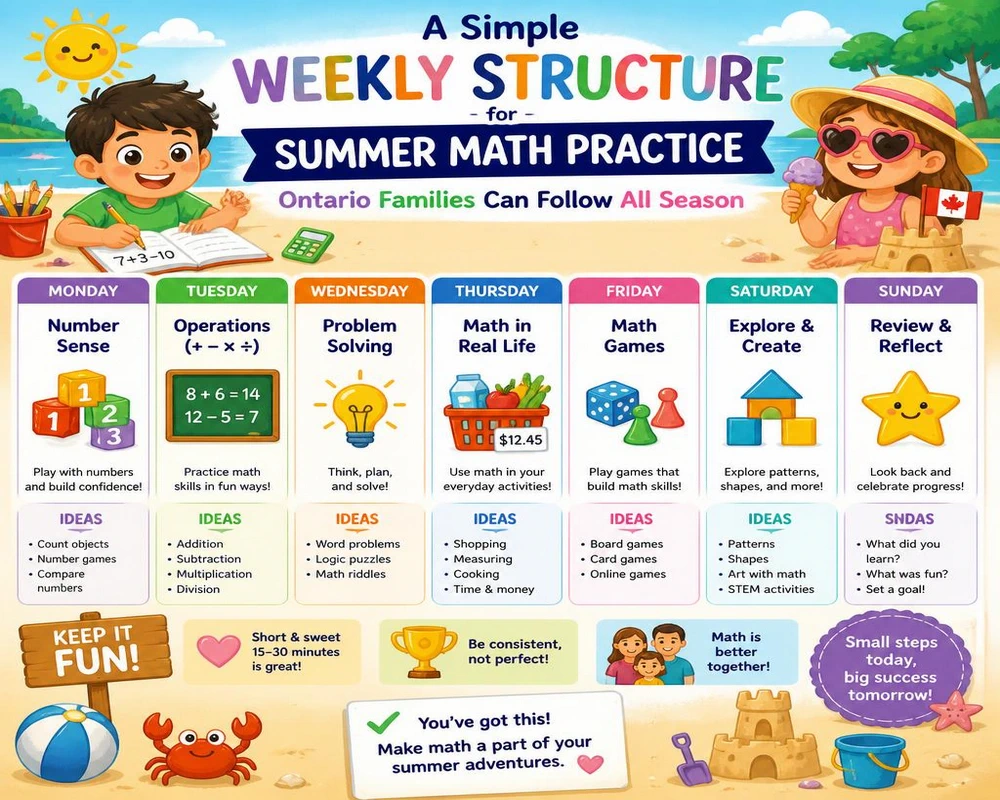
A Simple Weekly Structure for Summer Math Practice Ontario Families Can Follow All Season
| Day Type | Suggested Activity |
|---|---|
| A travel or errand day | Way 1: casual number-spotting during the activity already happening |
| A game night | Way 3: a card or dice game with built-in math |
| A rainy or slow day | Way 5: a slightly longer, relaxed practice session |
| An outing involving money | Way 6: real budgeting or price comparison |
| Midpoint of summer | Way 7: a single structured check-in |
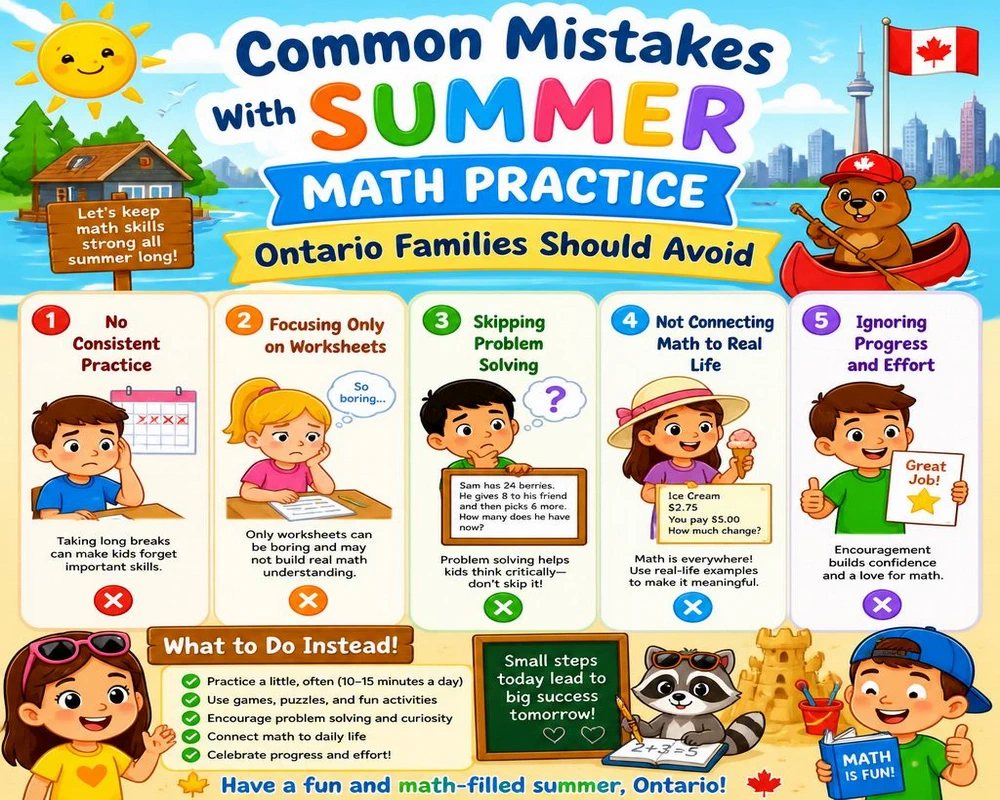
Common Mistakes With Summer Math Practice Ontario Families Should Avoid
Trying to Replicate the School Year
Summer math practice Ontario families build shouldn’t mirror a school-year workbook schedule. That approach tends to trigger resistance precisely because it feels like an extension of school during a season meant for a break.
Waiting Until the Last Two Weeks of August
Cramming a whole summer’s worth of review into the final stretch before school starts creates exactly the stressful, rushed experience this approach is meant to avoid. Spreading light practice across the full break works far better.
Ignoring Confidence, Not Just Skill
Even a quick refresh should include some acknowledgment that feeling rusty after a break is completely normal, rather than treating any hesitation as a sign something has gone wrong.
Frequently Asked Questions
1. How much summer math practice does a child actually need?
Roughly three short sessions a week, around fifteen minutes each, tends to be enough summer math practice Ontario families need to meaningfully reduce summer slide without turning the break into extra school.
2. Which math skills fade the fastest over summer?
Procedural fluency — multiplication facts, calculation steps, fraction procedures — tends to fade faster than genuine conceptual understanding, which usually holds up better across a break.
3. Should summer practice cover the whole previous year?
Targeting whatever specific strand a report card flagged as needing support is usually a better use of limited summer math practice Ontario time than trying to review everything equally.
4. What if my child refuses anything that looks like math over the summer?
Avoid naming it directly. Folding numbers into activities already happening — games, outings, errands — tends to bypass that resistance far more effectively than announcing a practice session.
5. Is it normal for a child to seem rusty in September even with some summer practice?
Yes, a brief adjustment period is normal even with consistent light practice, and it typically resolves within the first couple of weeks back at school.
6. When during summer should the midpoint check-in happen?
Roughly halfway through the break works well, leaving enough time afterward to address anything the check-in reveals without the pressure of September looming immediately.
7. Where can I find practice questions matched to my child’s grade for summer review?
Our Ontario math practice platform offers curriculum-aligned lessons by grade, useful for both light ongoing summer math practice Ontario families keep up and the midpoint check-in described above.
Explore grade-specific practice through our Grade 1 through Grade 6 math practice hubs, or see our Ontario math curriculum by grade guide to confirm exactly what your child covered this year and what’s coming next. Whatever combination of these seven ways you choose, consistent summer math practice Ontario families sustain across the whole break beats any single intensive session, no matter how well-intentioned.
For broader research on how learning loss develops over school breaks, the Ontario Association for Mathematics Education publishes resources on maintaining math skills outside the regular classroom.