
Homeschool Math Curriculum Ontario Elementary: 6 Best Steps
The single most surprising fact for families new to home education is this: a homeschool math curriculum Ontario elementary parents choose doesn’t legally need to resemble the provincial curriculum at all. Ontario gives homeschooling families genuine freedom here, more than many parents realize when they first start researching. That freedom is wonderful, but it can also feel overwhelming without a clear starting point.
This guide covers the actual legal requirements, then walks through six practical steps for building a homeschool math curriculum Ontario elementary students can genuinely thrive with, whether closely following the provincial sequence or taking a completely different approach. By the end, choosing the right homeschool math curriculum Ontario elementary approach for your specific family should feel far less intimidating.
This is general information, not legal advice. Requirements can change, so confirming current details with your school board is always worth doing before acting on anything here.
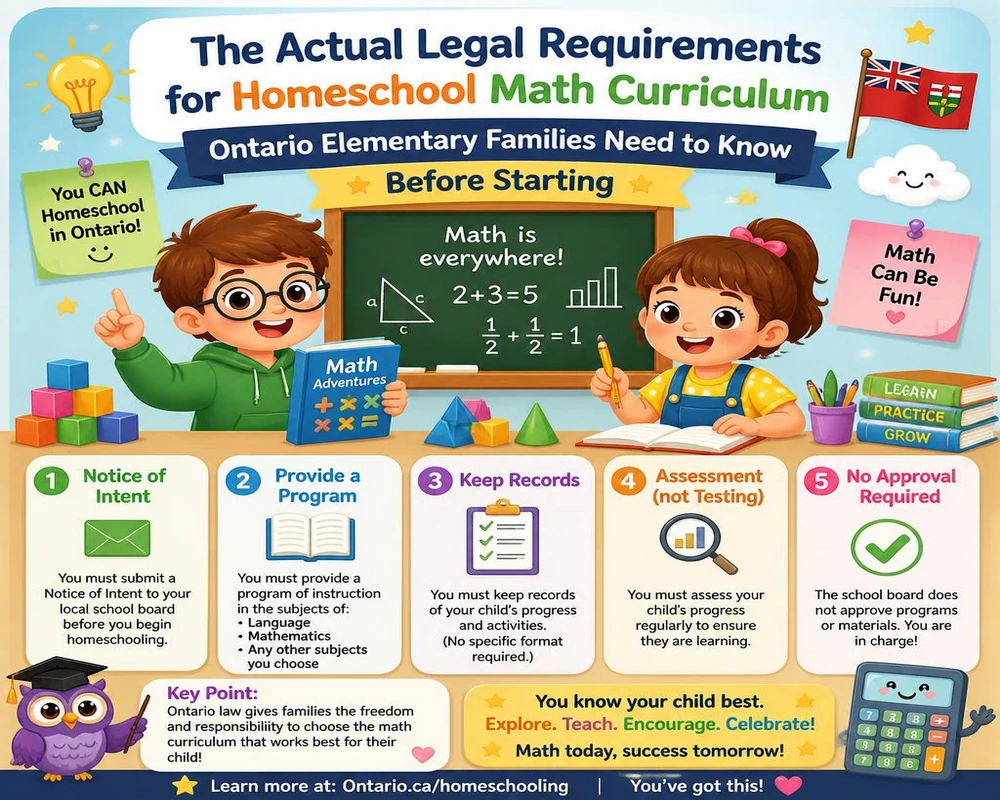
The Actual Legal Requirements for Homeschool Math Curriculum Ontario Elementary Families Need to Know Before Starting
Section 21 of the Education Act
Ontario’s Education Act excuses a child from compulsory school attendance when a parent provides “satisfactory instruction at home.” This single sentence is the entire legal foundation for homeschooling in the province.
The Notice of Intent
Rather than seeking permission, families send a written Notice of Intent to their local school board, informing them of the decision to homeschool. This is a notification, not an application — the board doesn’t approve or deny it. This single administrative step is often the only formal interaction a family has with the board while building their homeschool math curriculum Ontario elementary program independently.
No Mandatory Curriculum
This is the detail that surprises most new homeschooling families: Ontario does not require homeschooled students to follow the provincial curriculum at all. A homeschool math curriculum Ontario elementary family builds can be entirely different from what public schools teach, using any structured program, secular or religious materials, or an unschooling approach.
No Standardized Testing or Progress Reports
Ontario is considered a “no-report” jurisdiction for homeschooling. There’s no requirement for standardized testing, annual assessments, or submitted progress reports at any point during the elementary years, a level of flexibility many newcomer homeschool families find genuinely reassuring.
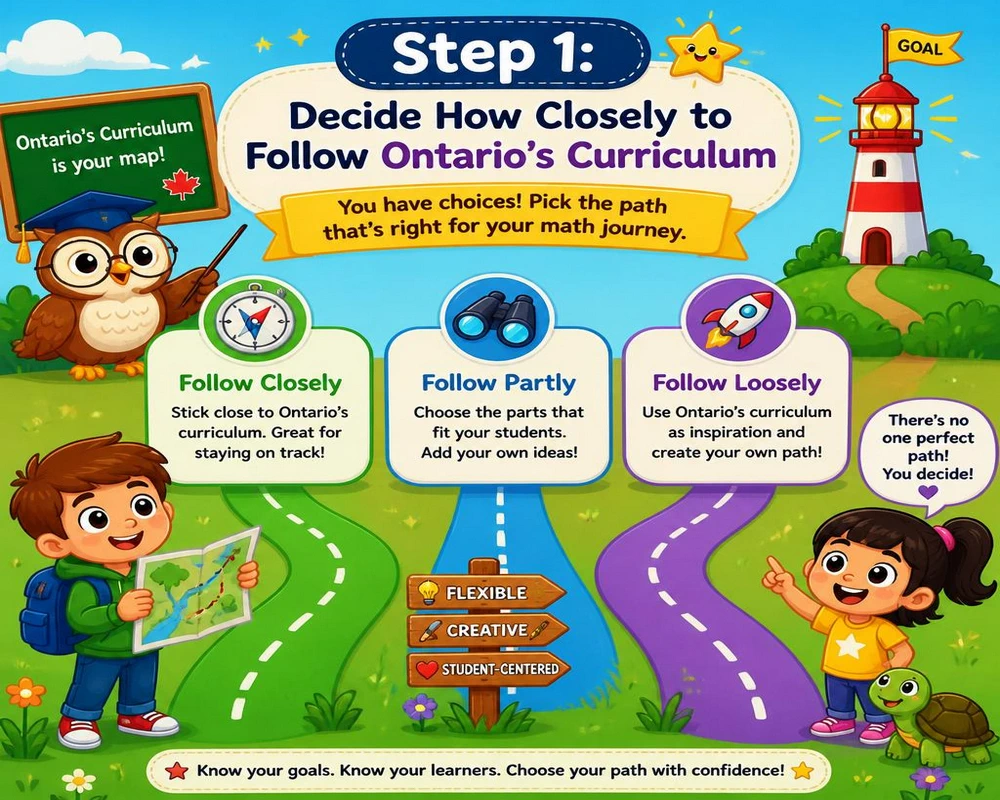
Step 1: Decide How Closely to Follow Ontario’s Curriculum
Since following the provincial curriculum is optional, this is genuinely the first real decision when planning a homeschool math curriculum Ontario elementary family will actually use day to day. Some families choose to mirror it closely, which keeps a smooth path back into public school if that ever becomes relevant. Others build something entirely their own, prioritizing pace and approach over matching any specific system.
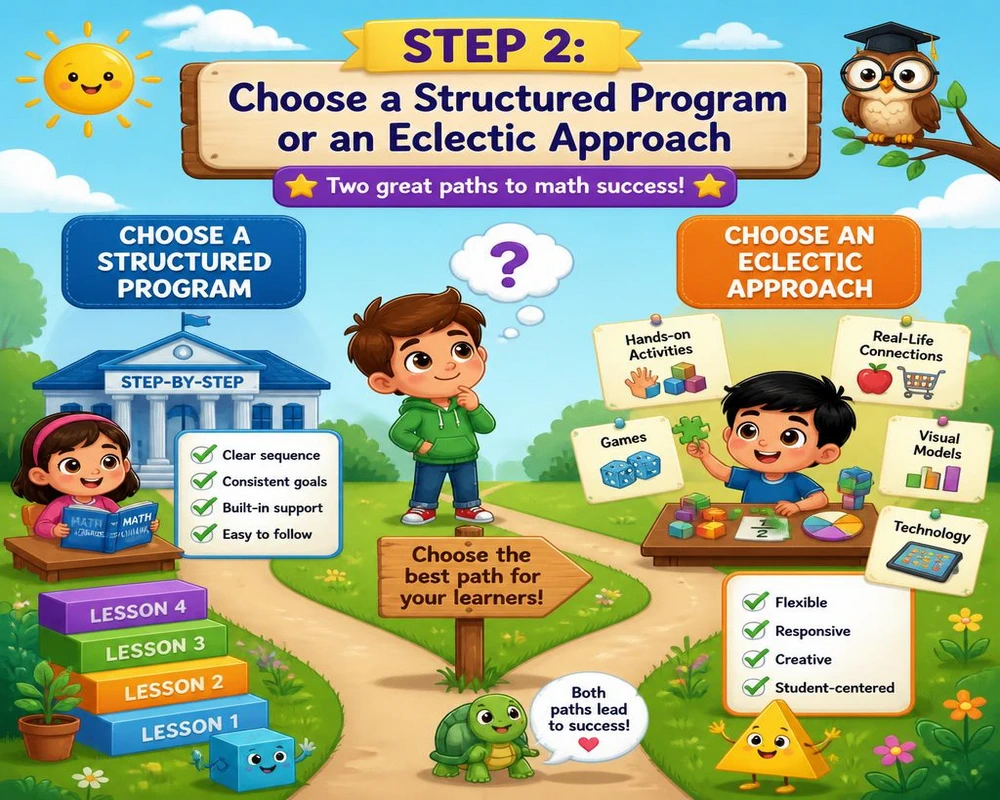
Step 2: Choose a Structured Program or an Eclectic Approach
A structured, sequential math program provides built-in scope and pacing, which some families find reassuring, especially early on. An eclectic approach, mixing resources from multiple sources based on what fits a specific child, offers more flexibility but requires more planning on the parent’s part. Neither approach is inherently better; the right choice usually depends on how much structure a specific parent and child both genuinely prefer.
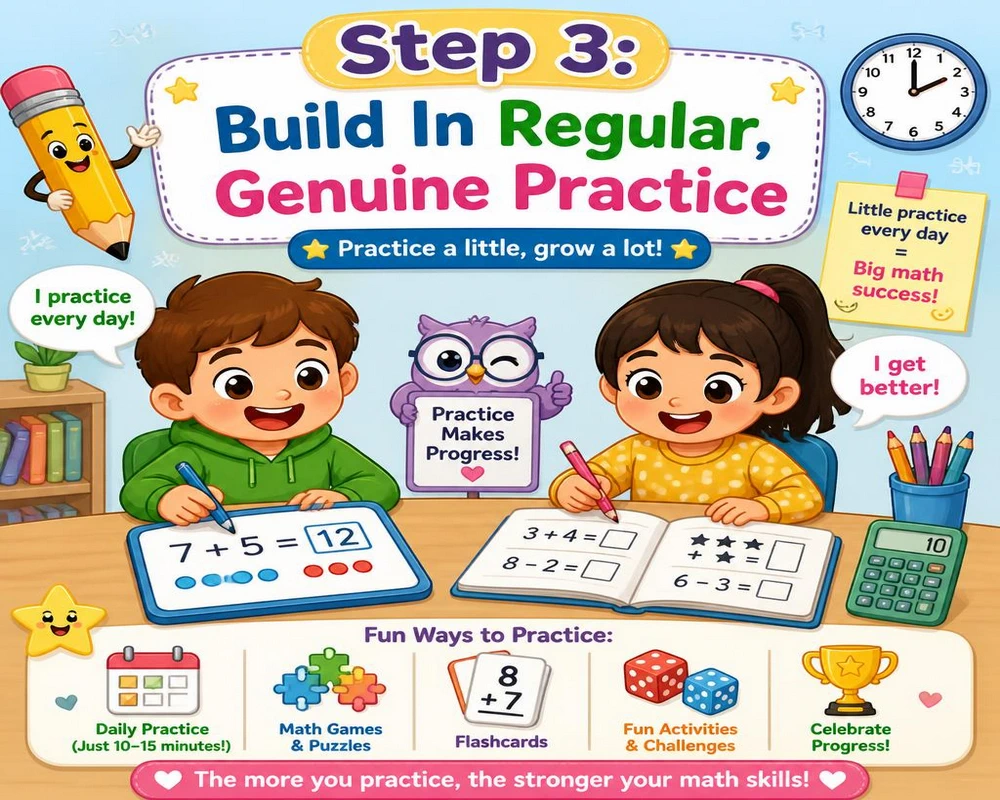
Step 3: Build In Regular, Genuine Practice
Regardless of which curriculum approach is chosen, consistent practice matters more than any single resource. Short, frequent sessions tend to build stronger retention than occasional long ones, a principle that holds true whether following Ontario’s sequence or an entirely different one.
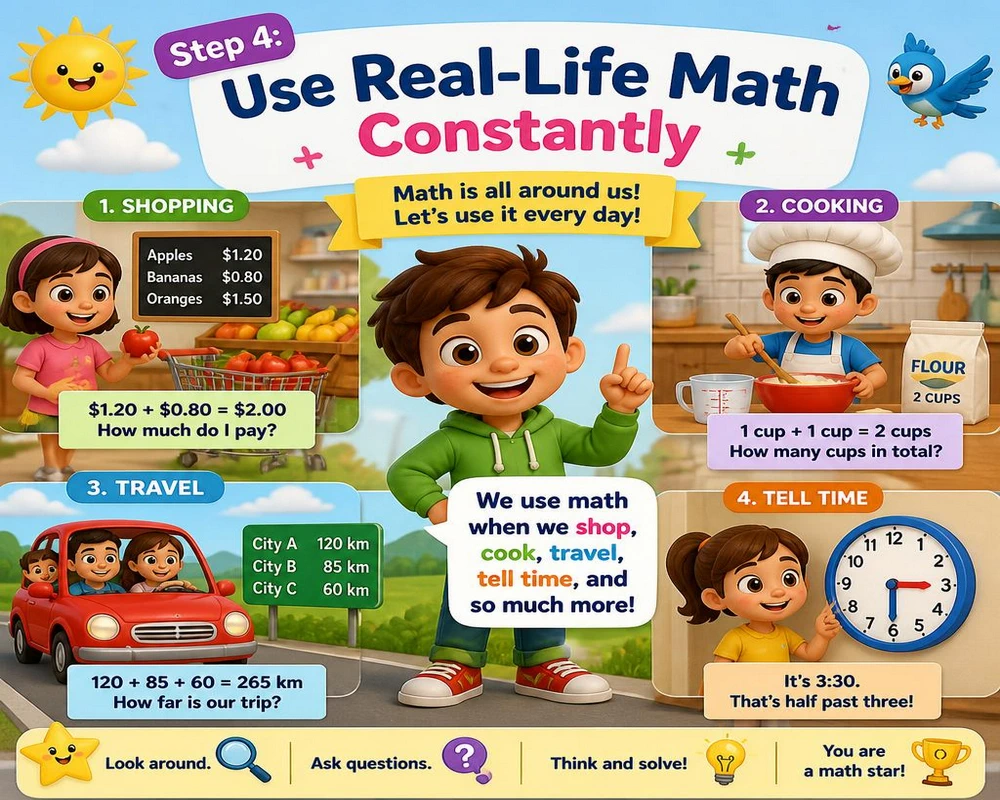
Step 4: Use Real-Life Math Constantly
Homeschooling offers a genuine advantage here: cooking, shopping, and household budgeting can become real math practice throughout an ordinary day, not confined to a single lesson block. This kind of applied practice reinforces concepts in a way a workbook alone often can’t, and it’s one of the more naturally enjoyable parts of building a homeschool math curriculum Ontario elementary family can sustain long-term without burnout.
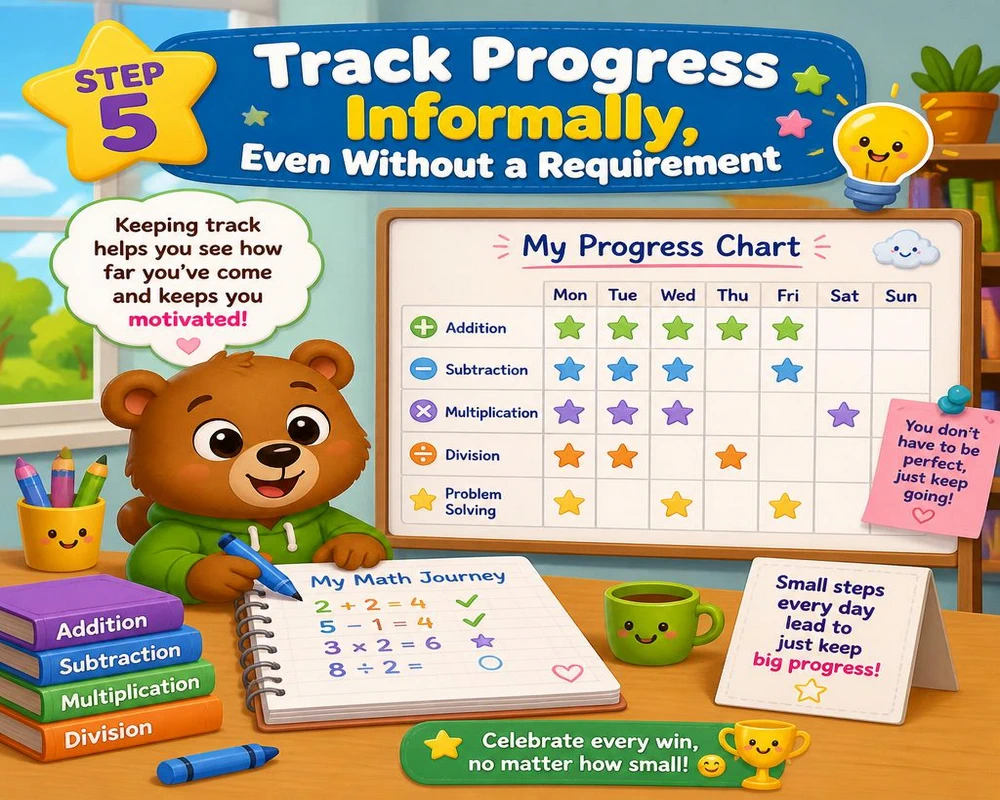
Step 5: Track Progress Informally, Even Without a Requirement
Since Ontario doesn’t require progress reports, it’s tempting to skip tracking entirely. A simple, informal record of topics covered and skills mastered still helps identify gaps early and provides useful continuity if a family’s approach or circumstances change, whether that means switching curricula, adding a new subject area, or eventually transitioning back into a traditional classroom setting.
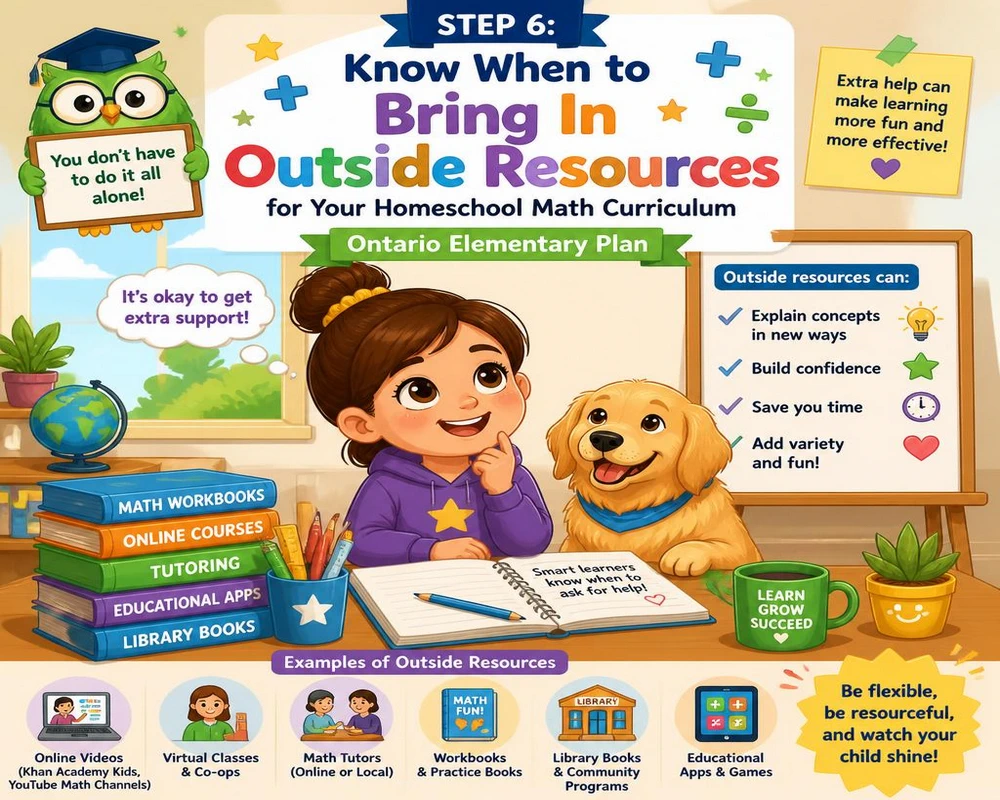
Step 6: Know When to Bring In Outside Resources for Your Homeschool Math Curriculum Ontario Elementary Plan
A homeschool math curriculum Ontario elementary family builds doesn’t need to be entirely self-created. Curriculum-aligned practice platforms, co-op classes, or occasional tutoring can supplement home instruction exactly where it’s most useful, without requiring a full curriculum overhaul.
Should You Follow Ontario’s Curriculum Sequence Anyway?
Even with full legal freedom, many families weighing a homeschool math curriculum Ontario elementary approach still find it useful to at least reference the provincial sequence, even if not following it exactly.
| Reason to Follow It Closely | Reason to Build Something Different |
|---|---|
| Keeps an easy path back to public school | Allows pacing matched exactly to your child’s readiness |
| Provides a ready-made, well-tested scope and sequence | Lets a family prioritize a different educational philosophy |
| Simplifies EQAO participation if a family opts in | Removes pressure to match an external timeline |
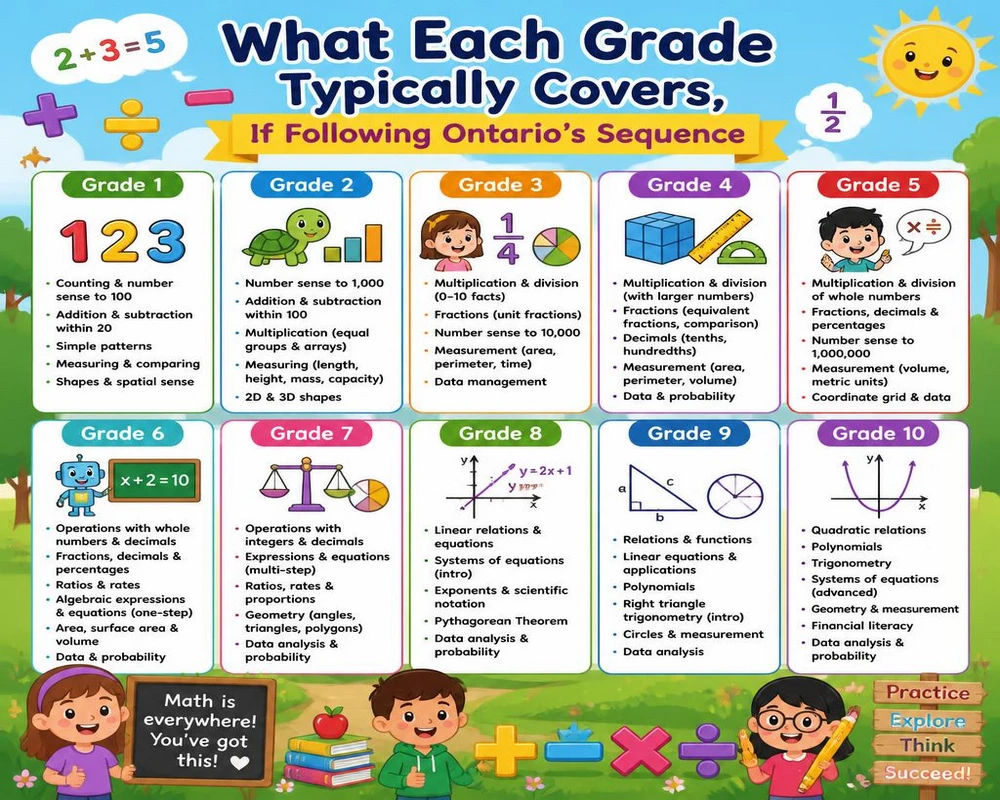
What Each Grade Typically Covers, If Following Ontario’s Sequence
For families choosing to mirror the provincial approach as at least a loose reference point, Ontario organizes elementary math into five strands across six grades. Grade 1 focuses on counting to 50 and basic shapes. Grade 2 builds toward two-digit operations and time. Grade 3 introduces formal multiplication and the first EQAO assessment. Grade 4 brings long division and more complex geometry. Grade 5 deepens fraction and decimal work considerably, and Grade 6 introduces integers, formal ratios, and a second EQAO assessment before the transition to Intermediate grades. Homeschooling families can use this sequence as a helpful checkpoint even without any obligation to follow it exactly.
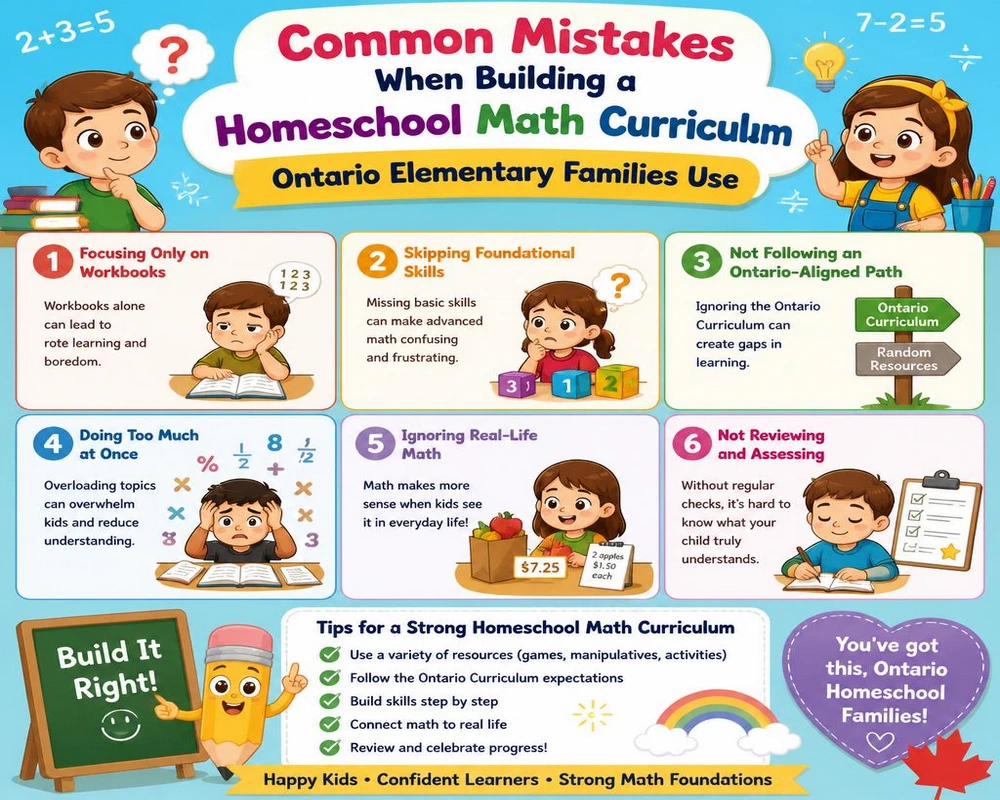
Common Mistakes When Building a Homeschool Math Curriculum Ontario Elementary Families Use
Assuming Ontario’s Curriculum Is Mandatory
Many new homeschooling families spend unnecessary time trying to match the provincial curriculum exactly, not realizing it’s entirely optional under Ontario’s framework.
Skipping Practice Consistency for Curriculum Perfection
Searching for the “perfect” curriculum before starting can delay actual practice indefinitely. A reasonable program used consistently outperforms an ideal program never quite settled on, a lesson that applies to nearly every homeschool math curriculum Ontario elementary family eventually learns firsthand.
Not Reassessing as a Child Grows
A curriculum approach that worked well in Grade 1 may need adjustment by Grade 4 or 5, as material becomes more abstract and a child’s learning style becomes clearer. What worked as a homeschool math curriculum Ontario elementary family used successfully in the early years doesn’t automatically remain the right fit forever.
Frequently Asked Questions
1. Do I legally have to follow the Ontario math curriculum if I homeschool?
No, Ontario does not require homeschooling families building a homeschool math curriculum Ontario elementary program to follow the provincial curriculum, giving genuine freedom to choose any structured program or approach.
2. What is a Notice of Intent, and is it mandatory?
It’s a written notification sent to the local school board informing them of the decision to homeschool. It’s the primary formal step in the process, though families should confirm current board-specific procedures directly.
3. Are homeschooled students in Ontario required to take standardized tests?
No, Ontario doesn’t require standardized testing, annual assessments, or progress reports for homeschooled students at the elementary level.
4. Can I mix Ontario’s curriculum with other resources?
Yes, many families use Ontario’s curriculum as a general reference while supplementing or substituting specific resources based on what works for their child.
5. How much math practice time is reasonable for a homeschooled elementary student?
This varies by family and child, but consistent, focused sessions several times a week tend to work better than infrequent long sessions, regardless of the specific curriculum chosen.
6. What if I want to transition my homeschooled child back into public school?
Following Ontario’s general sequence more closely can ease that transition, though schools typically assess an incoming student’s actual skill level directly rather than assuming based on homeschool records alone.
7. Where can I find curriculum-aligned practice to supplement homeschooling?
Our Ontario math practice platform offers lessons mapped to Ontario’s curriculum by grade, useful for families following the provincial sequence or simply wanting a curriculum-aligned reference point.
Explore what each grade covers through our Grade 1, Grade 2, Grade 3, Grade 4, Grade 5, and Grade 6 math practice hubs, or see our full Ontario math curriculum by grade guide, a useful reference regardless of which homeschool math curriculum Ontario elementary approach your family ultimately chooses.
For the official policy governing homeschooling in Ontario, including current Notice of Intent procedures, the Ontario Education Act and associated Ministry policy documents provide the authoritative legal framework.