
Girls Math Confidence Ontario: 5 Things Research Shows
Girls math confidence Ontario families notice often follows a strange pattern: a daughter earning the same grades as her male classmates, yet consistently rating herself as less capable at math when asked directly. This isn’t a small or isolated observation. Peer-reviewed research has documented this exact pattern repeatedly — girls and boys performing similarly on actual math tests, while girls report meaningfully lower confidence in their own ability.
This guide covers five things solid research actually shows about girls math confidence Ontario families should understand, framed for context here, along with what genuinely seems to help close the gap.
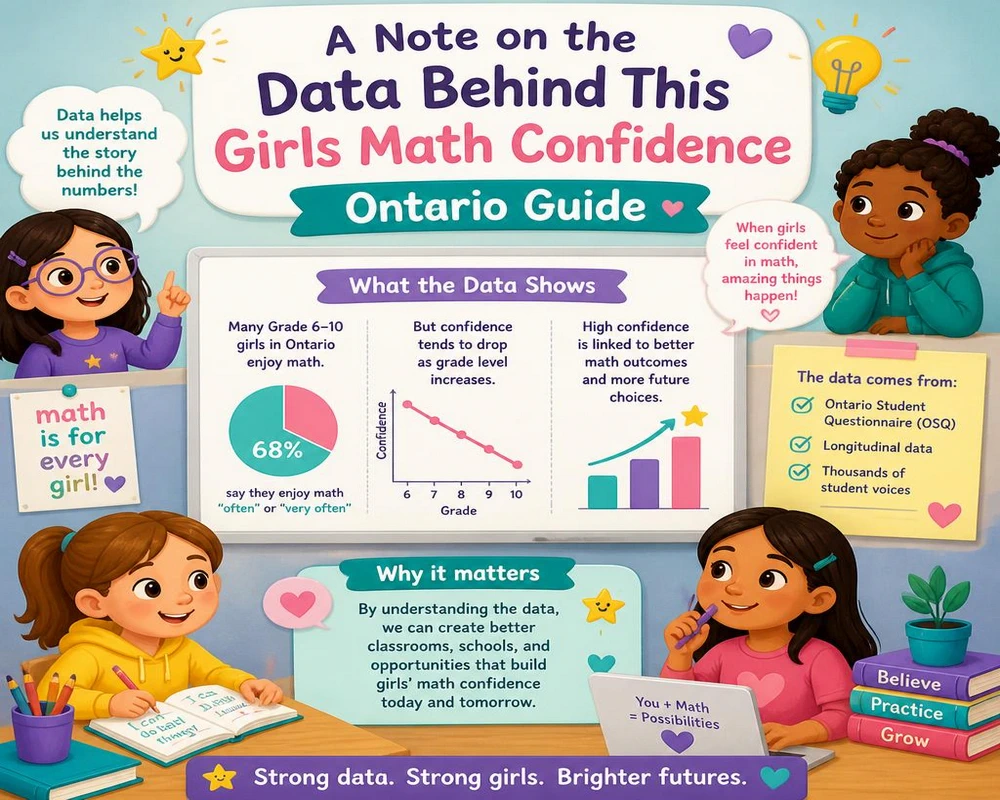
A Note on the Data Behind This Girls Math Confidence Ontario Guide
EQAO’s own public questionnaires ask Ontario students whether they like math and whether they see themselves as good at it, but the province doesn’t publish those specific results broken down by gender. The research cited throughout this guide comes from peer-reviewed academic studies conducted internationally, not from Ontario-specific EQAO data, since no public gender breakdown for Ontario currently exists. The underlying pattern, however, has been documented consistently enough across many countries and age groups that it’s genuinely relevant to Ontario families.
Thing 1: The Confidence Gap Exists Even When Grades Don’t Differ
A 2020 peer-reviewed study published in Frontiers in Psychology examined over 1,000 ninth-grade students and found that despite earning similar math grades, girls reported meaningfully lower math self-efficacy and self-esteem than boys. This wasn’t explained by actual performance — the grades were comparable, but the self-assessment wasn’t. This finding sits at the core of why girls math confidence Ontario parents and teachers observe deserves attention separate from actual achievement data.
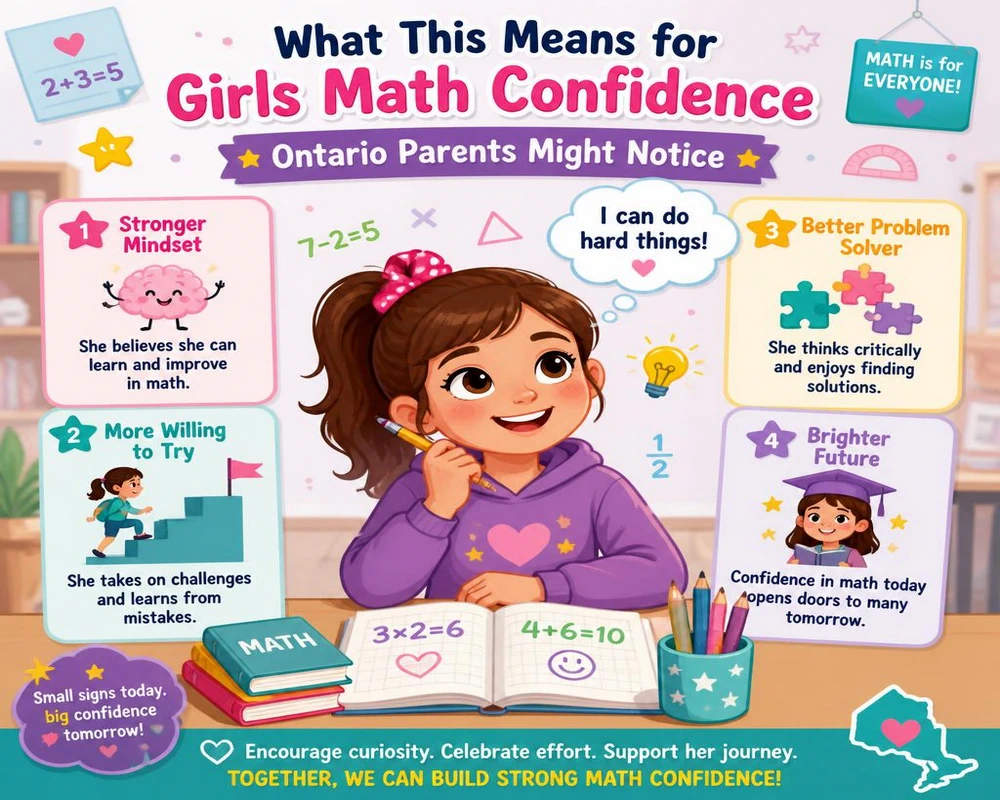
What This Means for Girls Math Confidence Ontario Parents Might Notice
A daughter who says “I’m just not good at math” while consistently earning solid grades isn’t necessarily describing her real ability accurately. This gap between actual performance and self-perceived ability is exactly the pattern researchers have documented.
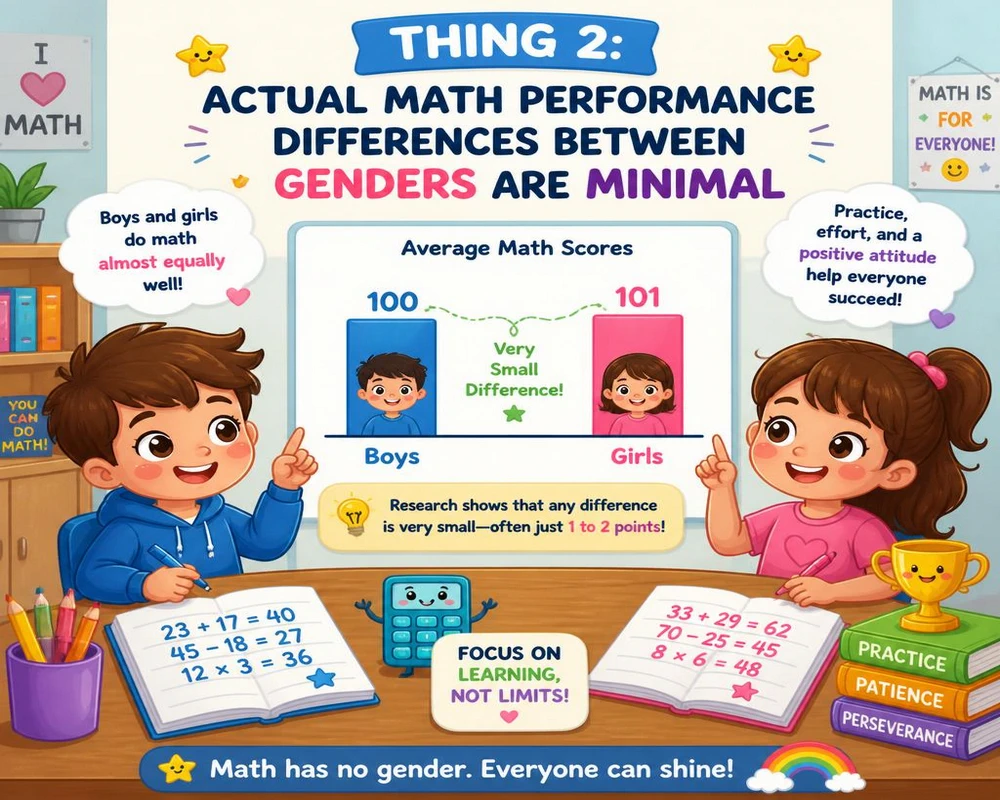
Thing 2: Actual Math Performance Differences Between Genders Are Minimal
A large-scale analysis of over 7 million students, examining SAT results and standardized state math scores, found virtually no meaningful difference in average math performance between boys and girls. Whether looking at average scores, top-performing students, or complex problem-solving, the researchers found scores were essentially comparable, a finding that directly undercuts the assumption sometimes fueling low girls math confidence Ontario educators and parents notice.
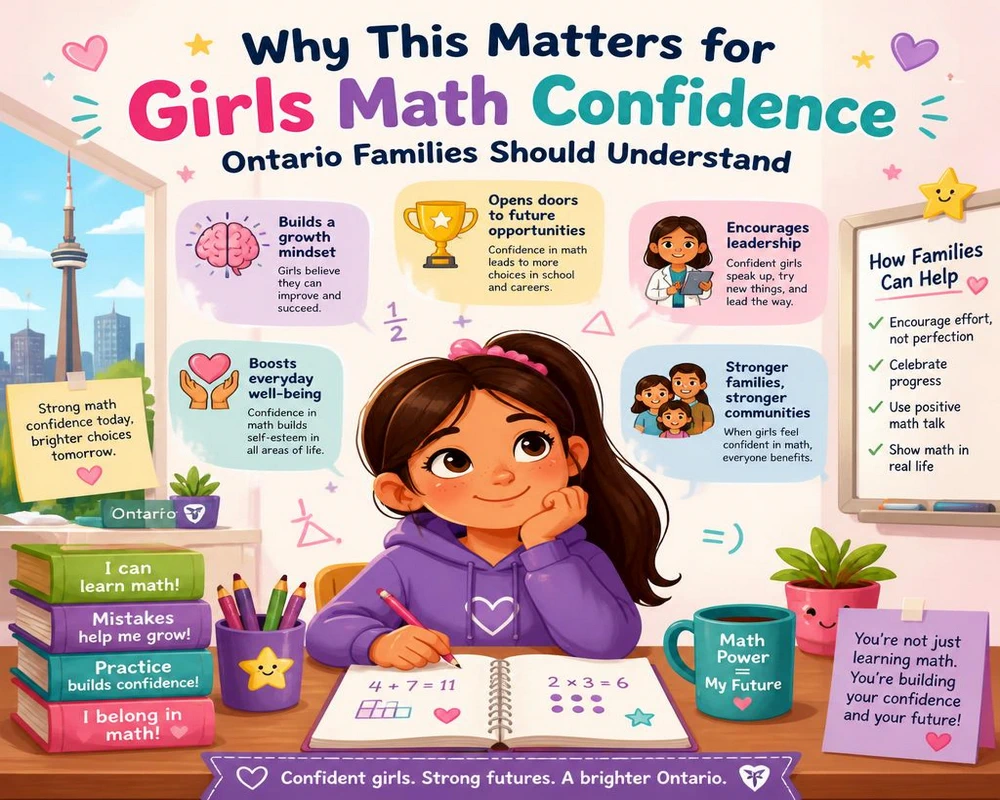
Why This Matters for Girls Math Confidence Ontario Families Should Understand
Since actual ability isn’t meaningfully different, a confidence gap that exists anyway points toward something other than genuine skill differences — likely a mix of stereotype exposure, self-assessment bias, and social expectation, not an accurate read on capability.
Thing 3: Boys Tend Toward Overconfidence, Not Just Girls Toward Underconfidence
Research comparing self-assessed ability to actual test performance has found that boys, conditional on identical performance, consistently rate their own ability higher than girls do — and this overconfidence gap is largest among the most mathematically gifted students specifically.
Reframing Girls Math Confidence Ontario Discussions
This research reframes the issue in a useful way: it’s not only that girls underestimate their ability, but that boys tend to overestimate theirs at the same performance level, meaning the “gap” reflects two different biases meeting in the middle, not a single one-directional problem.
Thing 4: Stereotype Exposure in the Classroom Environment Has a Measurable Effect
A study of middle school classrooms found that in classrooms where more students believed boys were innately better at math, girls’ actual test performance later declined relative to boys, even though this belief had no basis in genuine ability differences. The effect varied significantly between classrooms with different levels of stereotype belief, some with as few as 19% of students holding the belief and others with as many as 93%.
What This Suggests for Girls Math Confidence Ontario Classrooms
Classroom-level beliefs and casual comments about who’s “naturally” good at math appear to have real, measurable downstream effects on performance, not just confidence, suggesting the environment itself plays a genuine role beyond any individual student’s mindset.
Thing 5: Test Format Itself May Influence the Apparent Gap
Research comparing roughly 500,000 test results found that the gender gap in math scores widened specifically as the proportion of multiple-choice questions increased on an exam, with the same students performing more comparably on open-ended question formats.
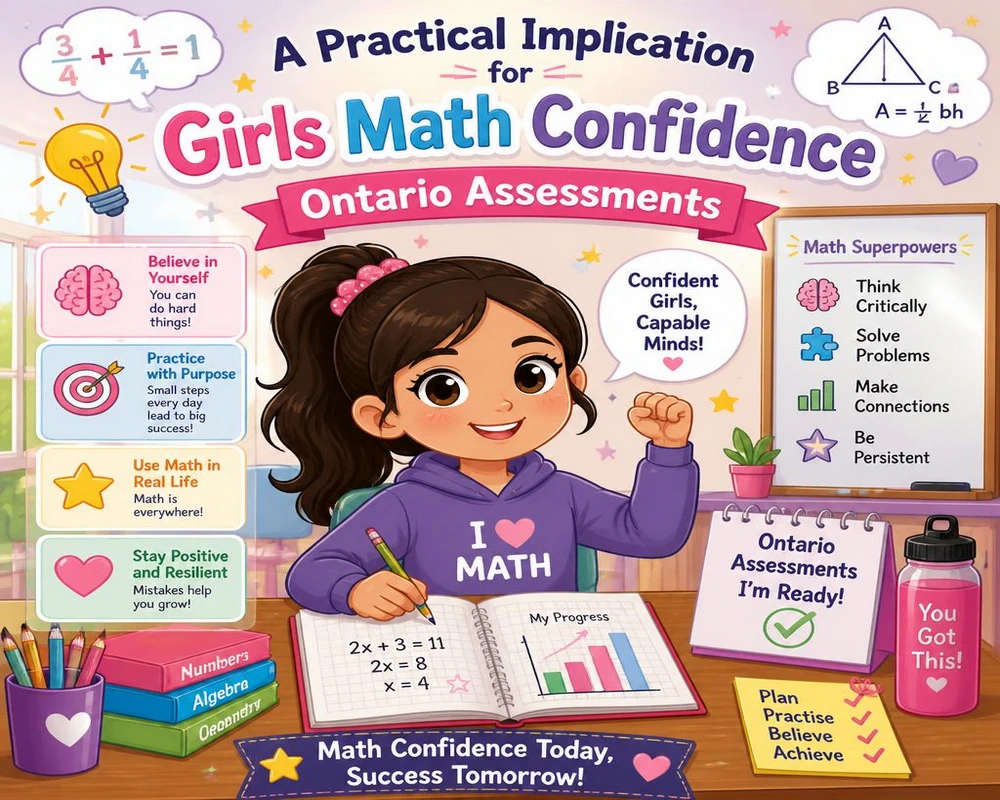
A Practical Implication for Girls Math Confidence Ontario Assessments
This suggests part of any observed performance gap may reflect testing format rather than underlying math ability, since multiple-choice questions appear to specifically advantage a confident guessing strategy more common among boys in these studies.
What Genuinely Seems to Help Girls Math Confidence Ontario Families Support at Home
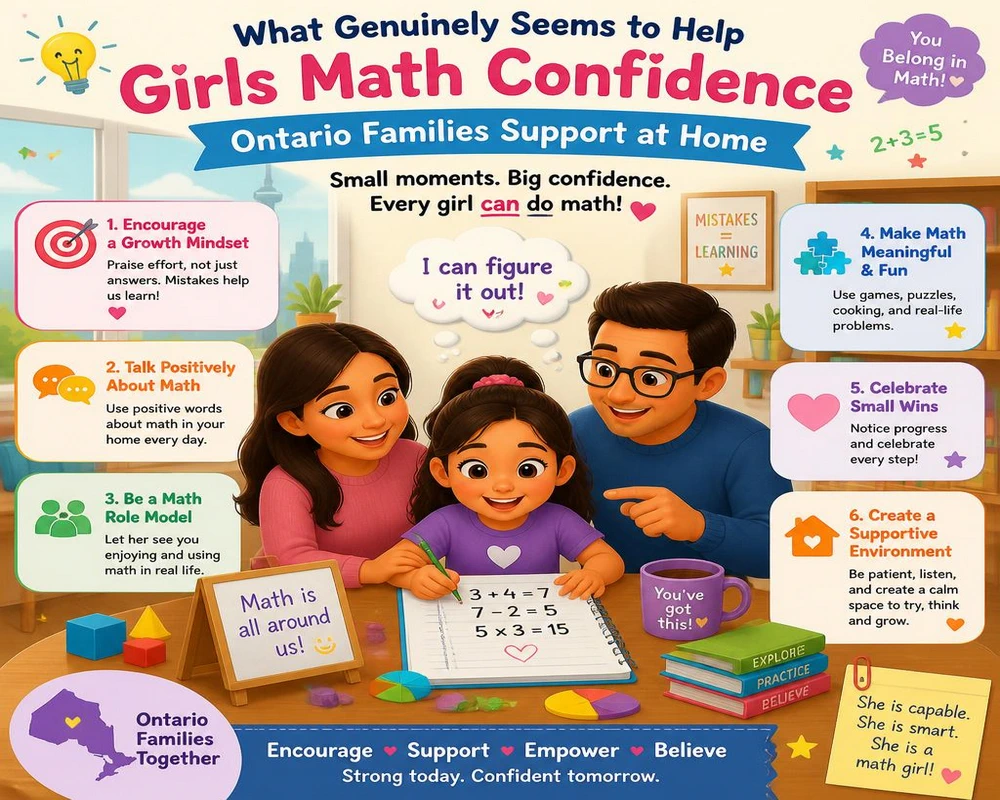
Praising Strategy and Effort, Not Just Correct Answers
Feedback focused on the approach a child took, rather than simply whether the final answer was right, tends to build more resilient confidence than praise tied only to getting things correct.
Naming the Gap Directly, Without Making It a Big Deal
Briefly explaining that many capable girls feel less confident in math than their actual skills warrant, in a calm and matter-of-fact way, can help a child recognize the feeling as a common pattern rather than a personal truth about her ability, without turning a single conversation into an ongoing source of anxiety.
Being Mindful of Casual Comments at Home
Offhand comments like “I was never a math person either” can unintentionally reinforce exactly the stereotype the research suggests affects real performance, even when said with good intentions or as a self-deprecating joke rather than a genuine belief.
Providing Consistent, Low-Stakes Practice
Regular, low-pressure practice that lets a child experience genuine success repeatedly can help close the gap between actual ability and self-perceived ability over time, since confidence often follows accumulated evidence of competence rather than a single pep talk or grade.
Talking to a Daughter About This Without Making It a Bigger Deal Than It Is
Bringing up girls math confidence Ontario research with a child directly requires a light touch. The goal isn’t to suggest something is wrong with her, but to offer a genuine, research-backed explanation for a feeling she may already have noticed in herself.
Frame It as a Common Pattern, Not a Personal Flaw
Explaining that many girls with strong math skills report feeling less confident than boys with similar grades — and that researchers have studied this specifically — can help a child recognize the feeling as external and common, rather than a private, personal truth about her own limits.
Avoid Overcorrecting Into Empty Praise
Simply insisting “you’re great at math” without connecting it to specific evidence tends to feel hollow. Pointing to concrete recent successes — a particular problem solved, a strategy that worked — carries more genuine weight than general reassurance alone.
Frequently Asked Questions
1. Is there real research showing girls have less math confidence than boys?
Yes, multiple peer-reviewed studies have found this pattern internationally, including research showing girls report lower math self-efficacy despite earning grades comparable to boys.
2. Does this confidence gap reflect an actual ability difference?
No, large-scale research comparing millions of test results has found minimal meaningful difference in actual math performance between genders, suggesting the confidence gap reflects something other than genuine skill differences.
3. Does Ontario publish gender-specific EQAO math confidence data?
No, EQAO’s public questionnaire results on liking and feeling good at math aren’t broken down by gender in publicly available reports, so this guide relies on broader international research rather than Ontario-specific statistics.
4. Are boys also affected by this dynamic, just differently?
Yes, research suggests boys tend toward overconfidence relative to their actual performance, particularly among the most mathematically gifted, meaning both genders show a bias, just in different directions.
5. Can classroom stereotypes actually affect real test performance?
Research suggests yes — one study found girls’ actual test scores declined more in classrooms where stereotype beliefs about boys’ math ability were more common, even though the belief had no basis in genuine ability differences.
6. Does test format really affect the apparent gender gap?
Some research suggests so, finding the gender gap widened specifically on multiple-choice-heavy exams compared to open-ended formats, using the same students and material.
7. How can consistent practice help build genuine confidence?
Regular, low-stakes practice that lets a child repeatedly experience real success can help close the gap between actual skill and self-perceived ability that shows up so often in girls math confidence Ontario research and international studies alike. Our Ontario math practice platform offers curriculum-aligned practice across every grade for exactly this kind of steady confidence-building.
Explore grade-specific practice through our Grade 1, Grade 2, Grade 3, Grade 4, Grade 5, and Grade 6 math practice hubs.
For the full peer-reviewed research this article draws from, see the original study “When Grades Are High but Self-Efficacy Is Low” published in Frontiers in Psychology.