
Dyscalculia Signs Elementary Ontario: 7 Real Patterns
Roughly as many elementary students have dyscalculia as have dyslexia, yet most parents have never heard the word. Dyscalculia signs elementary Ontario families notice often get mistaken for a child simply “not being a math person,” when the underlying pattern is actually a recognized, specific learning difference affecting an estimated 5 to 7 percent of elementary-aged children. This guide describes what dyscalculia signs elementary Ontario children may show tend to look like — not to diagnose anything, but to help a parent recognize when ordinary struggle might be something worth exploring further with a professional.
This is informational content only. Nothing here diagnoses your child or anyone else’s; only a qualified professional assessment can do that. What follows are patterns worth understanding, not a checklist to self-diagnose against.
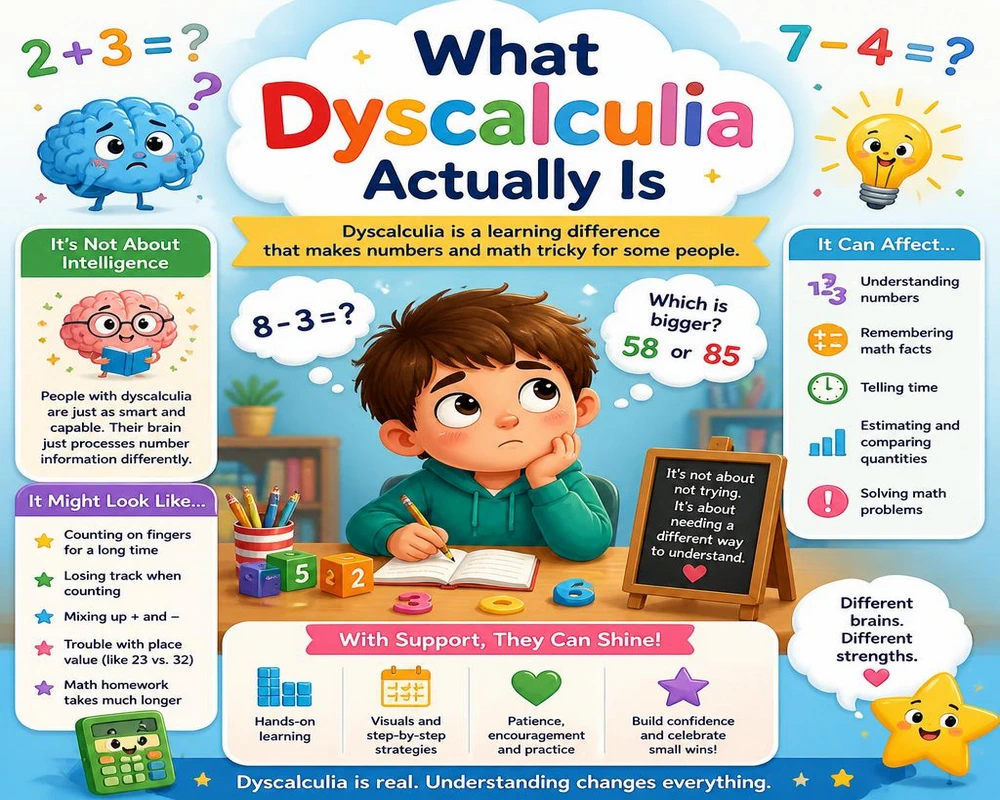
What Dyscalculia Actually Is
Dyscalculia is a specific learning disorder that affects a person’s ability to understand, learn, and work with numbers, distinct from general math difficulty or a temporary gap in a specific skill. It’s considered roughly as common as dyslexia, though far less studied and far less recognized by educators and even some clinicians. Dyscalculia signs elementary Ontario children display often first draw attention between ages 6 and 9, right as formal number work becomes central to the early curriculum. Understanding these dyscalculia signs elementary Ontario families can watch for is the first step toward knowing when to seek a genuine professional opinion.
7 Real Patterns Associated With Dyscalculia Signs Elementary Ontario Parents Ask About
1. Difficulty Recognizing Small Quantities at a Glance
Most children eventually develop the ability to look at a small group of objects — three dots, four blocks — and instantly know the quantity without counting one by one. This skill, sometimes called subitizing, typically develops naturally through repeated exposure. A persistent inability to do this, even with very small numbers well past the age when peers have developed it, is one of the earlier patterns researchers associate with dyscalculia.
2. Slow or Inconsistent Counting
Continued difficulty counting aloud reliably, or counting on fingers well past the age when peers have moved beyond it, is a commonly cited early pattern, distinct from occasional counting mistakes every young child makes. This isn’t about a single missed number during a rushed moment, but a consistent, ongoing struggle with the counting sequence itself.
3. Trouble Connecting a Number Symbol to Its Quantity
Recognizing that the symbol “5” represents five actual objects seems automatic to most children after enough practice. Persistent difficulty making that specific connection, even after substantial repetition, is a pattern worth noting.
4. Significant, Ongoing Difficulty With Basic Operations
Struggling with addition, subtraction, and later multiplication facts happens to nearly every child at some point, but a significant, persistent struggle that doesn’t resolve with typical practice is different from ordinary difficulty. Among all the patterns discussed here, this is often the one that first prompts a parent to search for dyscalculia signs elementary Ontario resources in the first place.
5. Trouble With Word Problems Specifically
Difficulty translating a word problem into the correct math operation, beyond what would be expected from reading comprehension alone, is a commonly reported pattern, especially once problems combine reading with number reasoning. A child might read the story portion of a problem perfectly well but genuinely struggle to identify what calculation the story is actually asking for.
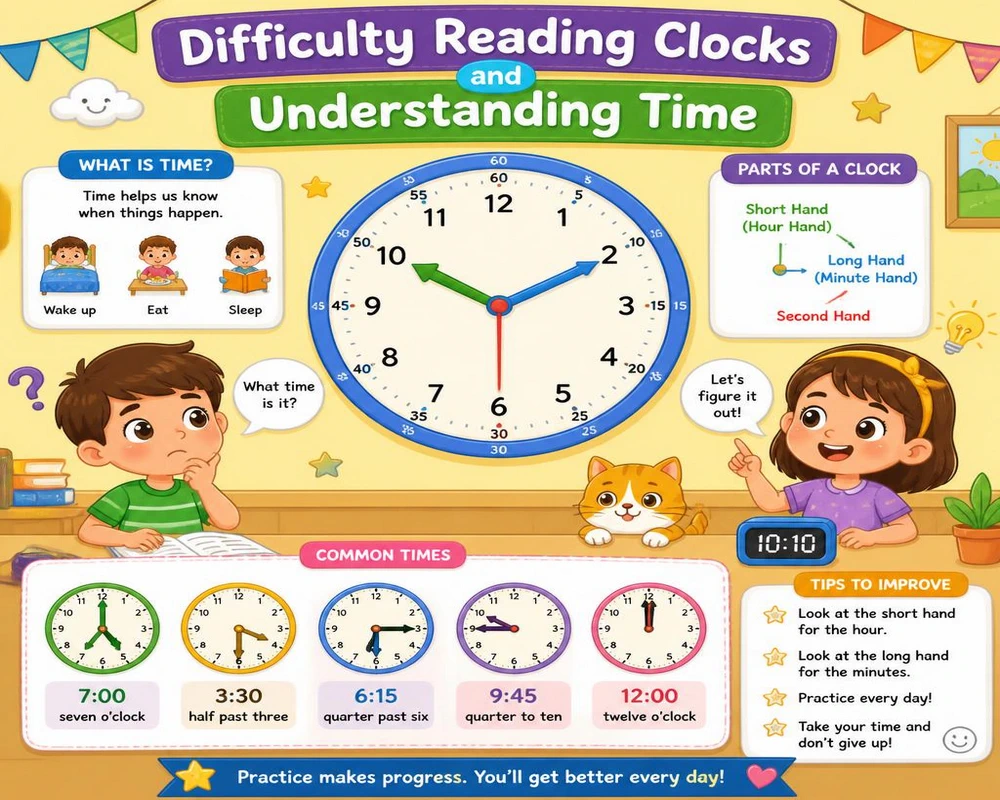
6. Difficulty Reading Clocks and Understanding Time
Persistent, significant trouble reading an analog clock or estimating how long a task will take is frequently mentioned alongside dyscalculia, since both rely on the same underlying number-sense skills as basic arithmetic. This often extends beyond just clocks to broader difficulty with sequencing and time-related concepts generally.
7. Avoidance and Anxiety Specifically Around Math
Children showing these patterns often develop real anxiety around math tasks specifically, becoming reluctant to participate in math games or activities that other children find neutral or even fun. This avoidance is frequently a secondary response to repeated difficulty, rather than the original cause of the struggle itself.
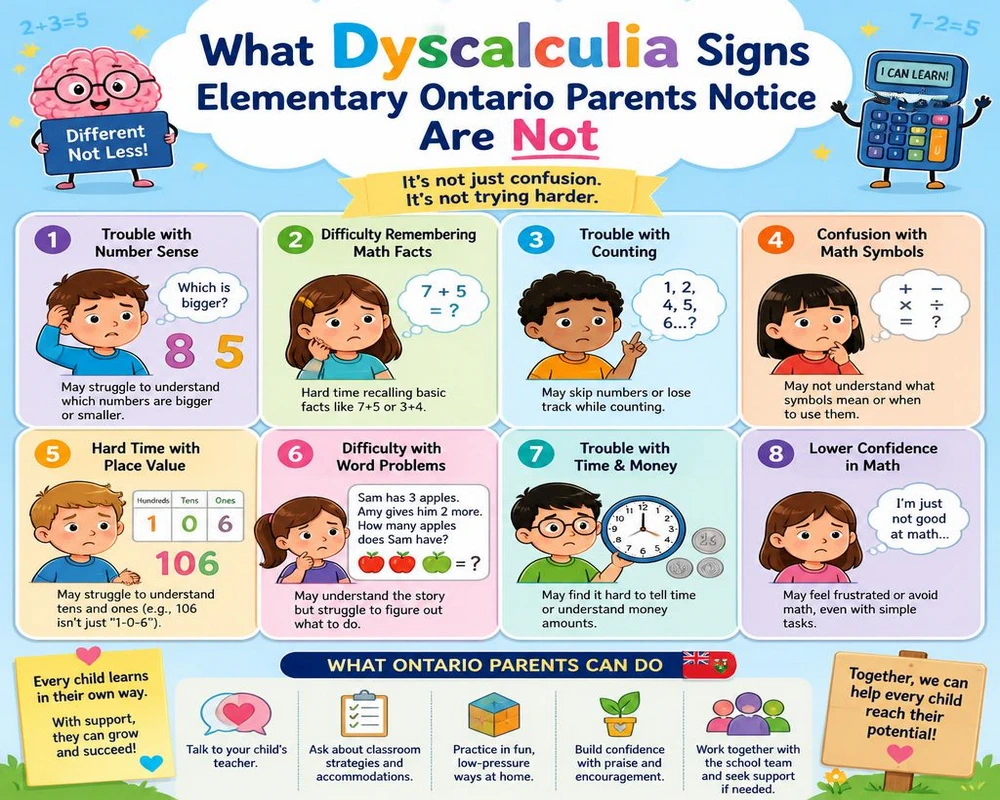
What Dyscalculia Signs Elementary Ontario Parents Notice Are Not
Just as important as knowing what these patterns might indicate is understanding what they don’t automatically mean on their own.
Not the Same as Simply Disliking Math
A child who finds math boring or prefers other subjects isn’t showing dyscalculia signs on that basis alone. The patterns above describe a specific, persistent difficulty with number concepts themselves, not a preference.
Not the Same as Math Anxiety Alone
Math anxiety can exist entirely on its own, without any underlying learning difference, and can also develop as a secondary response to struggling with dyscalculia. The two frequently overlap, which is part of why professional assessment matters rather than guessing from home, since the right support looks genuinely different depending on which is actually driving the difficulty.
Not Necessarily the Cause of Every Math Struggle
Other conditions, including attention differences, processing disorders, or straightforward gaps in prior instruction, can produce similar-looking struggles. Dyscalculia signs elementary Ontario parents notice on their own can’t reliably distinguish between these possibilities without professional input, which is exactly why a proper assessment, rather than a home checklist, matters so much for getting the right kind of support in place.
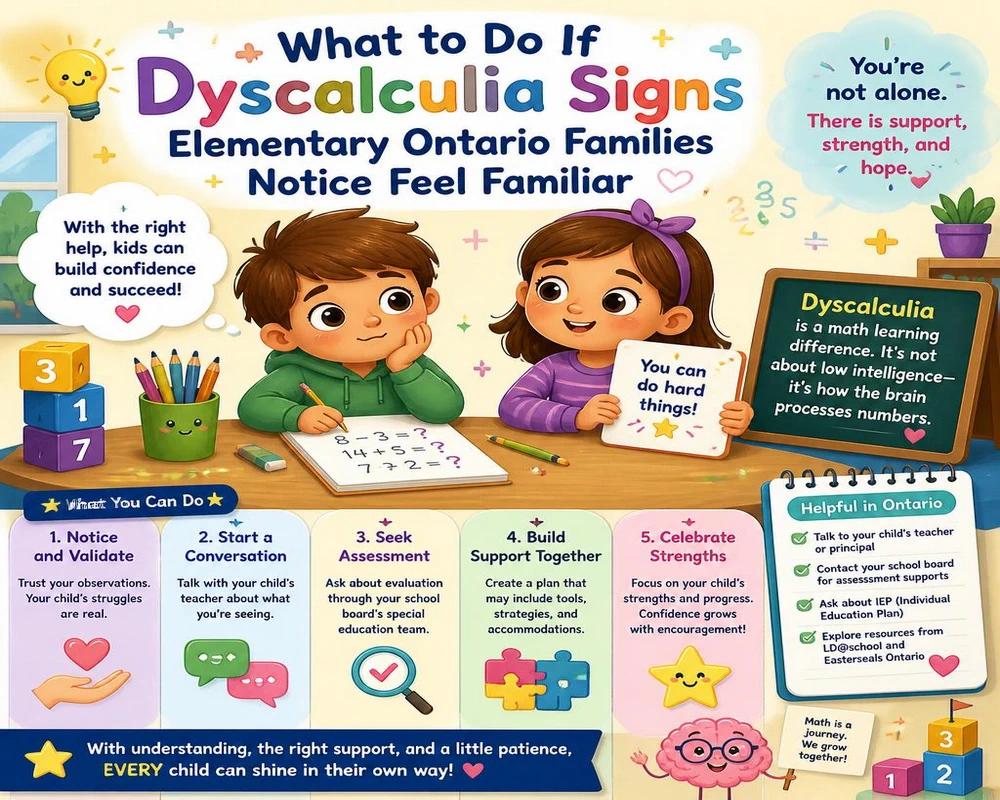
What to Do If Dyscalculia Signs Elementary Ontario Families Notice Feel Familiar
Track Specific, Concrete Examples
Rather than a general sense that “math is hard,” noting specific instances — which operation, which type of question, how consistently — gives a professional assessor far more useful information to work with. A simple running note over a few weeks, capturing exact examples rather than general impressions, tends to be genuinely more useful than trying to remember everything at once during an appointment.
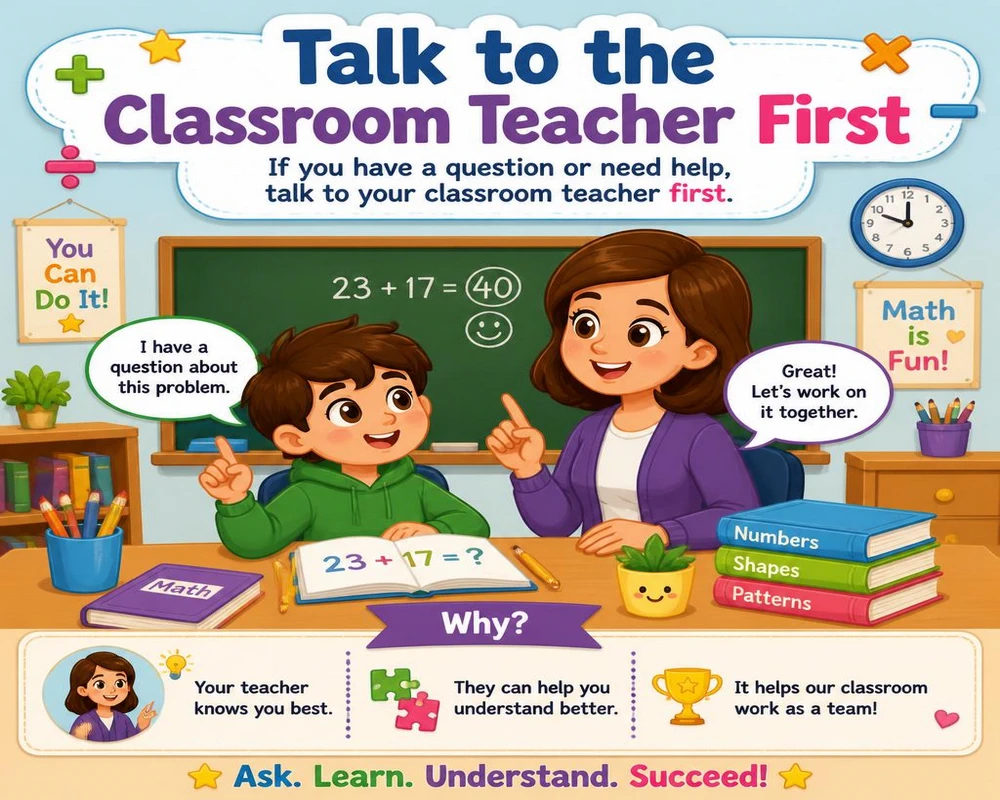
Talk to the Classroom Teacher First
Teachers see a child across an entire class of peers and can offer genuine comparative context, plus insight into whether the same patterns show up consistently at school as well as at home. This conversation is often the natural first step before pursuing any formal assessment process.
Ask About a Formal Psychoeducational Assessment
In Ontario, a formal assessment, often conducted through the school board or a private psychologist, is the appropriate next step for a genuine diagnosis, rather than any online checklist, including this one. Wait times through school boards can vary considerably, so asking early, even while still gathering observations, tends to be a reasonable approach rather than waiting for absolute certainty first.
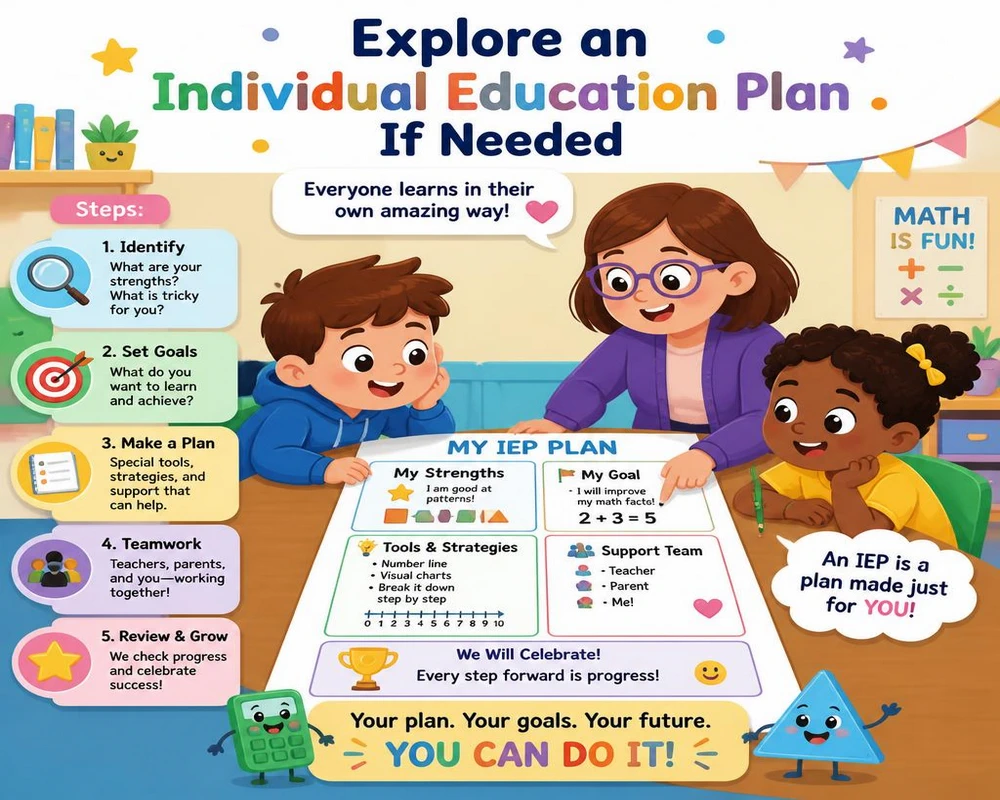
Explore an Individual Education Plan If Needed
If an assessment confirms a learning difference, an Individual Education Plan (IEP) can provide formal accommodations and support tailored specifically to how that child learns math. This might include extra time on assessments, access to manipulatives during tests, or modified expectations for certain tasks, developed collaboratively between the school and family based on the specific assessment findings.
Frequently Asked Questions
1. How common is dyscalculia in elementary students?
Estimates suggest between 5 and 7 percent of elementary-aged children may show dyscalculia signs elementary Ontario researchers and clinicians recognize, making it roughly as common as dyslexia, though far less widely known.
2. Is dyscalculia the same thing as being bad at math?
No, dyscalculia is a specific, recognized learning disorder affecting how the brain processes numbers, distinct from general difficulty, disinterest, or a temporary gap in one particular skill.
3. At what age do dyscalculia signs typically first appear?
Patterns often first draw attention between ages 6 and 9, corresponding with early elementary grades when formal number work becomes central to the curriculum.
4. Can dyscalculia be diagnosed from an online checklist?
No, only a qualified professional assessment, such as a psychoeducational evaluation, can provide an actual diagnosis. Online information can help identify when to seek that assessment, not replace it.
5. Does dyscalculia often occur alongside other learning differences?
Yes, dyscalculia frequently co-occurs with dyslexia and other learning differences, which is part of why a comprehensive professional assessment matters rather than assuming a single cause.
6. How is dyscalculia different from math anxiety?
Math anxiety can exist independently or develop as a secondary response to dyscalculia itself, and distinguishing between the two typically requires professional evaluation rather than home observation alone.
7. What support is available in Ontario if a child is diagnosed?
An Individual Education Plan (IEP), developed with the school, can provide formal accommodations and targeted support once a professional assessment confirms a learning difference.
Regardless of the underlying cause, consistent, low-pressure practice matched to a child’s actual level supports every learner. Our Ontario math practice platform offers curriculum-aligned lessons across every grade that can complement any additional support a child receives, whether or not dyscalculia signs elementary Ontario families notice ever lead to a formal diagnosis.
Explore grade-specific practice through our Grade 1 through Grade 6 math practice hubs.
For a thorough, clinically reviewed overview of dyscalculia signs and next steps, the Child Mind Institute’s guide to spotting dyscalculia offers additional detail beyond what’s covered here.