
Ontario Elementary Math Achievement Data: 5 Key Trends
Half of Ontario’s Grade 6 students are still not meeting the provincial math standard, even after several consecutive years of gradual improvement. That single fact sits at the center of the most recent Ontario elementary math achievement data, released by EQAO in December 2025, and it explains why the province’s own education minister recently announced a review of how math is taught and tested. This isn’t a story of failure, but it also isn’t the full success story sometimes presented in headlines.
This guide walks through five real trends buried in the latest Ontario elementary math achievement data, what they actually mean for a specific child, and where the numbers are genuinely improving versus where concern remains warranted. Reading past the headline percentages in this Ontario elementary math achievement data reveals a more nuanced, more useful picture than any single number can capture alone.
Where Ontario Elementary Math Achievement Data Actually Comes From
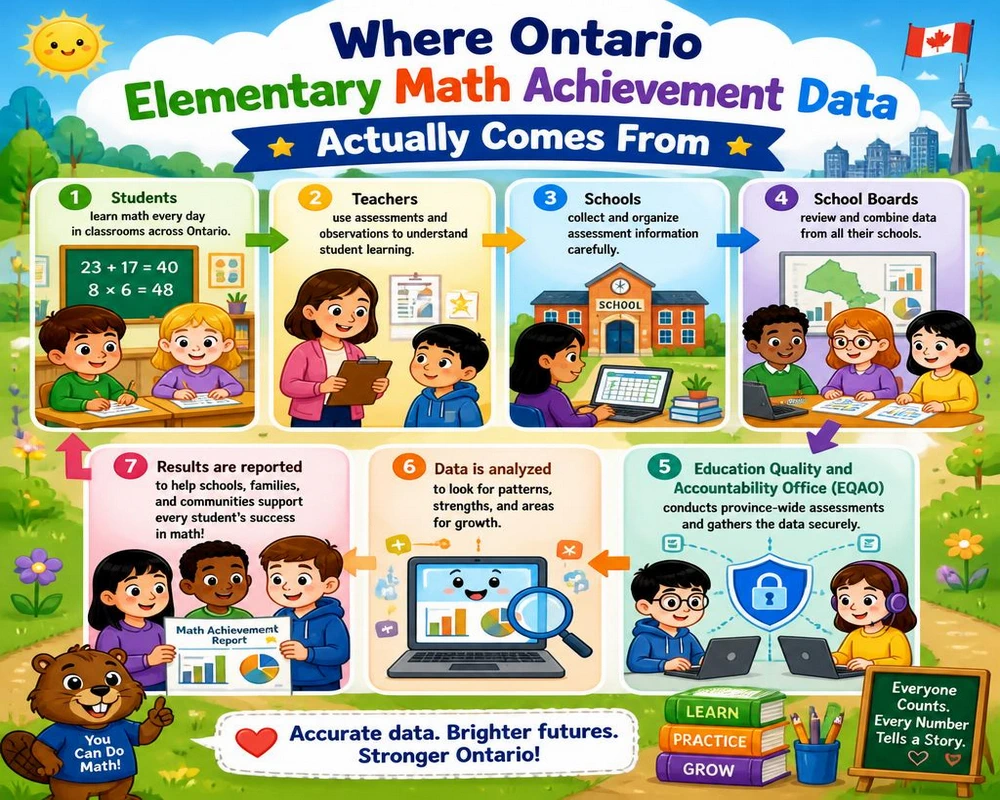
Understanding the source matters before trusting any Ontario elementary math achievement data cited casually online.
EQAO, Ontario’s Education Quality and Accountability Office, tests Grade 3 and Grade 6 students in math every spring, reporting the percentage of students who meet the provincial standard — Levels 3 and 4 on the same four-level scale used on report cards. The most recent full results, covering the 2024-2025 school year, were released in December 2025 after a delay the ministry attributed to reviewing the assessment approach itself.
Trend 1: Grade 3 Math Scores Have Genuinely Improved
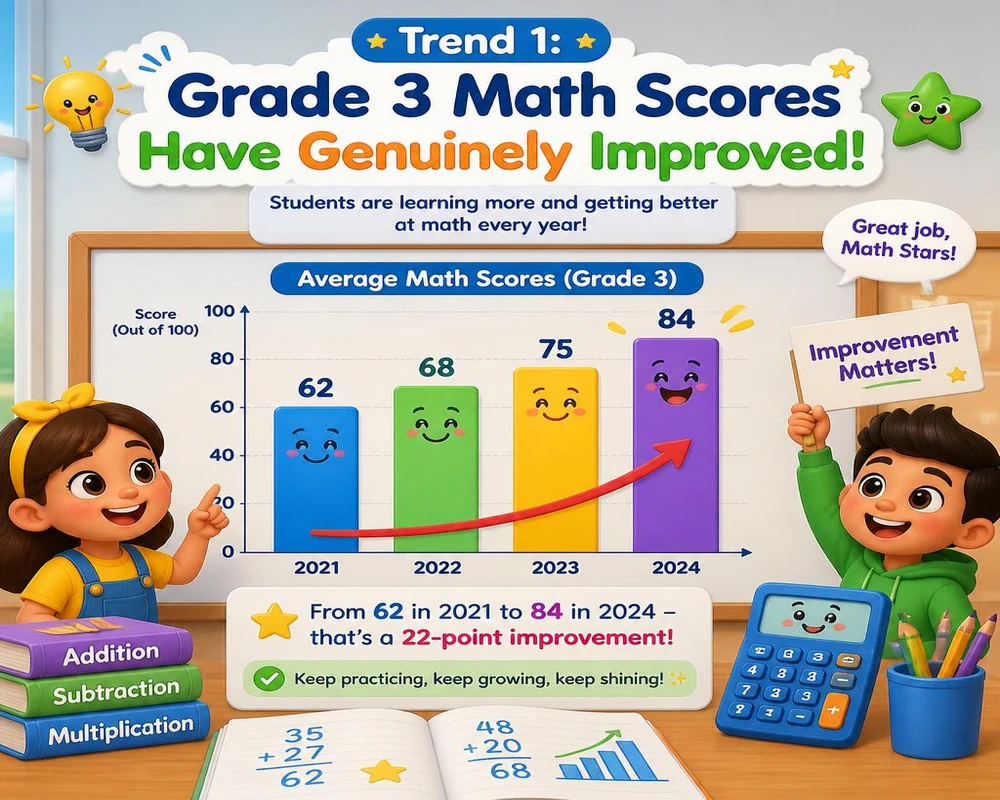
Ontario elementary math achievement data shows Grade 3 math results climbing steadily — from 59% of students meeting the provincial standard in the 2021-2022 school year, up to 64% in the most recent 2024-2025 results. That’s a five percentage point gain over three years, a real and measurable improvement rather than statistical noise.
What This Means for a Grade 3 Family
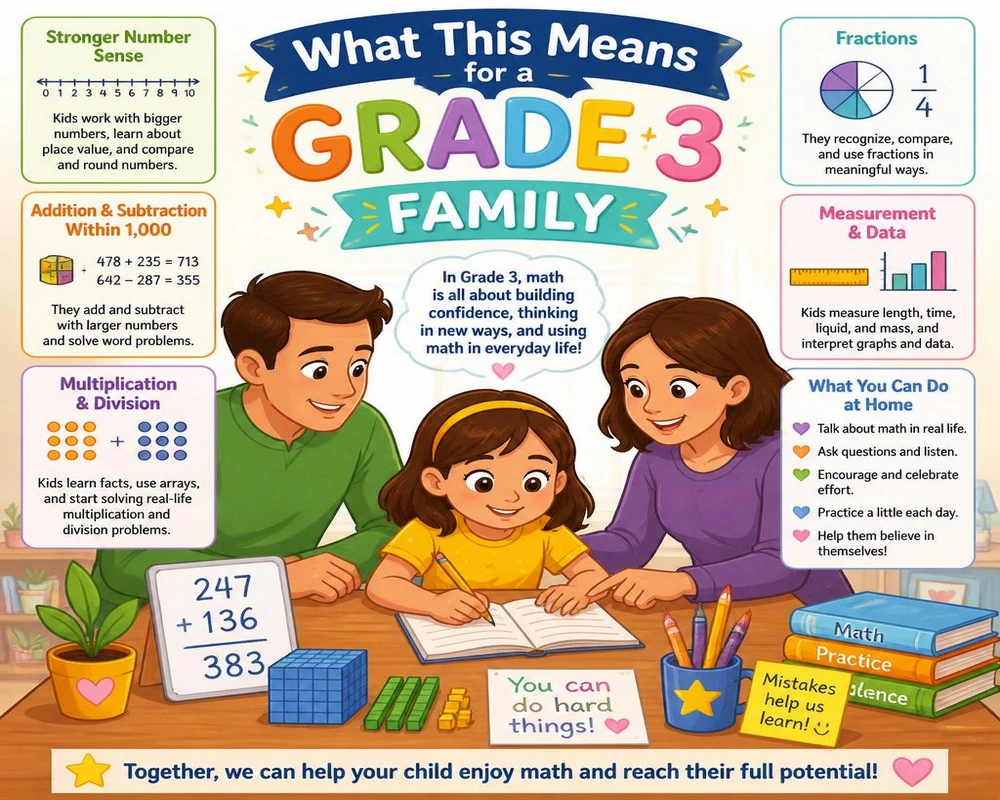
The trend is genuinely encouraging, though it also means over a third of Grade 3 students — 36% — still aren’t meeting the standard, so improvement at the provincial level doesn’t guarantee any individual student is on track without direct confirmation from a report card or teacher.
Trend 2: Grade 6 Math Remains the Weakest Point in the System
This is the trend driving the most public attention. Only 51% of Grade 6 students met the provincial math standard in 2024-2025, essentially unchanged from 50% the year before, and EQAO’s own release specifically flagged Grade 6 math in English-language schools as an area of concern even as most other measures showed improvement.
What This Means for a Grade 6 Family
Roughly half of Grade 6 students provincewide are not yet meeting the standard, which means a family whose child is in that position is far from alone. It also suggests Grade 6 math specifically — with its jump into formal ratios, integer operations, and more complex multi-step problems — deserves particular attention during this transition year.
Trend 3: The Gap Between Grade 3 and Grade 6 Is Widening in the Ontario Elementary Math Achievement Data
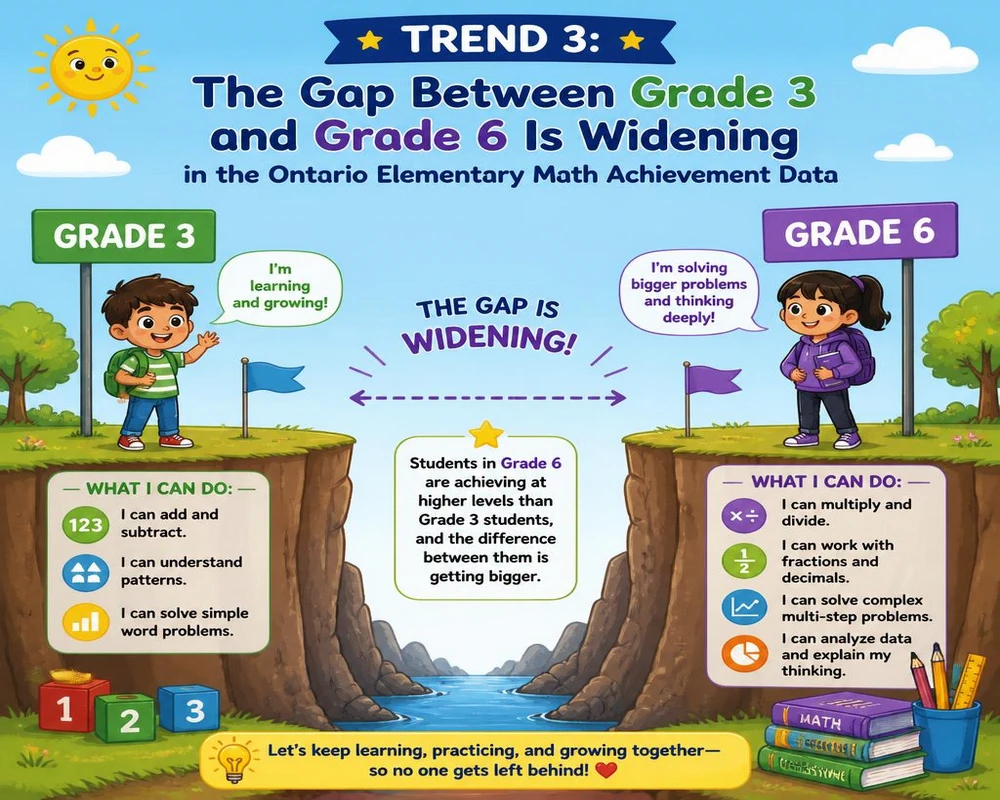
Comparing the two grades directly reveals something the individual numbers don’t show on their own: a 13 percentage point gap between Grade 3 achievement (64%) and Grade 6 achievement (51%) in the same 2024-2025 results. Since these aren’t literally the same students, this gap reflects a system-wide pattern rather than one specific cohort’s experience, but it does suggest something in the Junior Division years isn’t fully capturing the gains made earlier.
What This Means Across Grades
This pattern reinforces why steady practice through Grade 4 and 5 matters as much as strong Grade 1-3 foundations — the data suggests real ground can be lost during exactly those years if math confidence and skill aren’t actively maintained.
Trend 4: EQAO Now Tracks the Same Students Over Time
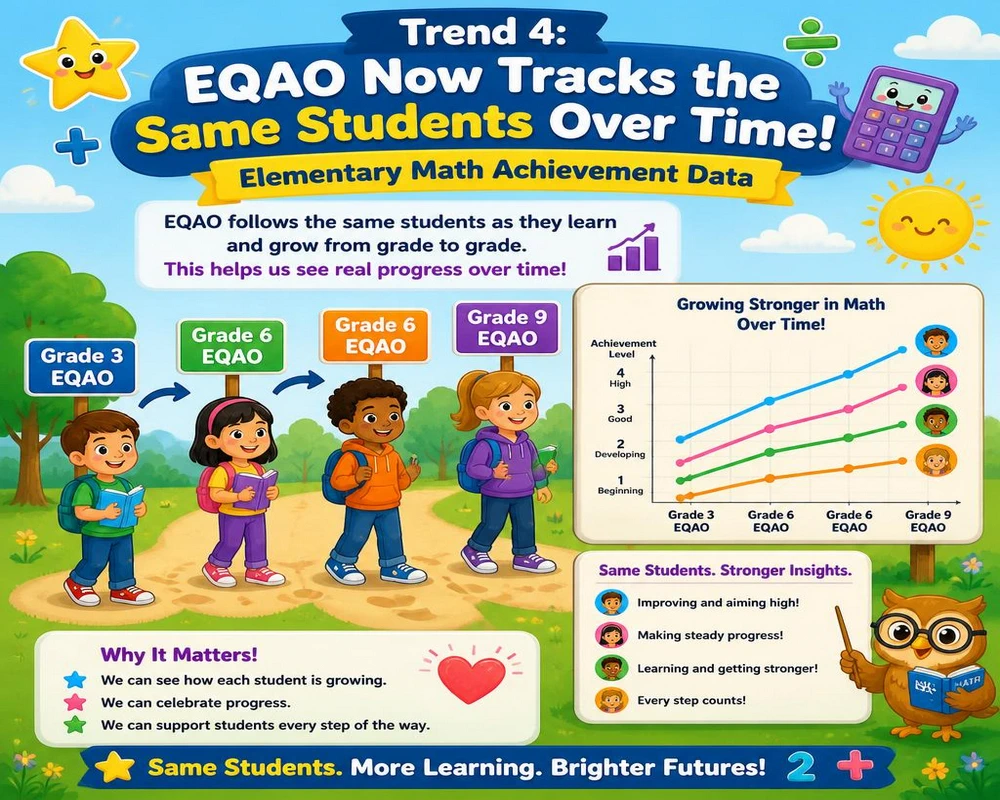
A genuinely new piece of Ontario elementary math achievement data this year: EQAO began publishing cohort-tracking results, following the specific group of students who were in Grade 3 during 2021-2022 through to their Grade 6 results in 2024-2025. This lets researchers see how many students maintained the standard, how many rose to meet it, and how many fell below it over that three-year span, rather than only comparing different groups of students year over year. This kind of longitudinal Ontario elementary math achievement data is a genuinely new addition to how the province reports results.
Why This Matters
Cohort tracking is a meaningfully more honest way to measure real student progress than comparing entirely different groups of Grade 3 and Grade 6 students each year, and it may reveal patterns province-wide averages have been masking until now.
Trend 5: Math Improvement Has Been Slower Than Reading and Writing
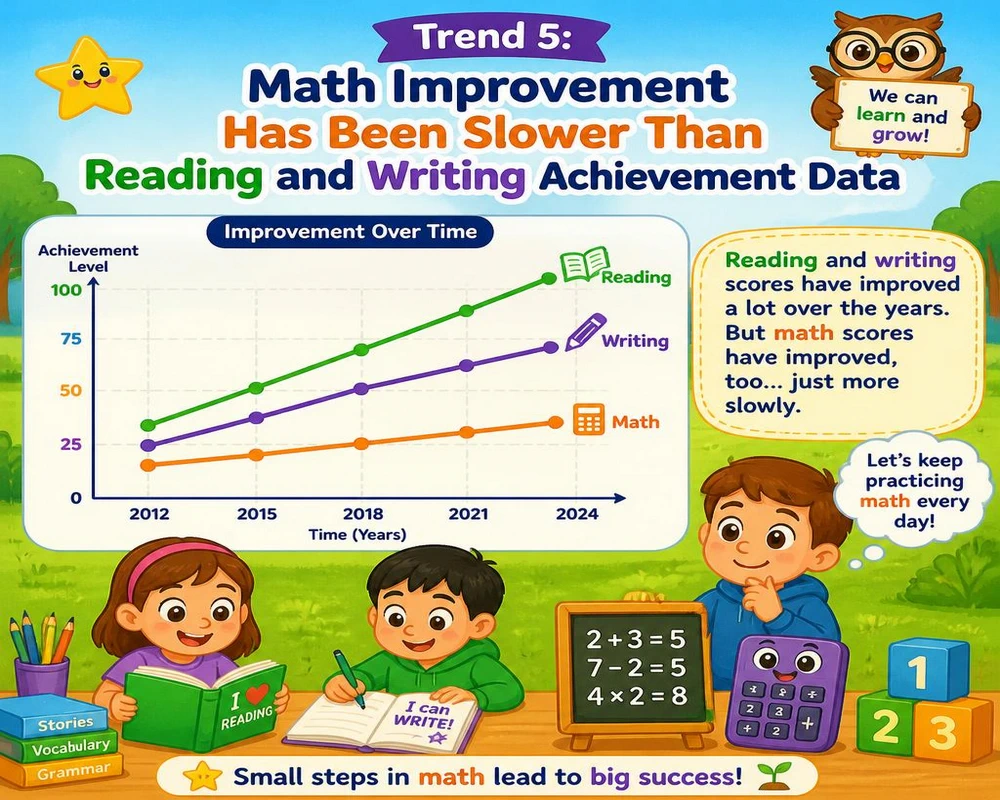
Across the multi-year trend, math has consistently lagged behind reading achievement at the elementary level, and the province’s own review of standardized testing was specifically prompted by concern that math improvement wasn’t happening fast enough despite years of curriculum changes aimed at addressing it. Reading achievement results have generally sat higher than both writing and math results across the same reporting periods, a pattern that has held steady even as math scores themselves improved year over year.
Why This Gap Between Subjects Persists
Part of the explanation likely lies in how differently math skill compounds compared to reading. A gap in foundational number sense or multiplication fluency tends to block progress on everything built afterward, while reading skill can sometimes be patched more incrementally. This is one reason consistent, targeted math practice tends to matter more, not less, the longer a specific gap goes unaddressed.
The Multi-Year Ontario Elementary Math Achievement Data at a Glance
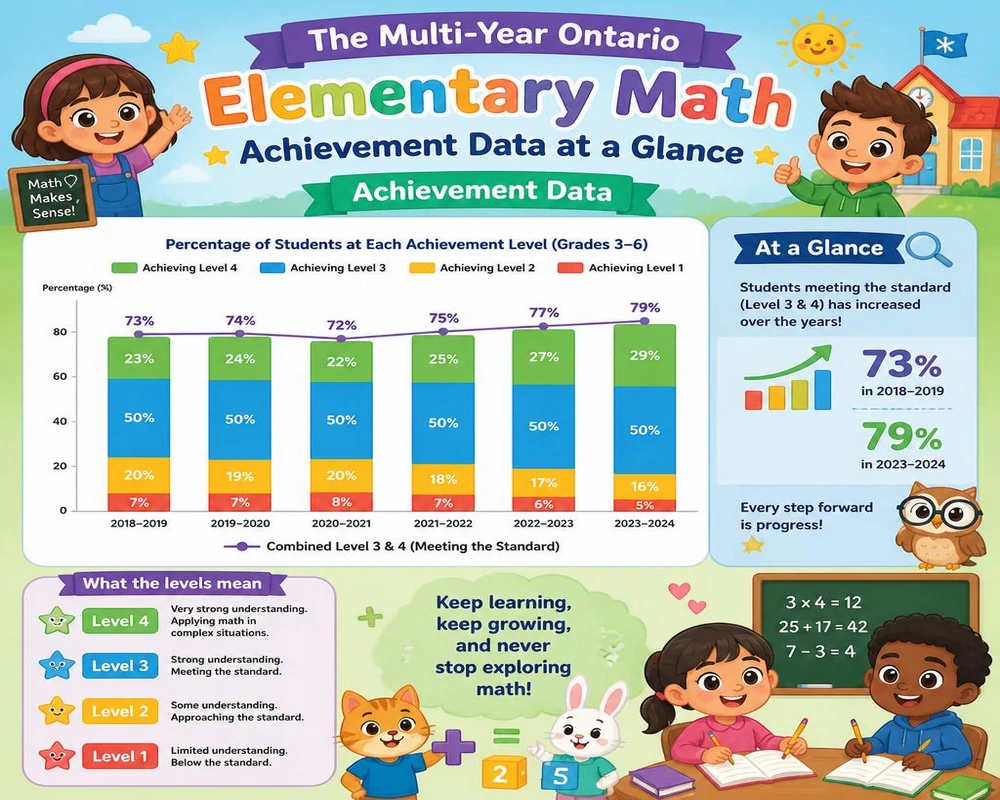
| School Year | Grade 3 Math | Grade 6 Math | Grade 9 Math |
|---|---|---|---|
| 2021-2022 | 59% | 47% | 52% |
| 2022-2023 | 60% | 50% | 54% |
| 2024-2025 | 64% | 51% | 58% |
Every grade shows genuine improvement over this period, though the pace varies considerably — Grade 3 and Grade 9 have moved more than Grade 6, reinforcing Trend 2’s finding that the Junior Division years deserve particular attention.
What This Ontario Elementary Math Achievement Data Really Means for Your Family
Provincial Trends Don’t Predict Individual Results
A rising provincial average doesn’t mean every student is improving, and a low provincial average for Grade 6 doesn’t mean a specific child is behind. Report card levels and direct conversations with the teacher remain the most accurate read on where an individual student actually stands.
Grade 6 Deserves Extra Attention as a Transition Year
Given how clearly the data points to Grade 6 as the system’s weakest point, families with a child approaching or currently in Grade 6 may want to be especially proactive about identifying and addressing any specific gaps before they compound.
Consistent Practice May Matter More Than the Data Suggests
Since the widening Grade 3-to-Grade 6 gap suggests ground gets lost somewhere in the middle years, steady, ongoing practice through Grade 4 and 5, not just at the EQAO-tested grades, may be exactly what prevents that pattern for an individual child.
Frequently Asked Questions
1. What percentage of Ontario students meet the math standard in Grade 3?
In the most recent 2024-2025 results, 64% of Grade 3 students met the provincial math standard, up from 59% three years earlier.
2. Why is Grade 6 math achievement lower than Grade 3?
EQAO’s own data flags Grade 6 math in English-language schools as a specific area of concern, with only 51% meeting the standard, and the reasons likely include the genuine jump in complexity Grade 6 math introduces, including formal ratios and integers.
3. Has Ontario math achievement improved over the past few years?
Yes, all three tested grades (3, 6, and 9) show measurable improvement over the past several years, though the pace of improvement varies, with Grade 6 improving the least.
4. What is cohort tracking in EQAO data?
It’s a newer approach that follows the same group of students over time, from their Grade 3 results through to Grade 6, rather than only comparing different groups of students from year to year.
5. Does a low provincial average mean my child is behind?
Not necessarily. Provincial averages describe the system as a whole, not any individual student, so a report card and direct conversation with the teacher give a far more accurate picture of where your specific child stands.
6. Why did the Ontario government review its standardized testing approach?
The review was prompted by concern that math achievement, while improving, wasn’t improving quickly enough despite the 2020 curriculum changes specifically intended to boost math results.
7. How can I help my child avoid the Grade 6 dip the data shows?
Consistent practice through Grade 4 and 5, not just around EQAO-tested grades, appears to be exactly what the widening gap in this Ontario elementary math achievement data suggests matters most for staying ahead of that pattern.
Our Ontario math practice platform offers curriculum-aligned lessons across every grade, including the Grade 4 and 5 years this Ontario elementary math achievement data suggests deserve particular attention.
Explore grade-specific practice through our Grade 1 through Grade 6 math practice hubs, including dedicated EQAO Grade 3 and Grade 6 practice tests built to reinforce exactly the strands this Ontario elementary math achievement data tracks.
For the complete, official results this article is based on, EQAO’s full 2024-2025 assessment results release provides the detailed provincial and board-level data.