
Math Anxiety in Elementary Students: 7 Signs to Watch For
A child who sharpens three pencils the moment a fraction worksheet appears isn’t stalling for no reason. Math anxiety in elementary students often hides behind behaviors that look like distraction, laziness, or a bad attitude, when the real driver is something closer to genuine fear. A 2025 survey of K-12 educators found the issue widespread enough that nearly every teacher surveyed described it as a real problem in their classroom, with more than one in five elementary educators calling their students’ math anxiety severe enough to interfere with learning itself.
This guide walks through the seven signs that actually indicate math anxiety in elementary students, rather than ordinary difficulty with a hard problem, plus what research suggests genuinely helps address math anxiety in elementary students at home and in the classroom.
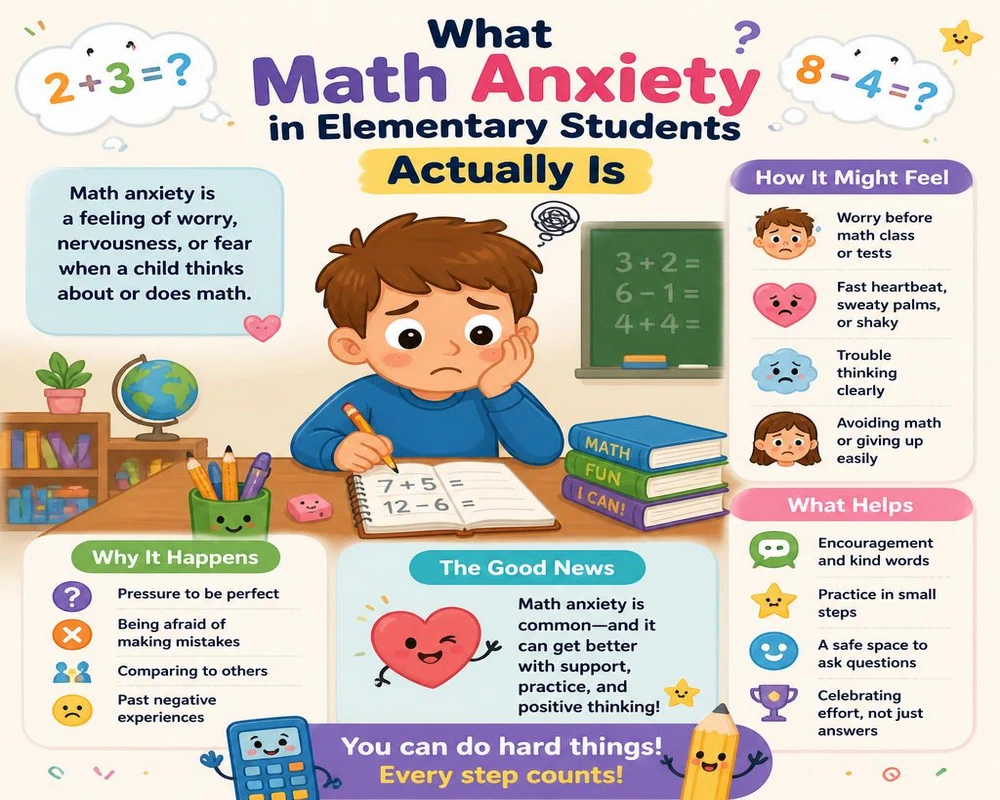
What Math Anxiety in Elementary Students Actually Is
Math anxiety in elementary students is different from simply finding a topic hard. It’s a specific, learned emotional response — tension and worry that shows up around numbers and math tasks specifically, even in situations where a child’s actual math skill would allow them to succeed. Research on math anxiety in elementary students goes back decades, and it’s increasingly recognized as something that can take root as early as age six, well before a child has had much time to genuinely fail at math repeatedly.
7 Real Signs of Math Anxiety in Elementary Students to Watch For
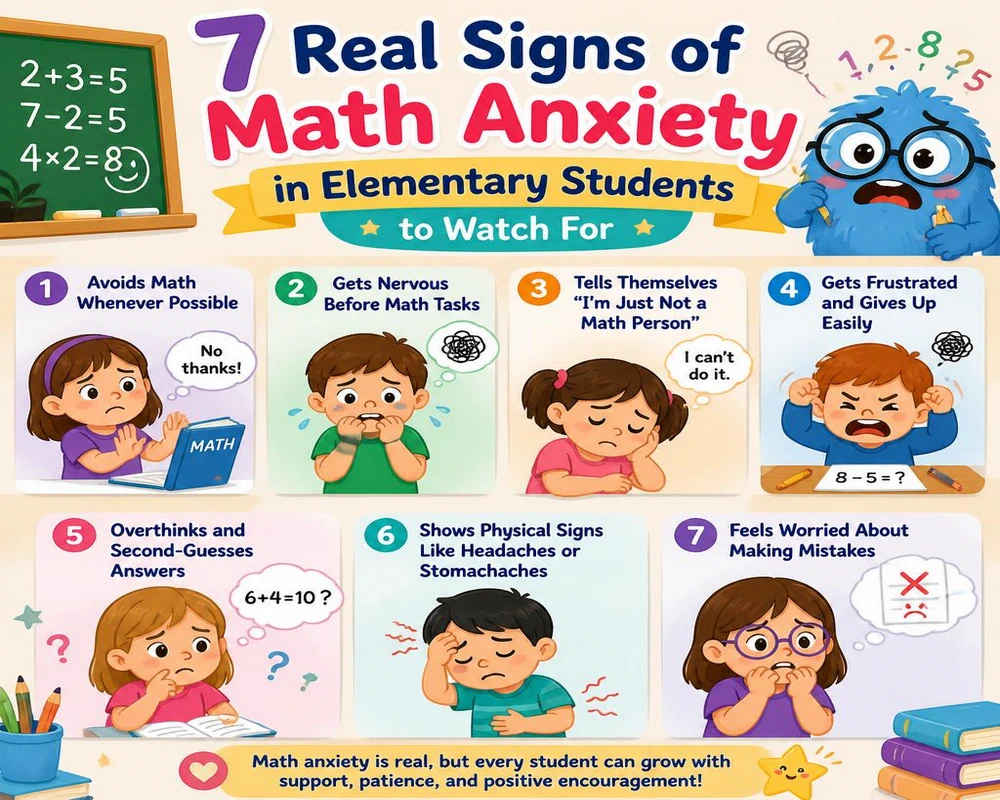
1. Physical Complaints Right Before Math Time
Stomachaches, requests to use the bathroom, or sudden fidgeting that appears specifically around math lessons, and not other subjects, often reflect a genuine physical stress response rather than a random coincidence.
2. Elaborate Avoidance Behaviors
Sharpening pencils repeatedly, asking excessive clarifying questions about material a child clearly already understands, or finding any reason to delay starting — these patterns center on avoidance, not confusion about the actual math.
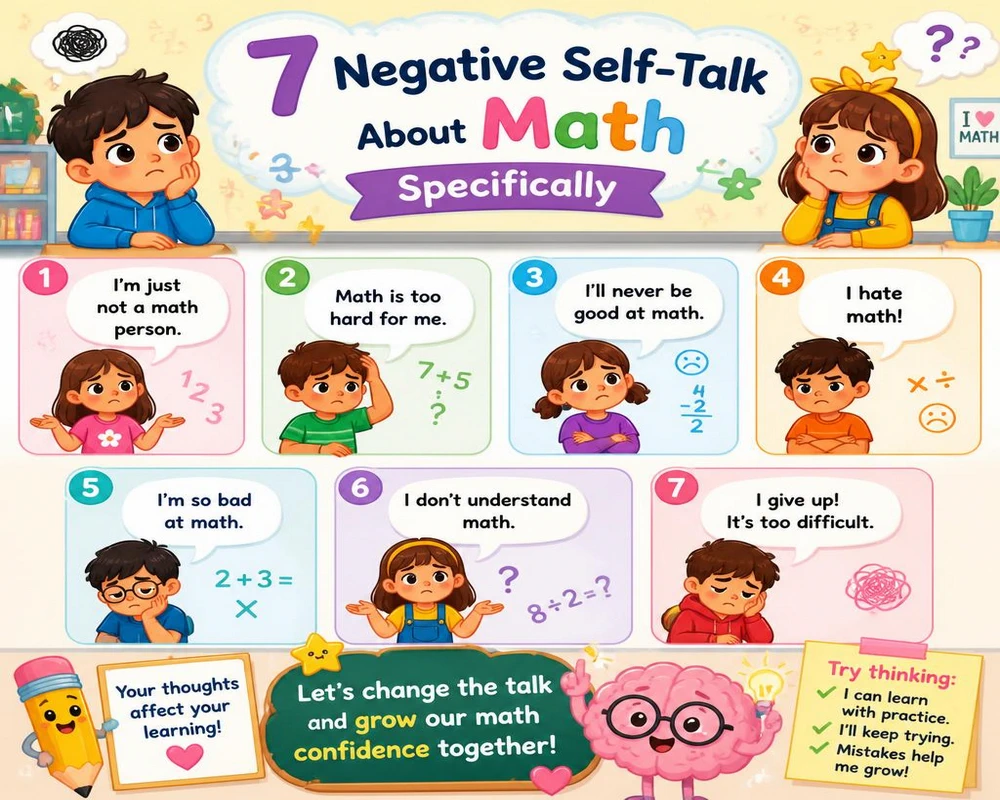
3. Negative Self-Talk About Math Specifically
Phrases like “I’m just not a numbers person” or “my brain doesn’t work for math,” especially when they show up consistently and specifically around math rather than other subjects, point toward anxiety rather than a simple bad day.
4. A Gap Between Understood Concepts and Actual Performance
A child who can explain a concept clearly out loud, but freezes or performs far worse on a written test covering that same concept, may be experiencing anxiety interfering with performance rather than a genuine knowledge gap.
5. Whispered or Quiet Answers During Math
A child who answers confidently in other subjects but suddenly speaks barely above a whisper during math discussions may be protecting themselves from being wrong in front of others, a common anxiety response.
6. Rushing Through or Skipping Problems Strategically
Consistently skipping specific problem types, or rushing through math work just to be finished with it, often reflects a desire to escape the anxious feeling rather than genuine time pressure.
7. Disproportionate Reactions to Small Mistakes
A single wrong answer triggering tears, shutting down entirely, or refusing to continue suggests the emotional stakes attached to math have grown far beyond what one incorrect answer actually warrants.
What the Research Says Actually Helps Math Anxiety in Elementary Students
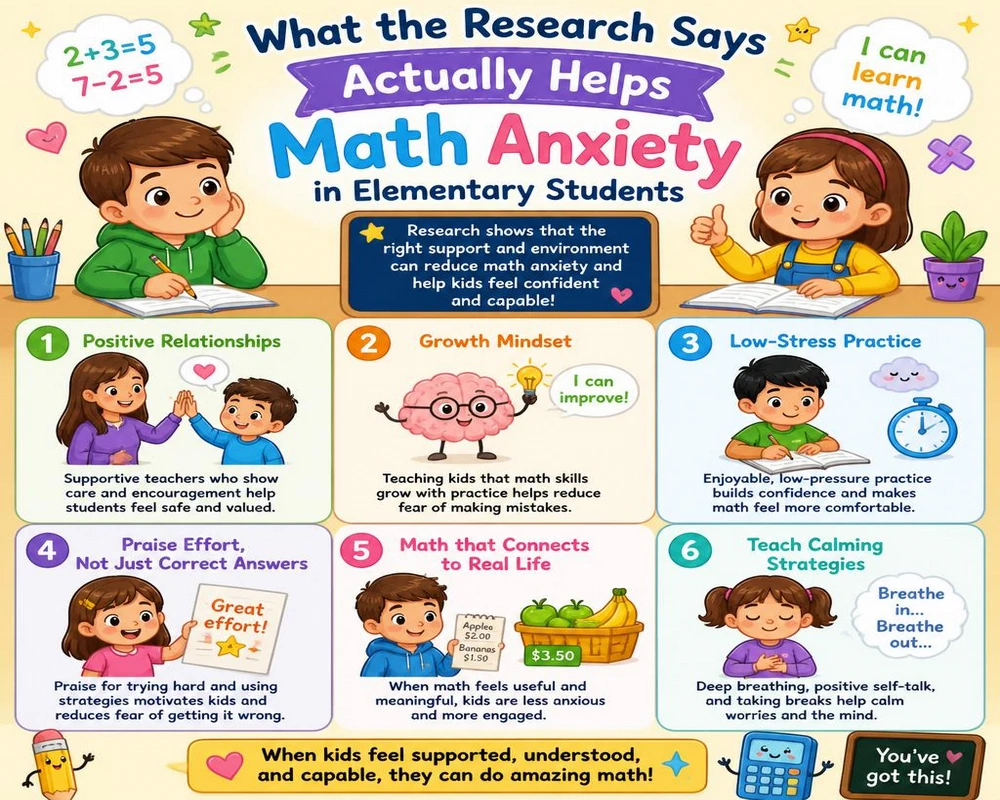
Growth-Focused Language Over Fixed Praise
Praising effort and strategy (“you tried a new approach when the first one didn’t work”) rather than innate ability (“you’re so smart at math”) helps build the kind of resilient mindset that research links to lower math anxiety over time.
Writing or Talking About the Anxiety Itself
Some research has found that having students briefly write or talk about their worries before a math task can reduce the anxiety’s negative effect on performance, essentially clearing mental space that would otherwise be consumed by worry.
Visual Models Before Abstract Numbers
Concrete tools — blocks, drawings, number lines — give an anxious child something tangible to lean on, reducing the pressure of working with pure abstract numbers before that confidence is genuinely built.
Normalizing Mistakes as Part of the Process
Openly discussing mistakes as a normal, expected part of learning math, rather than something to avoid entirely, helps loosen the all-or-nothing thinking that often fuels anxiety in the first place.
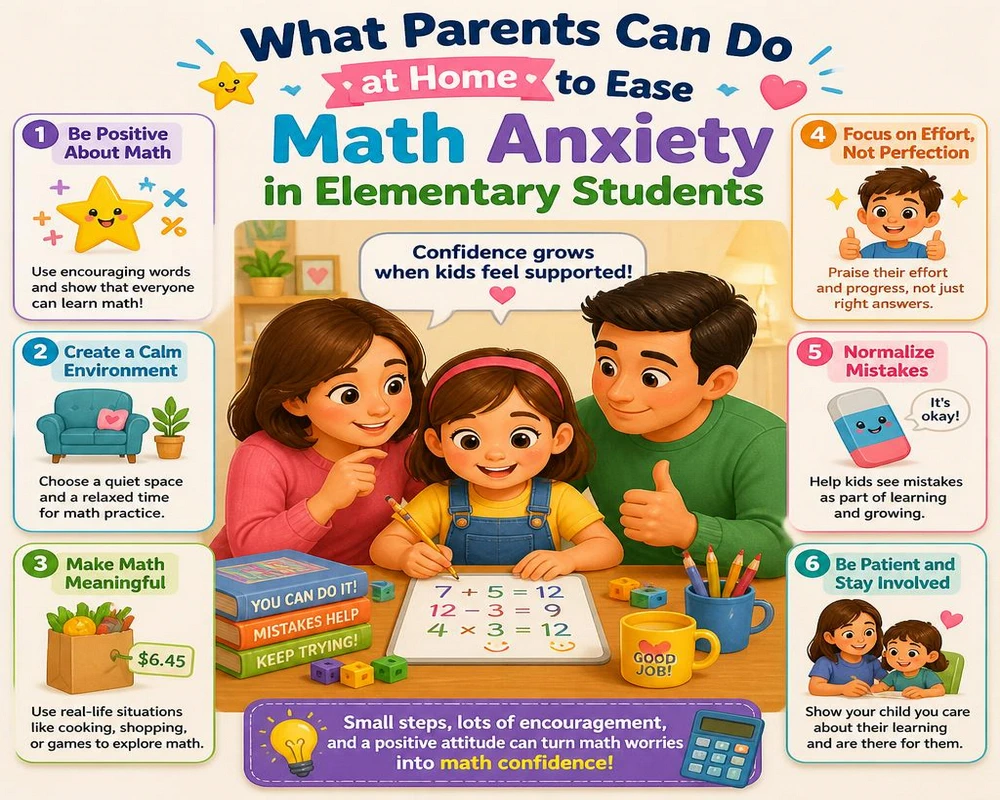
What Parents Can Do at Home to Ease Math Anxiety in Elementary Students
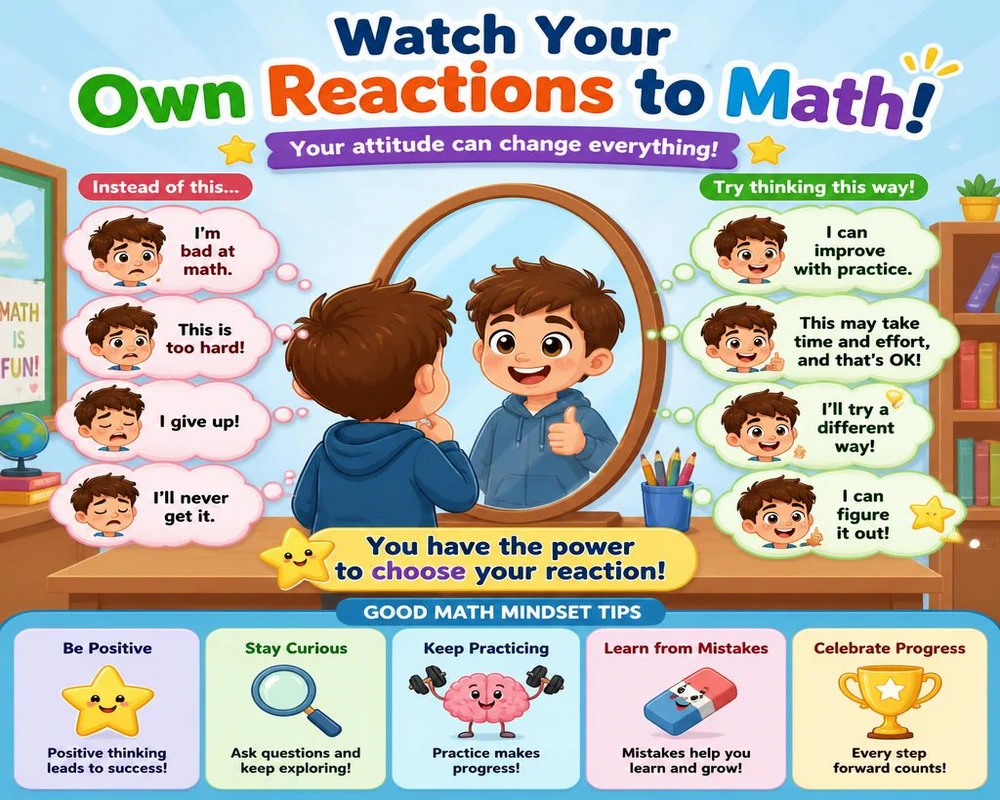
Watch Your Own Reactions to Math
Children pick up on parental stress around math surprisingly easily, even when it’s never stated directly. A calm, curious tone during homework time matters more than most parents realize.
Keep Practice Sessions Short and Low-Stakes
Long, high-pressure practice sessions tend to reinforce anxiety rather than reduce it. Short, frequent, genuinely low-pressure practice builds comfort more effectively than occasional marathon sessions.
Separate Math Time From Emotional Intensity
If a session is clearly triggering real distress, stopping and returning later, calmer, tends to work better than pushing through in the moment.
Talk to the Teacher About What You’re Noticing
Teachers see a child across an entire classroom of peers and can often confirm whether a pattern noticed at home also shows up at school, which helps clarify whether the anxiety is situational or more persistent.
When to Consider Additional Support for Math Anxiety in Elementary Students
Occasional nervousness before a math test is common and doesn’t necessarily require outside intervention. If math anxiety in elementary students is severe enough to consistently disrupt daily functioning, trigger significant distress, or persist despite calm, supportive practice at home, a conversation with the school counsellor or your child’s pediatrician is a reasonable next step, since they can help determine whether additional support would genuinely help.
Frequently Asked Questions
1. At what age can math anxiety start?
Research suggests math anxiety in elementary students can begin as early as age six, often well before a child has experienced much genuine academic struggle with the subject.
2. Is math anxiety the same as just disliking math?
No, math anxiety in elementary students involves a genuine stress response — physical, emotional, and behavioral — that interferes with performance, whereas simply disliking a subject doesn’t necessarily come with that same level of distress.
3. Can a strong math student still have math anxiety?
Yes, research has found math anxiety in elementary students and even high-achieving older students affects performance regardless of underlying skill, and it may develop early and compound over time even when actual math ability remains strong.
4. How is math anxiety different from general test anxiety?
Math anxiety specifically centers on numbers and math tasks, while general test anxiety can appear across any subject; a child can have one without necessarily having the other.
5. Should I avoid mentioning my own struggles with math?
Not necessarily, but framing it carefully matters — “math was hard for me too, and I got better with practice” tends to be more helpful than emphasizing struggle without the resolution.
6. Can math anxiety affect a child’s report card levels?
It can, since anxiety may interfere with performance on assessments even when underlying understanding is solid, which is part of why addressing the anxiety itself matters alongside academic support.
7. Where can I find grade-appropriate practice that won’t add to the pressure?
Our Ontario math practice platform offers low-stakes, curriculum-aligned practice at each grade level, which can help build quiet, steady confidence without the pressure of a graded classroom assessment.
Explore practice matched to your child’s exact grade through our Grade 1 through Grade 6 math practice hubs, all designed to reinforce confidence alongside skill for students managing math anxiety in elementary students.
For further reading on classroom strategies addressing this exact issue, EdWeek’s 2025 research summary on math anxiety offers additional evidence-based approaches educators are currently using.
This article discusses a common educational challenge; if you have concerns about your child’s broader emotional wellbeing, a conversation with your school or pediatrician can help identify the right kind of support.