
Ontario Math Curriculum Changes: What Parents Need to Know
A parent helping with Grade 5 fraction homework might notice something odd: this looks like material they remember from Grade 7. That’s not a false memory. Ontario math curriculum changes introduced in 2020 genuinely moved several topics earlier, added two entirely new areas of study, and replaced a document that had gone unchanged since 2005. If the math your child brings home looks unfamiliar compared to your own school years, there’s a real reason for that.
This guide walks through exactly what changed, why it changed, and what it means for a child sitting in an Ontario classroom right now.
Why Ontario Math Curriculum Changes Happened When They Did
Ontario’s previous math curriculum dated back to 2005, meaning an entire generation of students moved through elementary school under a document written before smartphones were common and well before financial literacy or coding were seen as basic skills. The province cited declining EQAO results as part of the motivation — only 48% of Grade 6 students met the provincial math standard in the 2018-2019 school year, down from 61% a decade earlier, with a similar decline recorded in Grade 3 scores over the same period.
The Ontario math curriculum changes announced in June 2020 took effect that September, applying to Grades 1 through 8 all at once, developed in consultation with academics, employers, and parents.
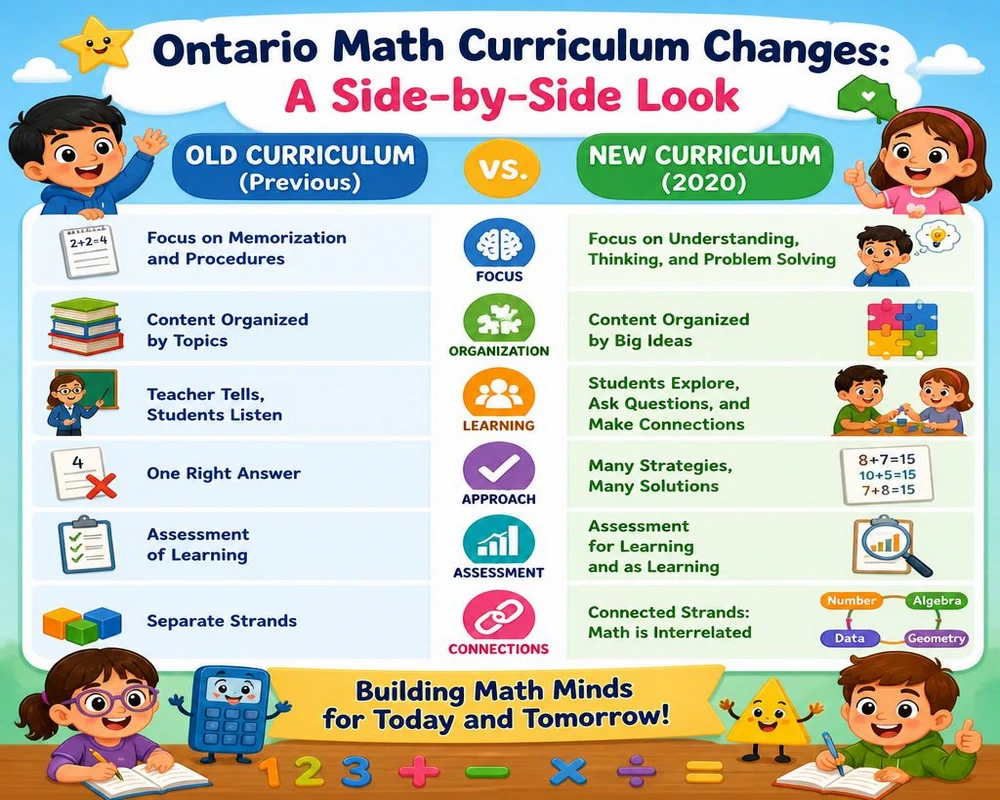
Ontario Math Curriculum Changes: A Side-by-Side Look
| Area | 2005 Curriculum | 2020 Curriculum |
|---|---|---|
| Financial Literacy | Not a dedicated strand; touched on in various subjects from Grade 4 onward | A full, dedicated strand taught in math from Grade 1 through Grade 8 |
| Coding | Not mentioned at all | Introduced starting in Grade 1, folded into the Algebra strand |
| Adding/Subtracting Fractions | Introduced in Grade 7 | Introduced in Grade 5, two years earlier |
| Negative Integers | Introduced in Grade 7 | Introduced in Grade 6, one year earlier |
| Social-Emotional Learning | Not addressed in the math curriculum | A dedicated strand addressing confidence and resilience while learning math |
| Total Strands | Five content strands | Six strands, including the new Social-Emotional Learning strand |
The New Financial Literacy Strand
This is one of the most visible Ontario math curriculum changes for families, and arguably the one that gets the most attention. Financial literacy now runs as its own dedicated strand starting in Grade 1, where students begin with the value of coins and cash. By Grade 8, the same strand covers long-term financial planning, interest rate calculations, and evaluating loyalty programs. Before 2020, financial concepts were touched on across various subjects starting around Grade 4, without the same dedicated, sequential structure.
Coding Enters the Math Classroom
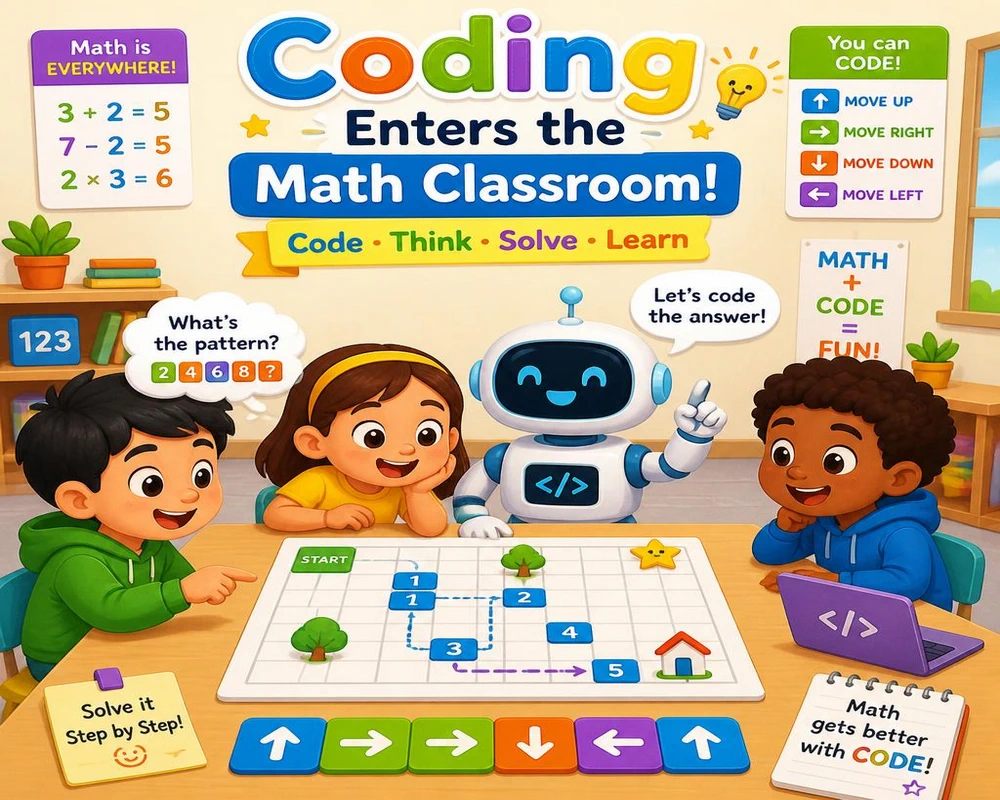
Coding wasn’t mentioned anywhere in the 2005 curriculum document. Among all the Ontario math curriculum changes introduced in 2020, this one is genuinely brand new territory, appearing starting in Grade 1, integrated within the Algebra strand rather than taught as a separate subject. The goal, according to the Ministry, is building problem-solving skills and comfort with technology that connect directly to algebraic thinking — recognizing patterns, following logical sequences, and debugging errors.
Topics That Moved Earlier
Fractions, Two Years Sooner
Adding and subtracting fractions now begins in Grade 5, compared to Grade 7 under the old curriculum. This is one of the more noticeable Ontario math curriculum changes for parents comparing their own school experience to their child’s current homework.
Negative Integers, One Year Sooner
Negative numbers are now introduced in Grade 6, a year earlier than the 2005 curriculum’s Grade 7 introduction. This explains why a Grade 6 student today works with concepts a parent might remember from Grade 7.
The Sixth Strand Most Families Don’t Know About
While financial literacy and coding got most of the public attention, some education commentators point to Social-Emotional Learning (SEL) as the more significant of all the Ontario math curriculum changes introduced in 2020. This strand addresses feelings students genuinely experience around math — confusion, frustration, anxiety — and aims to help them build resilience and confidence rather than treating those emotions as separate from actual math instruction.
Combined with Number, Algebra, Data, Spatial Sense, and Financial Literacy, SEL brings the total to six official strands, though it’s taught as an integrated skill throughout every lesson rather than as its own separate unit of content.
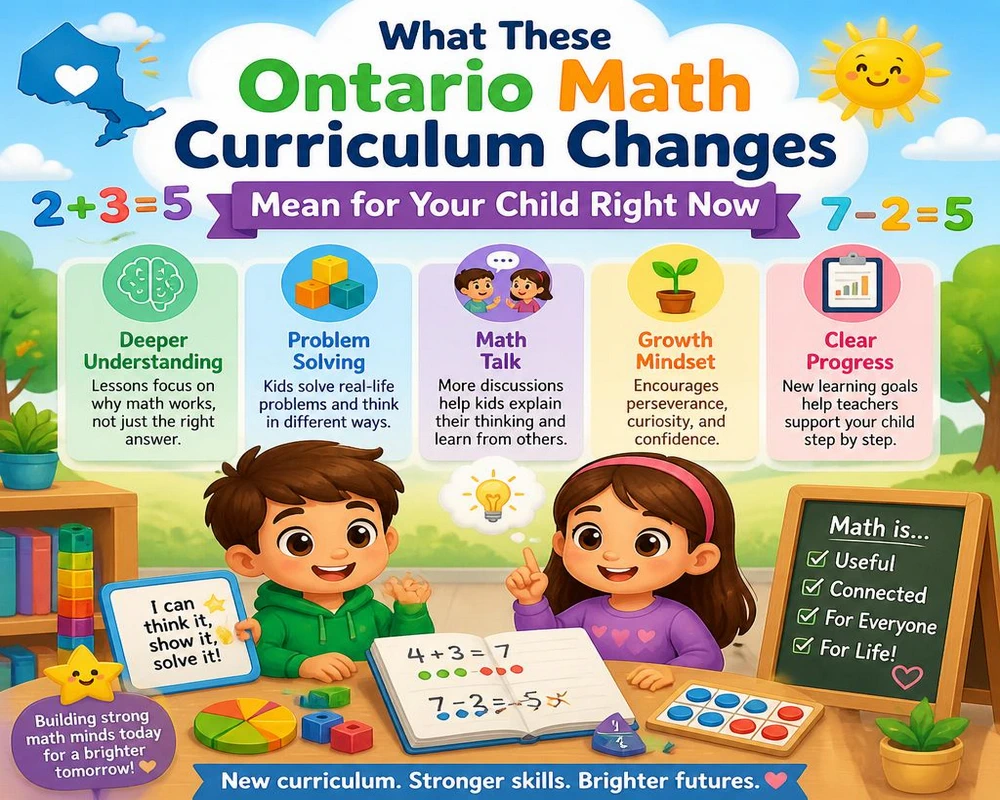
What These Ontario Math Curriculum Changes Mean for Your Child Right Now
If Your Child Started School Before 2020
Older siblings who began elementary school before September 2020 experienced a genuinely different sequence of topics than younger siblings do now. This explains real, noticeable differences in when certain concepts were introduced between kids in the same family.
If You’re Helping With Homework Using Your Own Memory
A method or timing that feels off compared to what you remember learning likely reflects one of these Ontario math curriculum changes, not a mistake in the material. Checking the current grade-level expectations before assuming something is wrong saves confusion for everyone, especially since so many Ontario math curriculum changes shifted timing by a full grade or two.
If Financial Literacy or Coding Feels Unfamiliar
Since neither existed in the 2005 curriculum, plenty of parents genuinely never studied these topics in school themselves. That’s completely normal, and it’s worth treating both as a chance to learn alongside your child rather than assuming you should already know the material.
Frequently Asked Questions
1. When did Ontario’s current math curriculum take effect?
The Ontario math curriculum changes were announced in June 2020 and took effect that September, applying to Grades 1 through 8 simultaneously.
2. What was the previous Ontario math curriculum from?
The prior curriculum dated back to 2005, meaning the 2020 update represented the first revision in 15 years.
3. Is financial literacy really a full strand in Ontario math class?
Yes, it’s one of six official strands, taught continuously from Grade 1 through Grade 8, covering everything from coin recognition in the early years to interest rates and financial planning by Grade 8.
4. Why does my Grade 5 child seem to be learning fractions I remember from later grades?
Adding and subtracting fractions moved from Grade 7 to Grade 5 as part of the Ontario math curriculum changes in 2020, a two-year shift earlier than before.
5. Where is coding taught within Ontario’s math curriculum?
Coding is integrated into the Algebra strand, starting in Grade 1, rather than taught as a separate standalone subject.
6. What is the Social-Emotional Learning strand in math?
It’s a strand addressing the feelings students experience while learning math, aiming to build resilience and confidence, and it’s considered one of the more significant Ontario math curriculum changes even though it received less public attention than financial literacy or coding.
7. How can I find out exactly what my child’s grade covers now?
Our Ontario math practice platform breaks down every grade’s expectations by strand, reflecting the current 2020 curriculum your child is actually being taught.
For a full, grade-by-grade breakdown of current expectations reflecting these Ontario math curriculum changes, see our Ontario math curriculum by grade guide, or explore practice questions through our Grade 1 through Grade 6 hubs.
For the complete, official curriculum document and policy details, the Ontario Ministry of Education’s elementary mathematics curriculum page provides the full, authoritative text.