
March Break Math Activities Ontario: 7 Best No-Prep Ideas
A week off school doesn’t have to mean a week off math — but it also shouldn’t mean dragging out a workbook while everyone’s supposed to be relaxing. March Break math activities Ontario parents can genuinely enjoy tend to hide inside things already happening during the break anyway: a road trip, a snow day, a board game night, a grocery run before a family gathering. The goal isn’t a structured lesson. It’s keeping a child’s math thinking warm during a week where formal practice understandably takes a back seat.
This guide walks through seven March Break math activities Ontario families can start with zero preparation, each one tied to something that naturally happens during the break anyway.
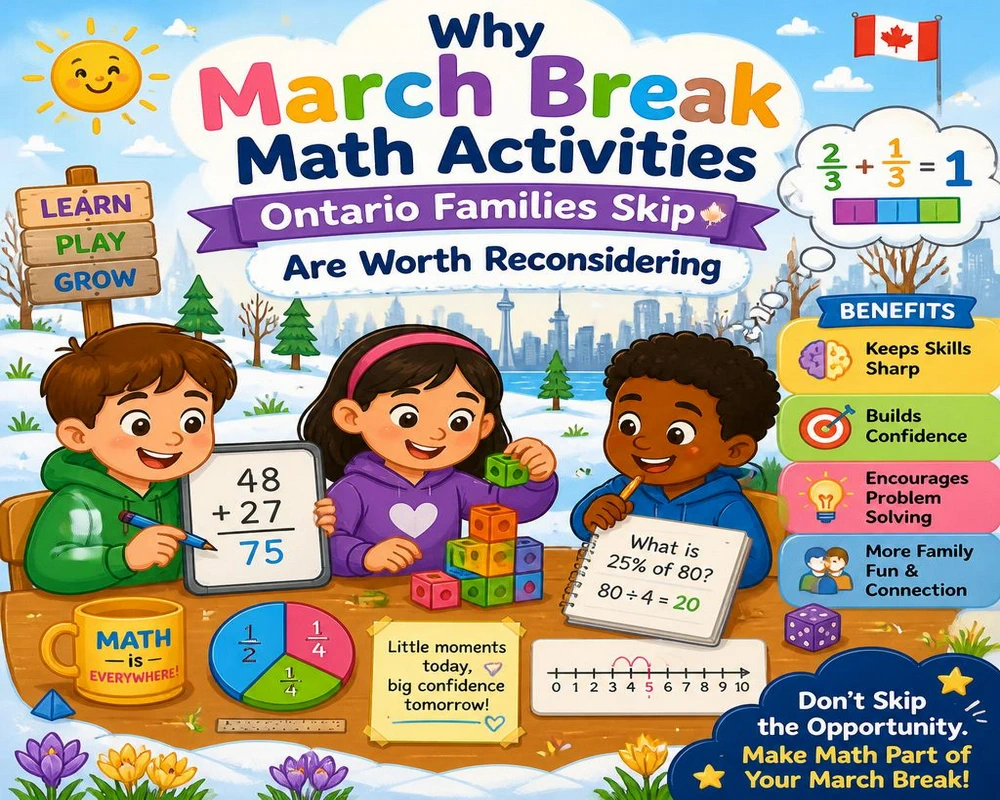
Why March Break Math Activities Ontario Families Skip Are Worth Reconsidering
A full week away from any math thinking can create a small, noticeable dip when students return to class, especially right before the spring stretch of curriculum that often introduces genuinely new material. March Break math activities Ontario families weave into the break naturally — not forced, not lengthy — tend to prevent that dip without turning a vacation week into extra school. Choosing just one or two March Break math activities Ontario households already have the materials for makes this genuinely easy to start.
This matters because the goal here isn’t intensive review. It’s light, occasional engagement that keeps numbers feeling familiar, so the first week back doesn’t feel like starting from scratch.
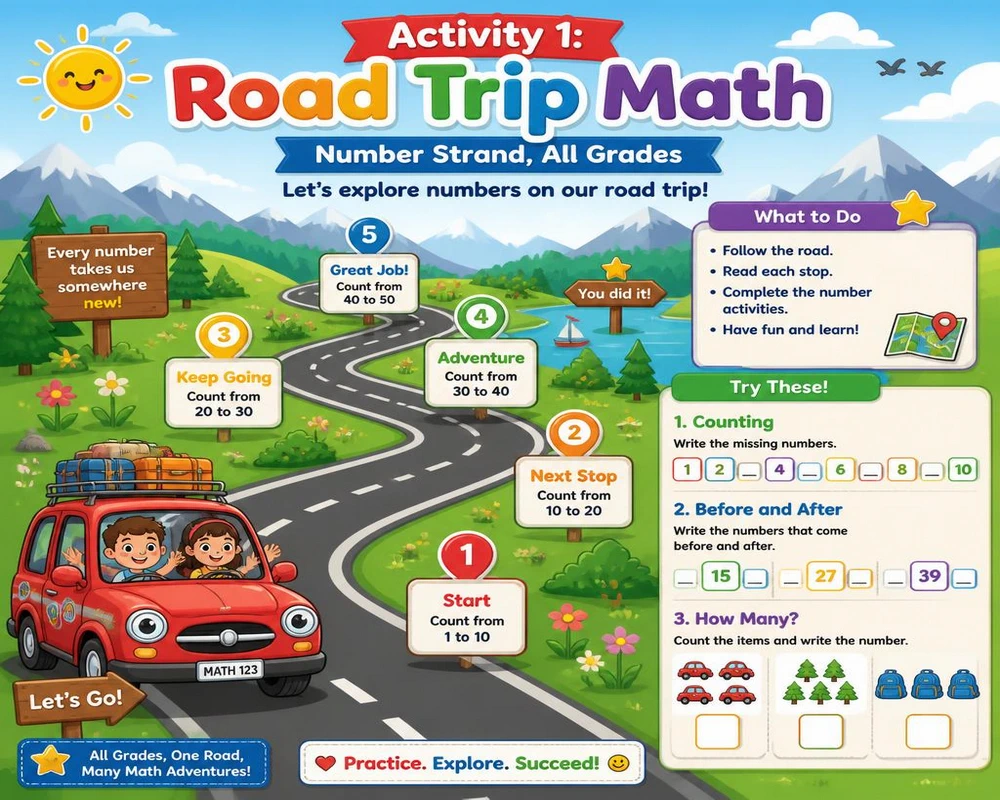
Activity 1: Road Trip Math (Number Strand, All Grades)
How It Works
On any drive during the break, turn the dashboard into a math problem. If a trip covers 180 kilometres at an average speed of 60 km/h, how long should it take? Younger kids can track distance on road signs and predict arrival times; older kids can calculate the actual travel time and compare it to the GPS estimate.
Why It Fits March Break Specifically
Family drives to visit relatives or take a short getaway are common during the break, making this one of the easiest March Break math activities Ontario families can do without setting aside any dedicated time at all.
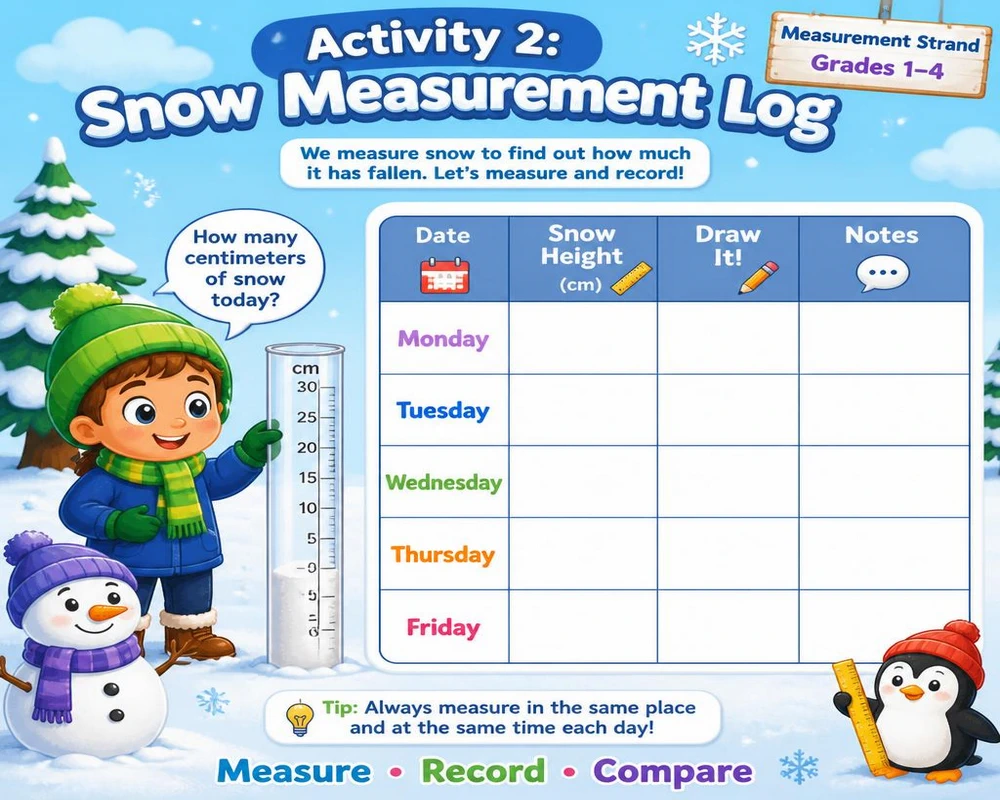
Activity 2: Snow Measurement Log (Measurement Strand, Grades 1-4)
How It Works
If there’s snow on the ground, measure the depth in the backyard each morning of the break using a ruler, and track how it changes. Adding 15 cm from one day to 8 cm of new snowfall the next gives a running total of 23 cm, which can then be converted to metres for older students.
Why It Fits March Break Specifically
March in Ontario is genuinely unpredictable weather-wise, which makes this one of the more naturally occurring March Break math activities Ontario winters offer, blending real measurement practice with something kids are already curious about outside.
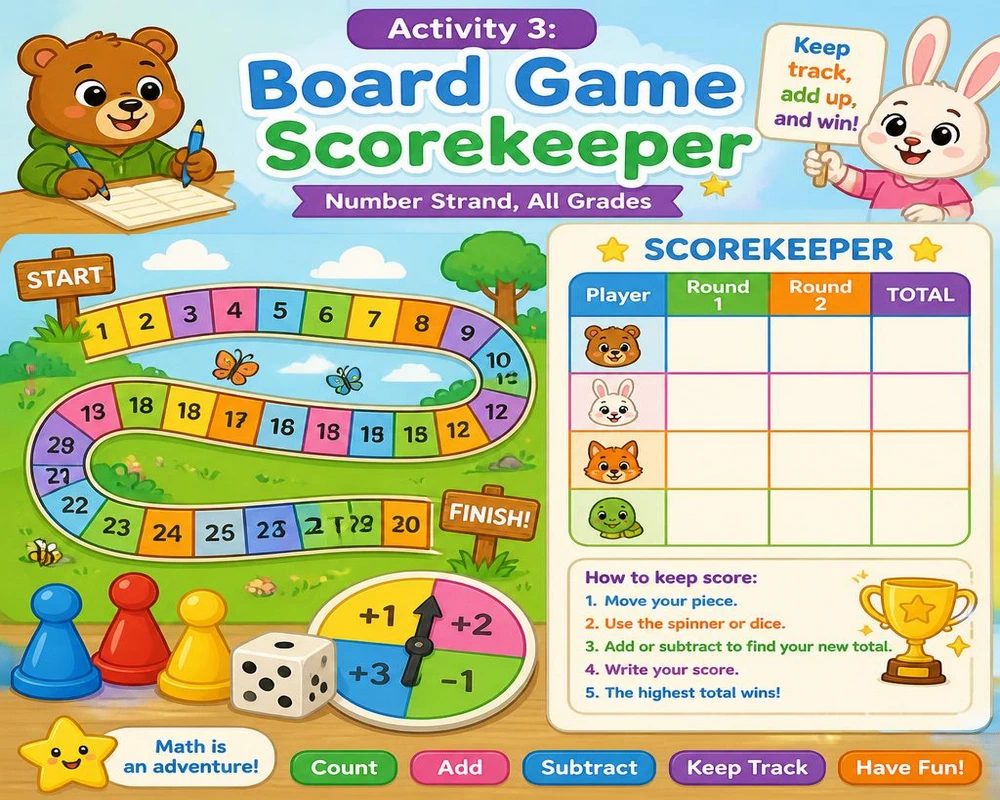
Activity 3: Board Game Scorekeeper (Number Strand, All Grades)
How It Works
During any family board game night, put your child in charge of tallying scores. Adding three players’ scores of 24, 18, and 31 to find a running total, or calculating who’s ahead by how much, is genuine addition and comparison practice disguised entirely as game night.
Why It Fits March Break Specifically
Board games are a natural go-to during a week without school, and putting a child in charge of the math side adds real value without adding a single extra minute to family time.
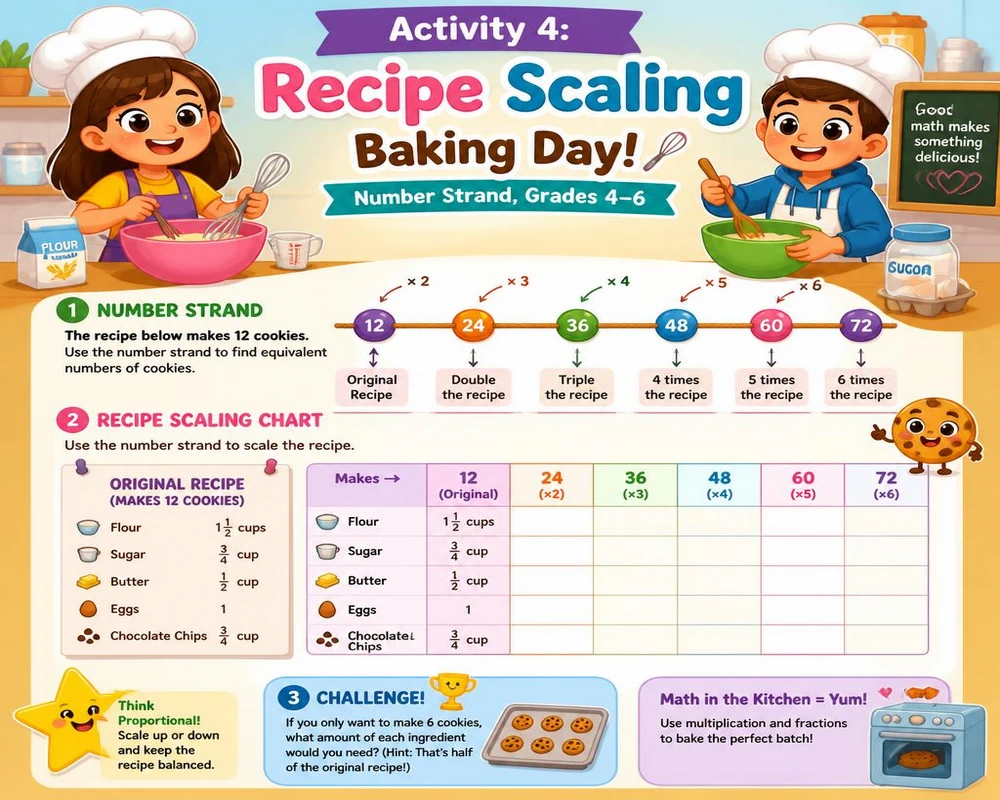
Activity 4: Recipe Scaling Baking Day (Number Strand, Grades 4-6)
How It Works
Pick a simple recipe and scale it up together — if a recipe calls for 2 cups of flour and you want to make two and a half batches, that’s 5 cups total. Older students can handle scaling with fractions; younger ones can help measure the scaled amounts once the math is worked out together.
Why It Fits March Break Specifically
A rainy or cold March Break afternoon is exactly when a baking project fills time naturally, making this one of the more enjoyable March Break math activities Ontario families can turn into an actual afternoon plan.
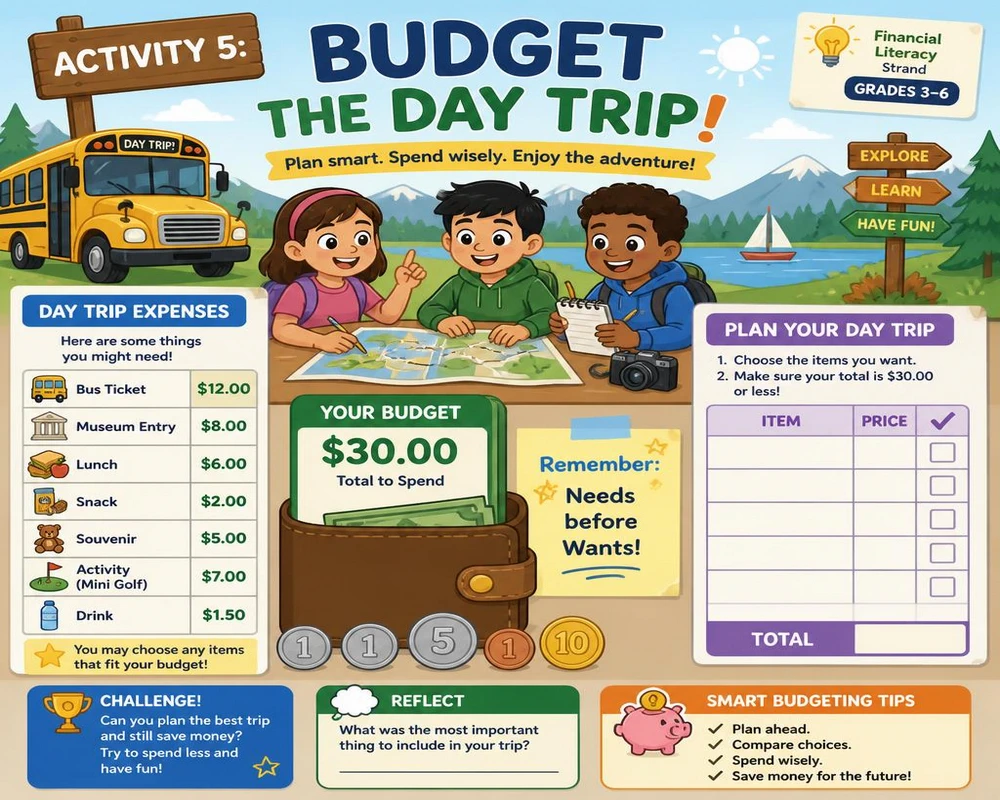
Activity 5: Budget the Day Trip (Financial Literacy Strand, Grades 3-6)
How It Works
Give your child a pretend (or real, small) budget for a day out — say $40 — and have them plan three activities at $12 each, then figure out what’s left over. This kind of real budgeting mirrors exactly what Ontario’s Financial Literacy strand expects, especially from Grade 3 onward.
Why It Fits March Break Specifically
Many families plan at least one outing during the break, so involving a child in the actual budget decision turns a normal family activity into genuine, relevant practice.
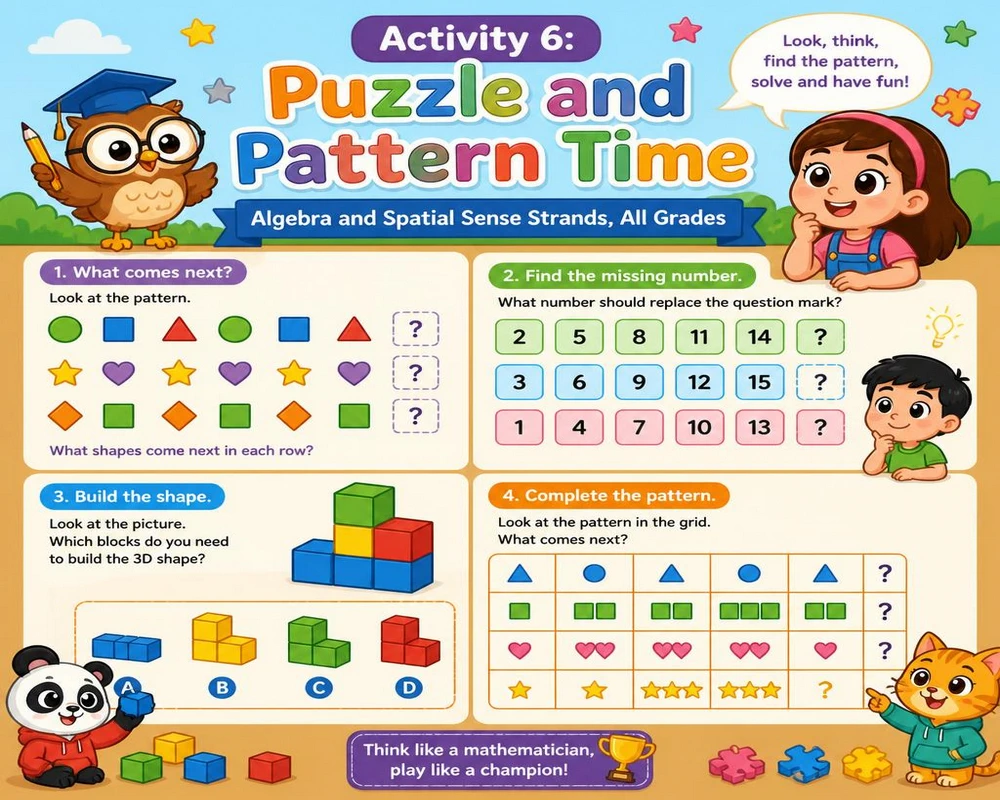
Activity 6: Puzzle and Pattern Time (Algebra and Spatial Sense Strands, All Grades)
How It Works
Jigsaw puzzles, pattern blocks, or even simple tangrams reinforce spatial reasoning and pattern recognition without ever feeling like schoolwork. For older students, timing how quickly a puzzle section comes together and predicting completion time adds a light numerical layer.
Why It Fits March Break Specifically
Slower-paced days during the break are the perfect setting for a puzzle that might otherwise never get finished during a busy school week.
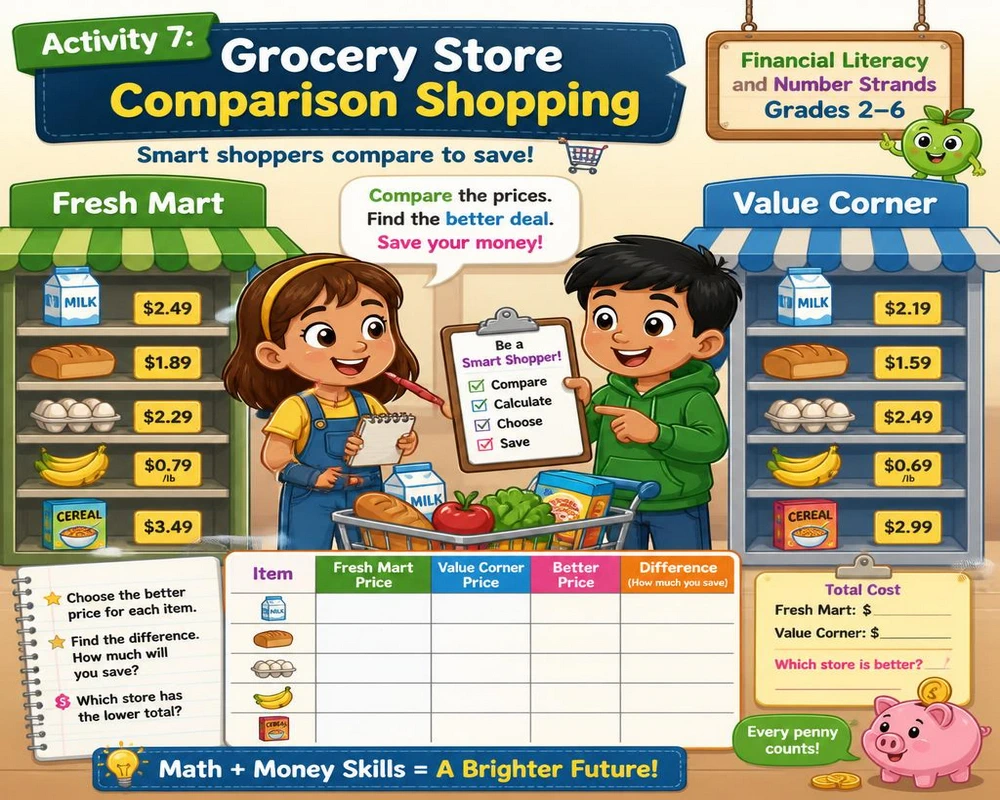
Activity 7: Grocery Store Comparison Shopping (Financial Literacy and Number Strands, Grades 2-6)
How It Works
If a family gathering or special meal is part of the break, bring your child along for the grocery trip and have them compare prices between two similar products to find the better deal per unit.
Why It Fits March Break Specifically
Special meals and family visits are common during the break, and the grocery trip that comes with them is a naturally occurring opportunity that costs nothing extra to turn into practice.
Matching March Break Math Activities Ontario Families Can Use to Your Plans
| If Your Break Includes | Try This Activity |
|---|---|
| A road trip or drive to visit family | Road Trip Math |
| Snow or unpredictable weather | Snow Measurement Log |
| Family game nights | Board Game Scorekeeper |
| A rainy or slow afternoon at home | Recipe Scaling Baking Day, Puzzle and Pattern Time |
| A planned day trip or outing | Budget the Day Trip |
| A family gathering or special meal | Grocery Store Comparison Shopping |
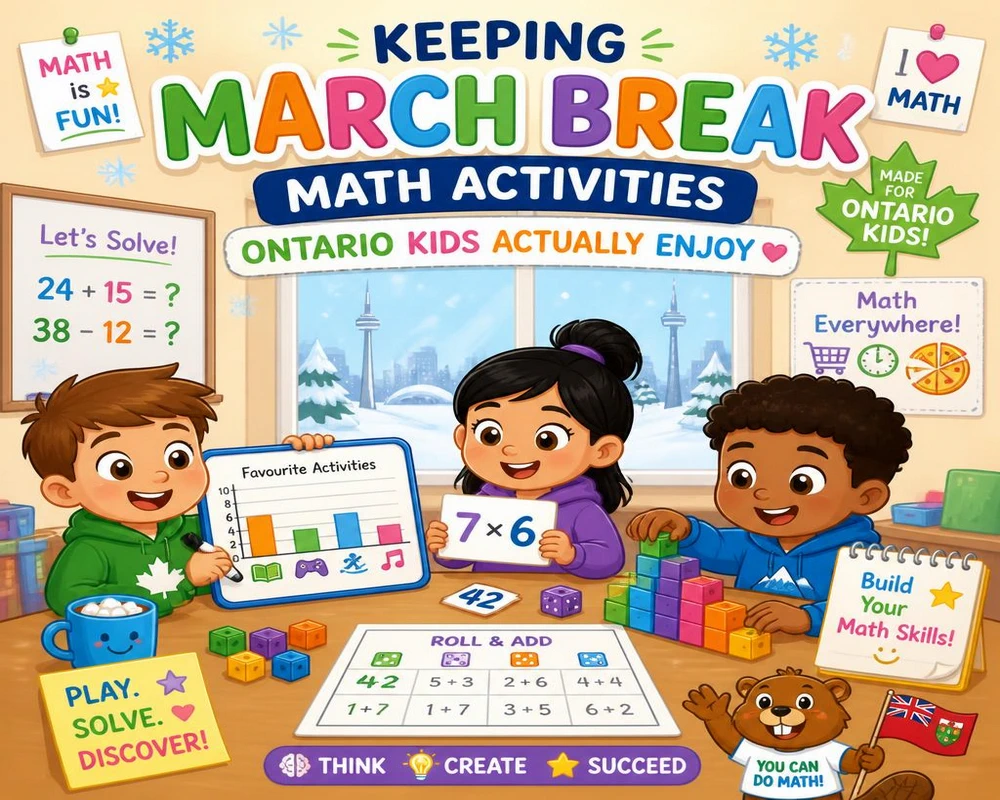
Keeping March Break Math Activities Ontario Kids Actually Enjoy
Even the best-designed March Break math activities Ontario families try can fall flat if the tone feels off. A few small adjustments make a real difference.
Never Frame It as “Extra Homework”
The moment an activity gets labelled as school-related work, resistance tends to follow, even during a week off. Keeping the language casual — “help me figure this out” rather than “let’s practice math” — changes the entire tone.
Let the Activity Come First, the Math Second
The road trip, the baking, the board game — these should happen because they’re genuinely fun on their own, with the math folded in naturally rather than the activity existing purely as an excuse for practice.
Skip It Some Days Entirely
March Break math activities Ontario families use don’t need to happen every single day of the break. A few genuine moments across the week accomplish the goal without turning a vacation into a structured program.
Frequently Asked Questions
1. Do March Break math activities really prevent skill loss?
Light, occasional engagement during a break tends to keep numbers feeling familiar, reducing the adjustment period when formal school practice resumes, even without formal, structured review. That’s the entire logic behind building March Break math activities Ontario families can genuinely sustain across a busy week off.
2. How much time should these activities take each day?
There’s no fixed requirement — most of these March Break math activities Ontario families use take only as long as the activity itself already would, since the math is folded into something already happening.
3. What if my child resists anything that feels like math during the break?
Avoid naming it as math at all. Framing it simply as “help me figure this out” during a natural moment tends to bypass that resistance far more effectively than announcing a math activity outright.
4. Are these activities appropriate for every grade?
Most scale naturally — younger children can participate at a simpler level (counting, basic comparison) while older children handle the same activity with more complex calculation, like fractions or unit rates.
5. Should we do all seven activities during one March Break?
Not necessarily. Picking two or three that naturally fit your family’s actual plans for the week tends to work better than trying to force all seven into one break.
6. What if our March Break doesn’t include travel, snow, or outings?
Board Game Scorekeeper, Recipe Scaling, and Puzzle and Pattern Time all work entirely at home, with no special circumstances required beyond ordinary household items.
7. How can I find more structured practice for when the break ends?
Our Ontario math practice platform offers curriculum-aligned lessons by grade, a natural next step once regular practice resumes after the break.
Explore grade-specific practice through our Grade 1 through Grade 6 math practice hubs, or see our Ontario math curriculum by grade guide for what each grade covers before and after the break. These March Break math activities Ontario families use now pair naturally with that structured practice once the break ends.
For official Ontario school calendar dates, including this year’s March Break window, the Ontario Ministry of Education’s school year calendar page lists confirmed dates by school board.