Grade 6 Financial Literacy Practice — Budgeting and Money Ontario Curriculum
📅 August 7, 2026·✍️ Teacher·⏱ 9 min read
Ask most adults where they learned to build a budget, and a surprising number will say “I figured it out the hard way.” Ontario is trying to change that story, and it starts as early as elementary school. Grade 6 financial literacy practice has become one of the more talked-about corners of the math curriculum in the last few years, and honestly, it’s about time.
As someone who has spent over a decade in Ontario classrooms and curriculum consulting, I’ve watched financial literacy shift from an afterthought to a genuine priority — and Grade 6 sits right at the sweet spot where kids are old enough to grasp real money concepts but young enough to build good habits before bad ones take root.
This guide covers exactly what Grade 6 students are expected to learn about money in Ontario, plus practical practice questions and activities you can use at home to reinforce it.
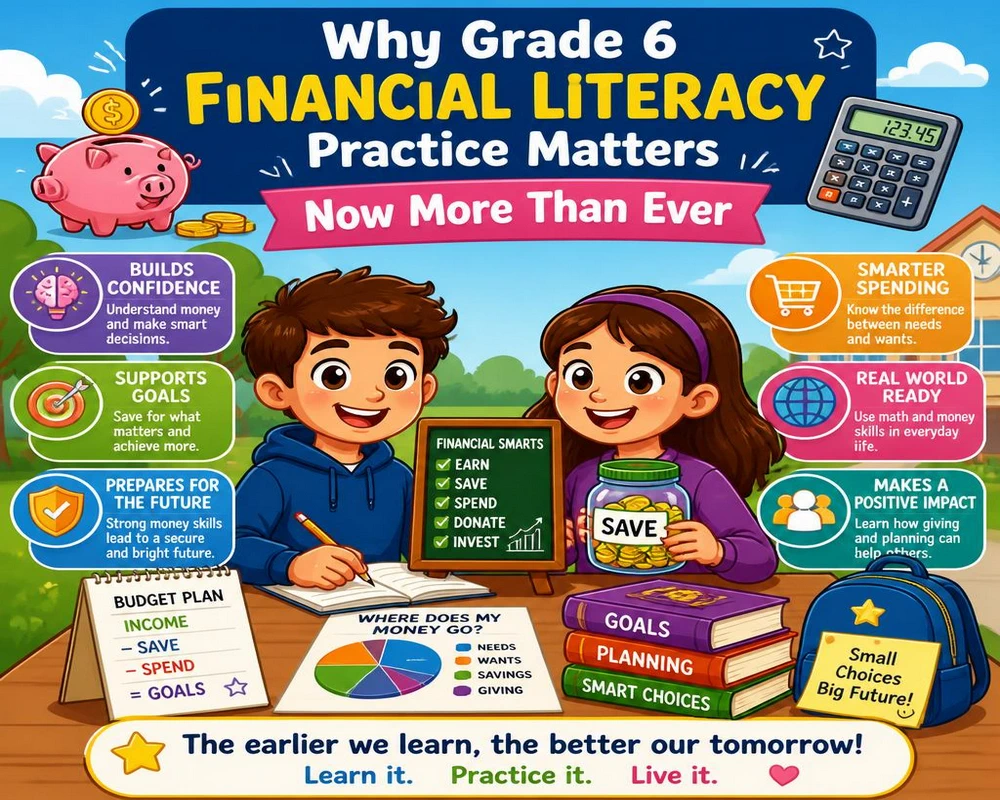
Why Grade 6 Financial Literacy Practice Matters Now More Than Ever
Ontario’s 2020 mathematics curriculum states that in Grades 4 to 8, students extend their learning to the knowledge, concepts, and skills required to make informed financial decisions relevant to their lived experiences, including planning simple sample budgets. This isn’t a token unit tucked into the back of a math textbook — it’s woven into the year as its own strand.
Ontario’s Ministry of Education introduced financial literacy as part of the mathematics curriculum across Grades 1 through 9, structured around three broad expectations: Money Concepts, Financial Management, and Consumer and Civic Awareness. The reasoning behind this is straightforward: structured teaching of financial literacy skills supports students in making effective financial decisions earlier in life, including with loans, interest payments, investments, and budgeting, as they move through their careers and post-secondary education.
There’s also a bigger policy shift backing this up. Starting in 2025, Ontario high school students must meet a new financial literacy graduation requirement, part of a broader reform to modernize the Ontario Secondary School Diploma for the first time in 25 years. Students will need to pass a financial literacy assessment within their Grade 10 math course, scoring 70% or higher. That means the money math Grade 6 Canada students are learning right now isn’t an isolated unit — it’s the foundation for a requirement they’ll face again in high school.
Why Grade 6 Financial Literacy Practice Matters Now More Than Ever
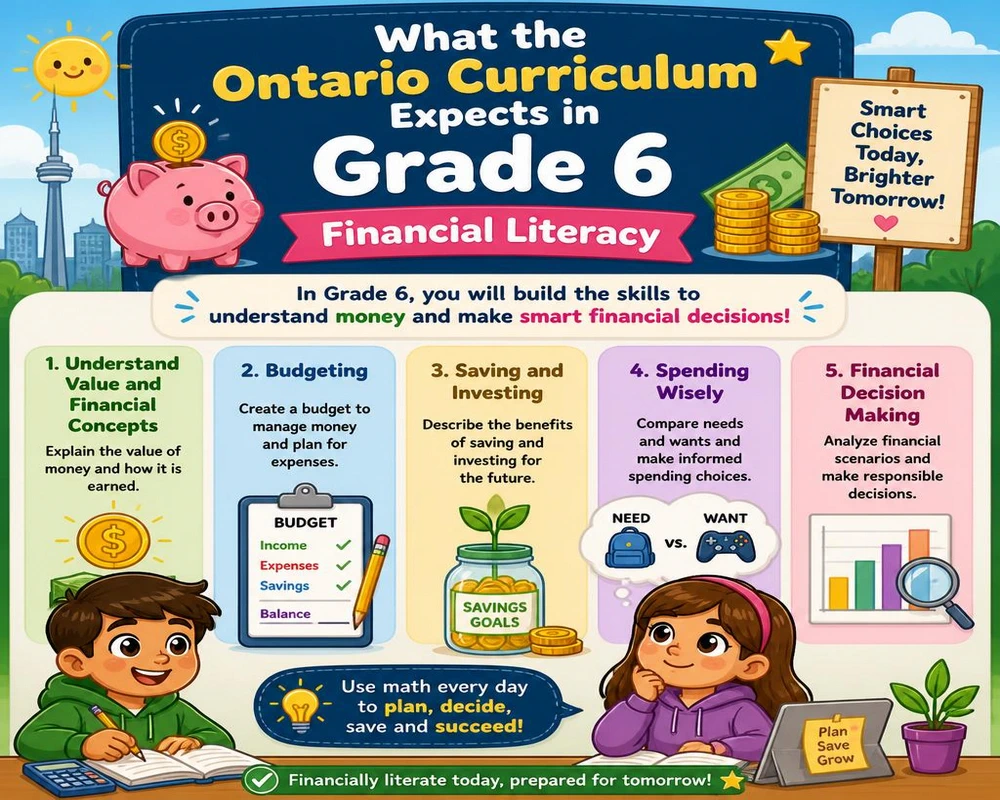
What the Ontario Curriculum Expects in Grade 6 Financial Literacy
Money Concepts
At this stage, students move beyond simply recognizing coins and bills. Grade 6 students are expected to understand different forms of payment, compare financial products, and grasp basic concepts like interest — both the kind you earn and the kind you pay.
Financial Management
This is where budgeting Grade 6 math really comes to life. Students learn to create simple budgets, track income against expenses, and understand the difference between needs and wants in a spending plan.
Consumer and Civic Awareness
Students explore how advertising and marketing influence spending decisions, and they start thinking critically about value — is the cheaper option actually the better deal once you factor in quality or long-term cost?
What the Ontario Curriculum Expects in Grade 6 Financial Literacy
Core Financial Literacy Skills for Grade 6 Students
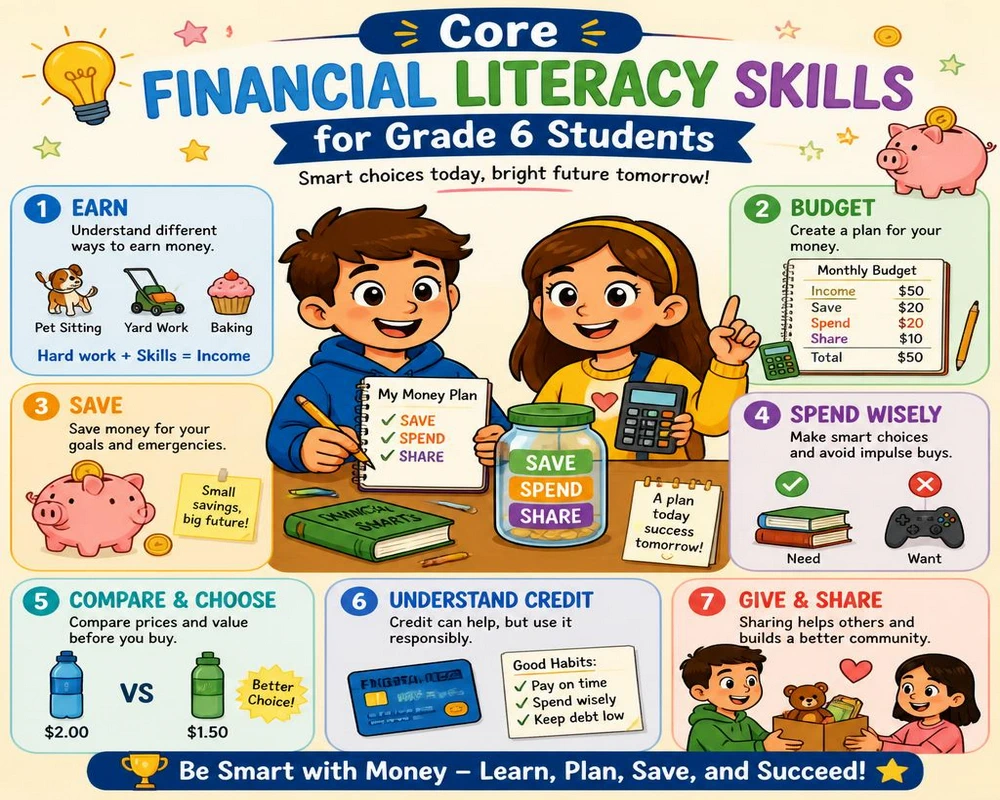
Before jumping into practice questions, here’s a quick-reference table of the core skills most Ontario Grade 6 classrooms cover over the year.
Skill Area
What It Looks Like in Practice
Budgeting
Creating a simple monthly budget with income and expense categories
Simple Interest
Calculating interest earned on savings or owed on a loan
Percentages
Applying discounts, taxes, and sales tax to purchase prices
Comparing Value
Evaluating unit prices to determine the better deal
Saving Goals
Setting a savings target and calculating time needed to reach it
Banking Basics
Understanding the difference between checking and savings accounts
Core Financial Literacy Skills for Grade 6 Students
Grade 6 Financial Math Questions Practice
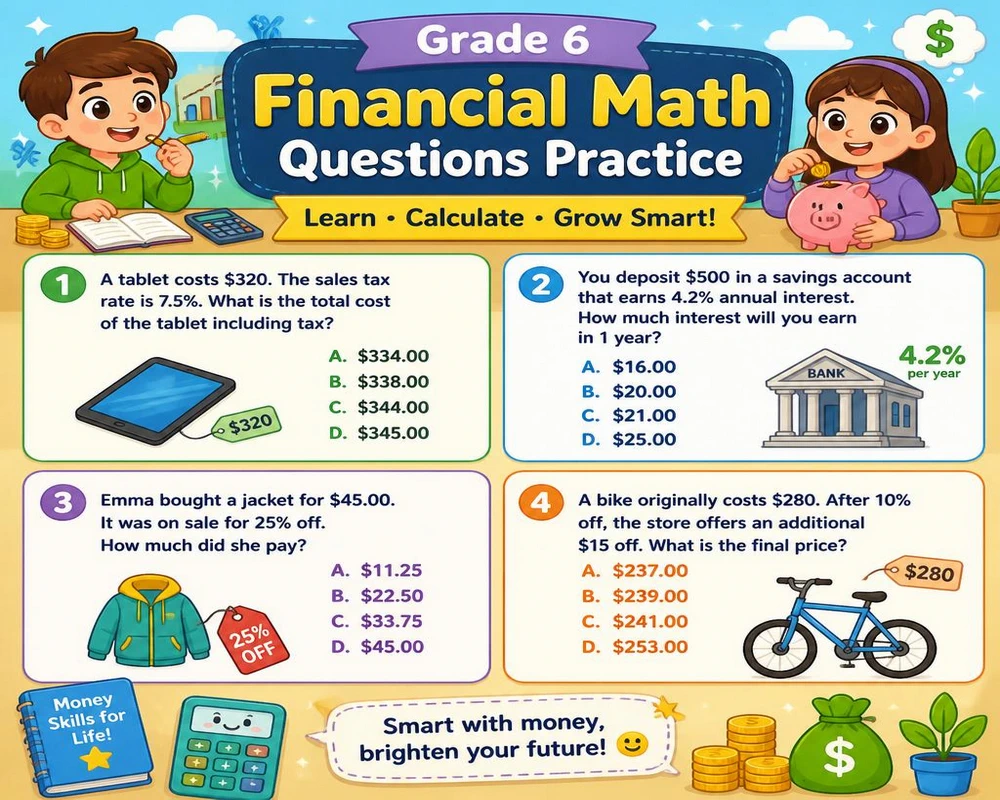
Here’s a set of financial literacy Grade 6 Ontario style questions, organized by skill area. Work through these with a calculator handy for the trickier ones — the goal is to build reasoning, not test mental math speed.
Budgeting Practice
Malik earns $40 a month from chores. He wants to spend $15 on a video game, save $20, and donate the rest. How much does he donate?
A family’s monthly budget includes $800 for rent, $300 for groceries, $100 for transportation, and $150 for other expenses. If their monthly income is $1,500, how much is left over?
Create a simple weekly budget for a $25 allowance. Include at least three spending or saving categories.
Simple Interest Practice
Priya deposits $200 in a savings account that earns 2% simple interest per year. How much interest will she earn after one year?
If you borrow $150 at 5% simple interest for one year, how much will you owe in total?
Percentage and Discount Practice
A bike is priced at $180 and is on sale for 20% off. What is the sale price?
A $12 item has 13% sales tax added. What is the final price?
A backpack originally costs $50. It’s marked down to $35. What percentage discount does that represent?
Comparing Value Practice
A 500 mL bottle of juice costs $2.50, and a 1.5 L bottle costs $6.00. Which option has the better unit price?
Store A sells a pack of 12 pencils for $3.60. Store B sells a pack of 8 pencils for $2.24. Which store offers the better deal per pencil?
Saving Goals Practice
Jordan wants to save $150 for a new bike. If they save $12.50 per week, how many weeks will it take?
Aisha has $40 saved and adds $5 each week. After how many weeks will she have at least $100?
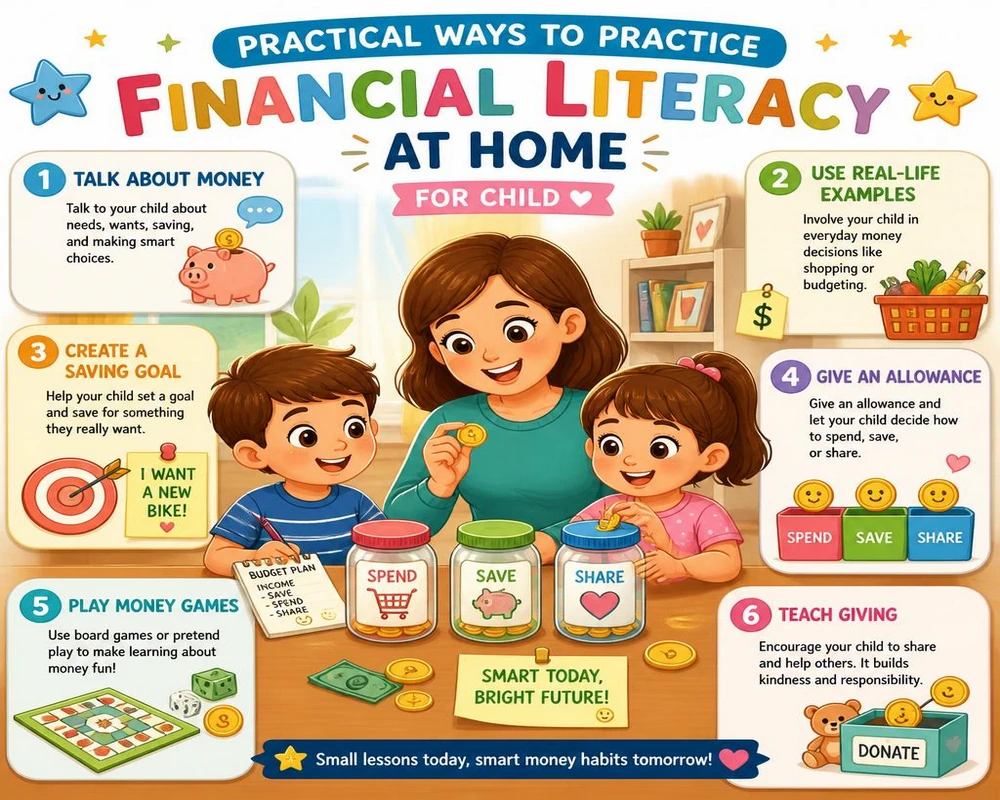
Practical Ways to Practice Financial Literacy at Home
Run a Mini Household Budget Together
Sit down with your child and walk through a simplified version of your family’s actual monthly budget — housing, groceries, and a few discretionary categories. Seeing real numbers, even in general terms, makes the abstract concept of budgeting click faster than any worksheet.
Use Allowance as a Live Case Study
If your child receives an allowance, use it as an ongoing financial literacy Grade 6 Ontario lesson. Have them split it into spending, saving, and giving categories each week. It’s a low-stakes way to practice the exact skills the curriculum targets.
Compare Prices at the Grocery Store
Next time you’re shopping, hand your child two similar products and ask them to figure out which one is the better value per unit. It’s a quick, real-world application of the comparing-value skills covered in class.
Track a Savings Goal Visually
Help your child pick something they want to save for, then create a simple chart or thermometer graphic to track progress toward that goal. Visualizing the math makes the process — and the payoff — feel much more tangible.
Practical Ways to Practice Financial Literacy at Home
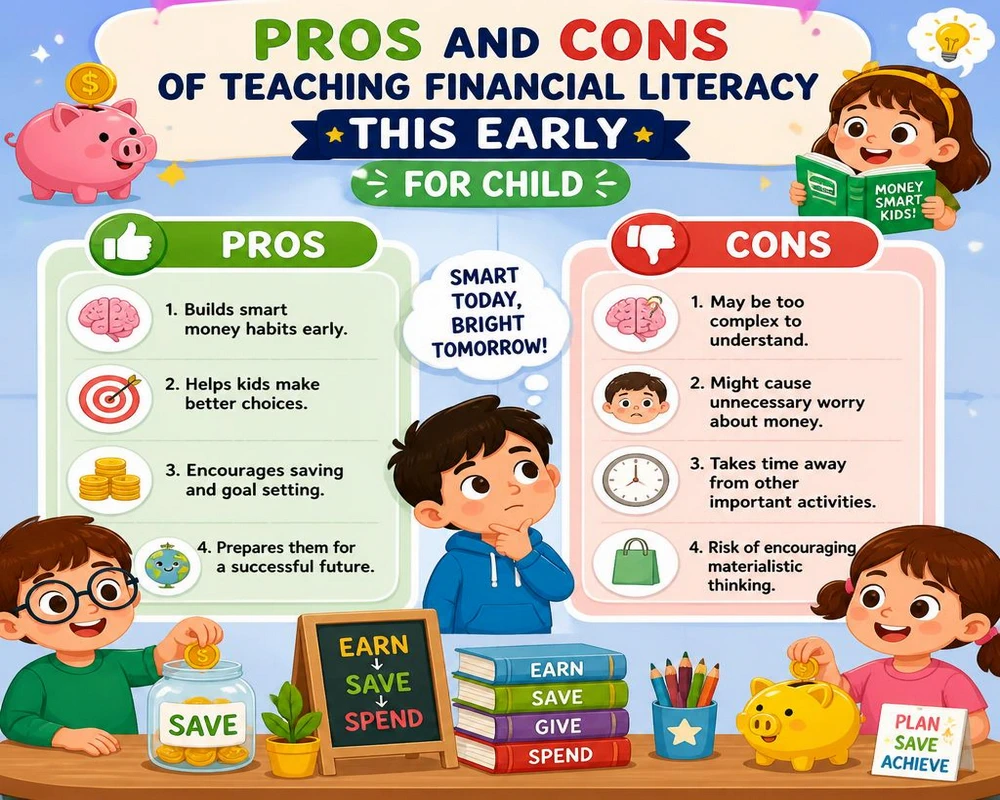
Pros and Cons of Teaching Financial Literacy This Early
Pros
Cons
Builds money habits before poor habits form
Abstract concepts like interest can be tricky for some 11-year-olds
Connects math to real, relatable scenarios
Requires parents to reinforce learning outside school
Prepares students for the Grade 10 requirement
Curriculum coverage can vary by classroom and teacher
Increases engagement since topics feel practical
Some students may not yet have real financial experiences to draw on
Even with those challenges, the consensus among educators I’ve worked with is clear: starting early beats starting late, especially with a formal graduation requirement now waiting for these students down the road.
Pros and Cons of Teaching Financial Literacy This Early
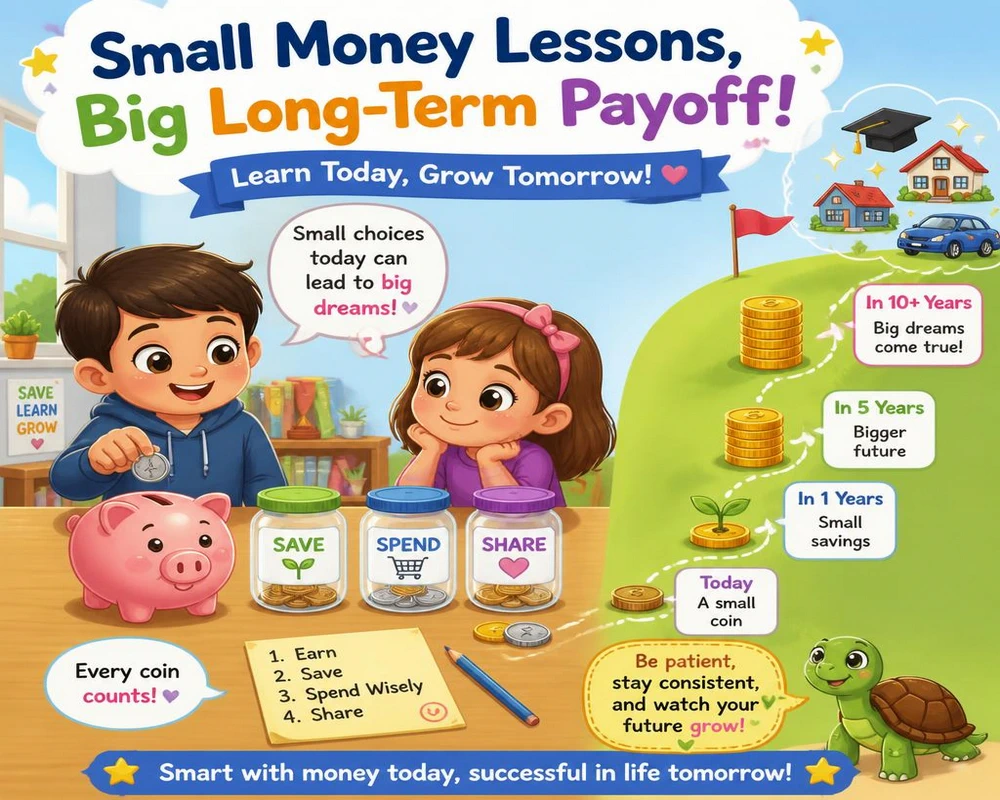
Conclusion: Small Money Lessons, Big Long-Term Payoff
Grade 6 financial literacy practice isn’t about turning your child into a junior accountant — it’s about giving them a working vocabulary and a comfort level with money that most adults had to build from scratch. Between budgeting, simple interest, and comparing value, these are skills your child will use every single week for the rest of their life, not just on a test. Pair the practice questions above with a few real-world conversations about money, and you’ll be reinforcing exactly what Ontario’s curriculum — and eventually the Grade 10 financial literacy requirement — is asking of them.
Start small: pick one skill area from this guide, work through three or four questions together this week, and build from there. Consistent, low-pressure practice is what turns financial literacy from a school subject into a life skill.
Small Money Lessons, Big Long-Term Payoff
Frequently Asked Questions
1. What is covered under Grade 6 financial literacy in Ontario? Grade 6 financial literacy covers three broad areas: Money Concepts, Financial Management, and Consumer and Civic Awareness, including budgeting, simple interest, and evaluating value as a consumer.
2. Why was financial literacy added to the Ontario math curriculum? It was introduced to help students build the knowledge and confidence to make informed financial decisions earlier in life, covering everything from budgeting to loans and interest.
3. Is Grade 6 financial literacy connected to any future graduation requirement? Yes. Starting in 2025, Ontario high school students must pass a financial literacy assessment as part of their Grade 10 math course, so early exposure in Grade 6 helps build the foundation for that later requirement.
4. What kind of financial math questions will my child see in Grade 6? Expect questions on simple interest, budgeting, percentage discounts, comparing unit prices, and setting savings goals — all framed around relatable, real-life scenarios.
5. How can I help my child practice budgeting at home? Use their allowance as a hands-on tool, having them divide it into spending, saving, and giving categories, and involve them in a simplified version of household budget conversations.
6. Do Grade 6 students need a calculator for financial literacy practice? It’s fine to use one for more complex percentage or interest calculations, since the goal is understanding the concept and process, not testing raw calculation speed.
7. What’s the difference between financial literacy in Grade 6 versus Grade 4? Grade 4 focuses on more foundational concepts like recognizing forms of payment and basic budgeting, while Grade 6 builds toward more complex skills like simple interest and comparing financial products.
8. Are there free resources to support Grade 6 financial literacy practice? Yes, Ontario’s curriculum support sites and many teacher resource platforms offer free worksheets and lesson materials aligned specifically to the Grade 6 Financial Literacy strand.
Ontario didn’t just tack financial literacy onto the math curriculum as an afterthought — it’s now woven through Grades 1 to 9 as its own strand, built around three core areas: Money Concepts, Financial Management, and Consumer and Civic Awareness. If you want tools that go beyond the classroom, the Financial Consumer Agency of Canada offers free resources specifically designed to help kids and families build these exact skills at home.
👩🏫
Teacher
Math educator and curriculum specialist helping Canadian families make the most of elementary math education.