
Grade 6 Decimals Practice: The Decimal Point Detective
Multiply 3.2 by 1.5 and a surprising number of Grade 6 students land on an answer like 0.48 or 48, both technically using the right digits in the wrong place. The digits were never the problem — the decimal point was. Grade 6 decimals practice this year shifts from simple addition and subtraction into multiplication and division, and that’s exactly where placing the decimal point correctly becomes the real skill worth mastering, far more than the multiplication itself.
This guide introduces a simple “detective” method — estimate first, then place the decimal point where the estimate says it belongs — and applies it across real Grade 6 decimals practice questions.
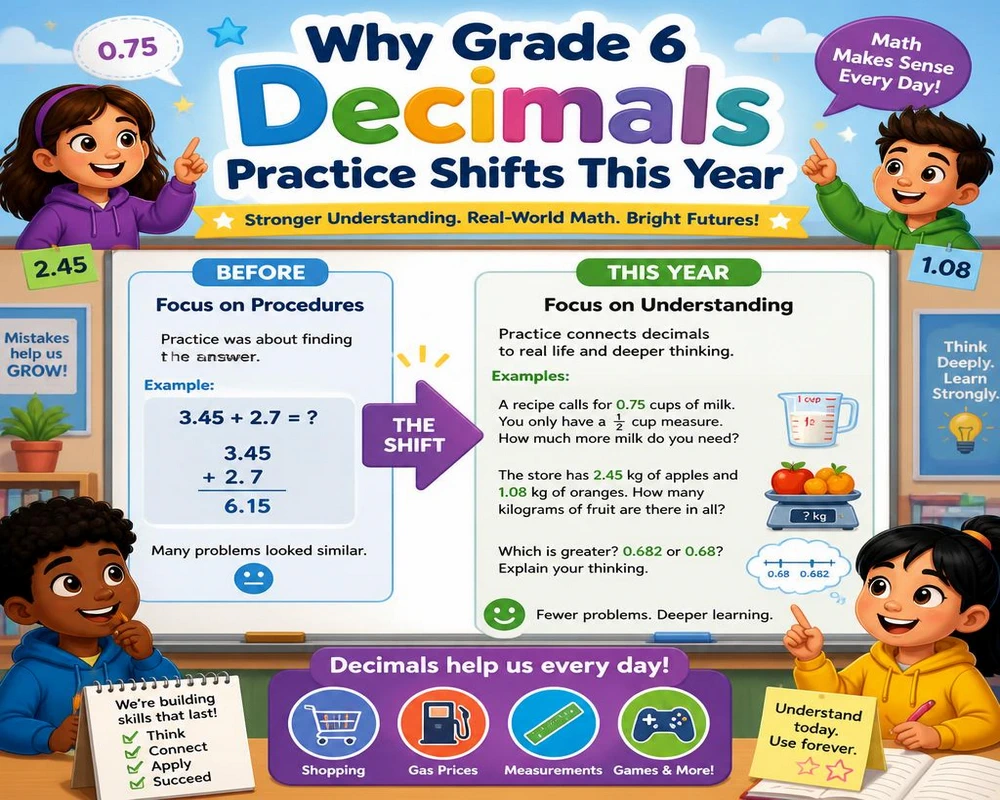
Why Grade 6 Decimals Practice Shifts This Year
Ontario’s curriculum expects Grade 6 students to multiply and divide decimals, building on the addition, subtraction, and hundredths place value work from Grade 5. Multiplying decimals uses the exact same process as multiplying whole numbers — the only new step Grade 6 decimals practice adds is figuring out where the decimal point belongs in the final answer.
This matters because most errors in Grade 6 decimals practice aren’t calculation errors at all. The digits are usually correct; the decimal point just ends up in the wrong spot, which is exactly the gap the detective method closes.
What the Ontario Curriculum Expects in Grade 6
By the end of Grade 6, students are generally expected to:
- Multiply decimal numbers by whole numbers and by other decimals
- Divide decimal numbers by whole numbers and by other decimals
- Estimate products and quotients involving decimals before calculating
- Solve real-world problems involving decimal operations
- Connect decimal calculations to equivalent fraction and percent representations
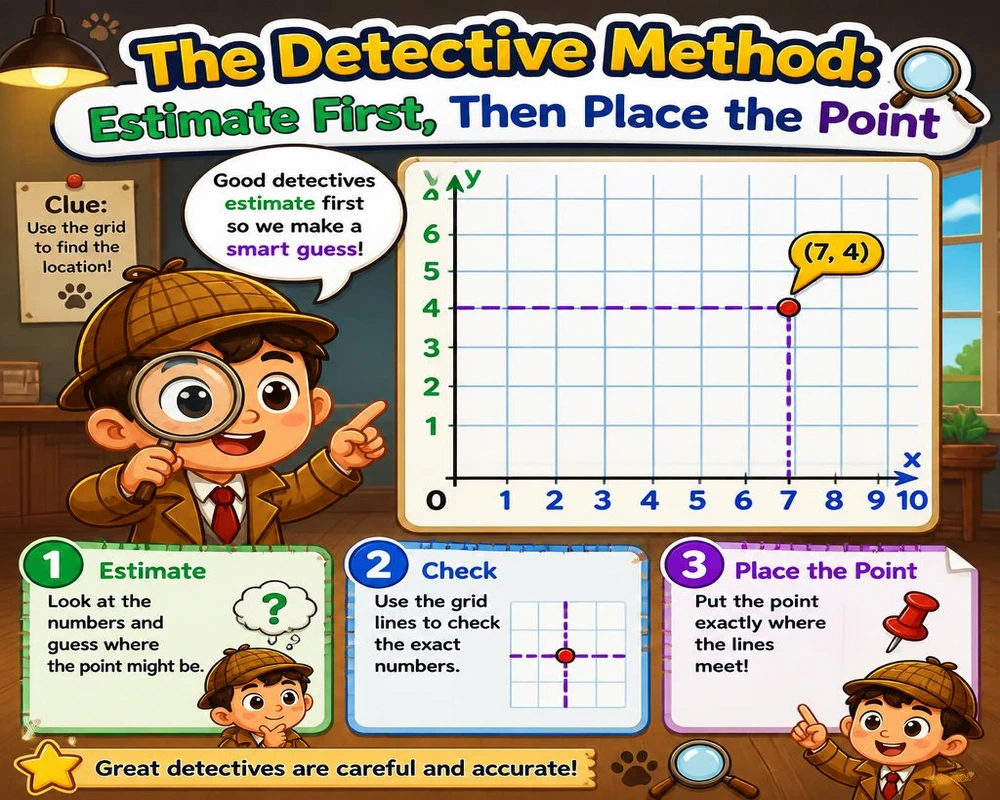
The Detective Method: Estimate First, Then Place the Point
This single habit is the core of effective Grade 6 decimals practice for multiplication and division alike.
How It Works
Before multiplying the digits, round both numbers to a friendly estimate and multiply those instead. The real answer’s decimal point goes exactly where that estimate says it should.
Worked Example
Problem: 3.2 × 1.5
Step 1 (estimate): Round to 3 × 1.5, or even simpler, 3 × 2 = 6
Step 2 (multiply the digits, ignoring the decimal point): 32 × 15 = 480
Step 3 (use the estimate to place the point): Since the estimate was close to 6, the real answer must be close to 6 too — so 480 becomes 4.80
Answer: 4.8
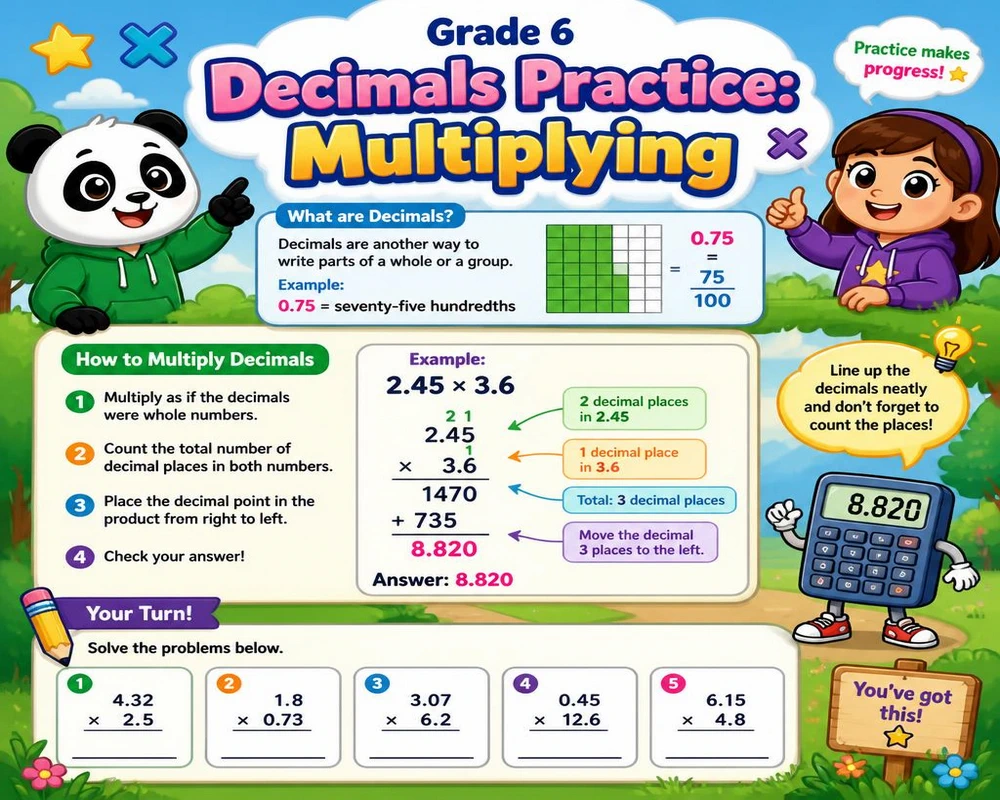
Grade 6 Decimals Practice: Multiplying
- 2.4 × 0.6 = ___ (estimate first: is this closer to 1 or 15?)
- 0.8 × 0.5 = ___ (estimate first: is this closer to 0.4 or 4?)
- 4.5 × 2.2 = ___ (estimate first: is this closer to 10 or 100?)
Answers: 1) 1.44 (estimate: closer to 1) 2) 0.4 (estimate: closer to 0.4) 3) 9.9 (estimate: closer to 10)
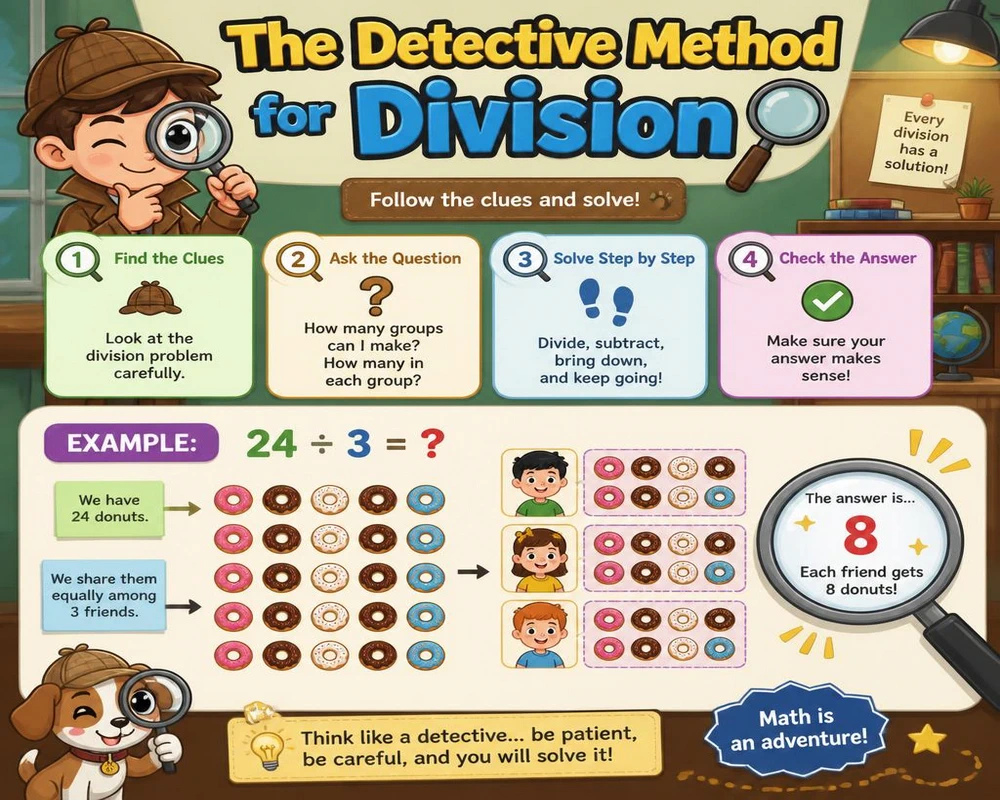
The Detective Method for Division
The same estimate-first approach works for dividing decimals, which is where Grade 6 dividing decimals practice tends to feel the most unfamiliar at first.
Worked Example
Problem: 6.4 ÷ 0.8
Step 1 (estimate): Think of it as roughly 6 ÷ 1, which is close to 6, or even better, recognize that dividing by a number less than 1 makes the answer bigger
Step 2 (calculate): 6.4 ÷ 0.8 = 8
Step 3 (check against the estimate): 8 is reasonably close to the rough estimate of 6-8, so the decimal placement looks correct
Grade 6 Decimals Practice: Dividing
- 9.6 ÷ 1.2 = ___
- 3.15 ÷ 0.5 = ___
- 7.2 ÷ 0.9 = ___
Answers: 1) 8 2) 6.3 3) 8
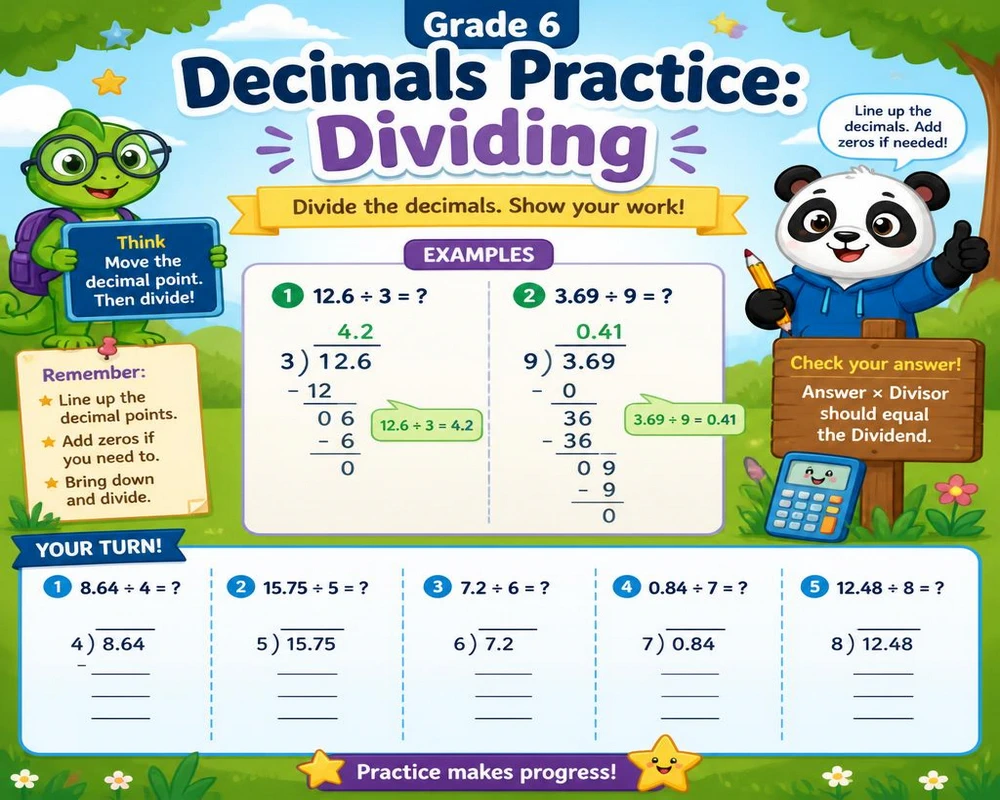
Three Real Places Grade 6 Decimals Practice Actually Gets Used
Reading a Grocery Receipt
4 items priced at $3.25 each should total $13.00. A student who calculates $1.30 or $130 instead of $13.00 has made exactly the decimal-point error this guide addresses — the digits 1300 are right, but the point landed in the wrong place.
Calculating Fuel Efficiency
A car that travels 456.8 km using 38.2 litres of fuel gets approximately 11.96 km per litre. Estimating first (450 ÷ 38, roughly 12) confirms the decimal point belongs after the first two digits, not somewhere else.
Converting Measurements
If one item weighs 12.5 kg, four identical items weigh 50 kg exactly — a calculation where a misplaced decimal point could easily turn into an answer of 5 kg or 500 kg instead.
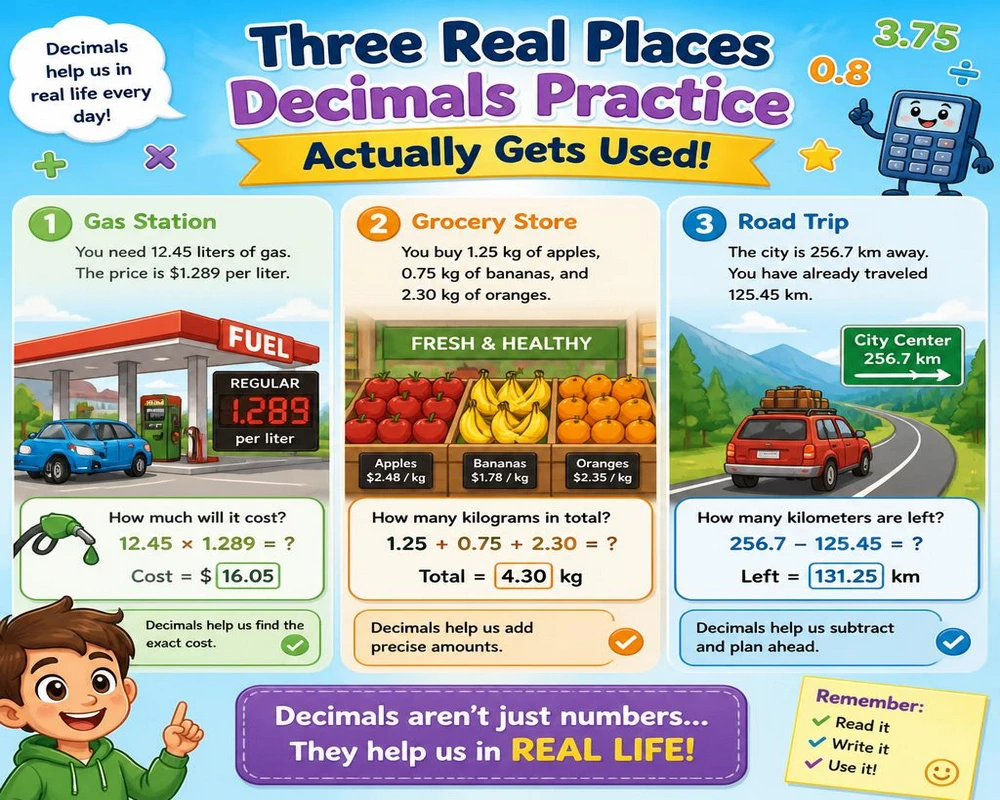
Real-Life Word Problems for Grade 6 Decimals Practice
- A recipe requires 0.75 kg of flour per batch. How much flour is needed for 6 batches?
- A 15.6 metre rope is cut into pieces that are each 1.3 metres long. How many pieces can be cut?
- Gas costs $1.45 per litre. How much does 12 litres cost?
Answers: 1) 4.5 kg 2) 12 pieces 3) $17.40
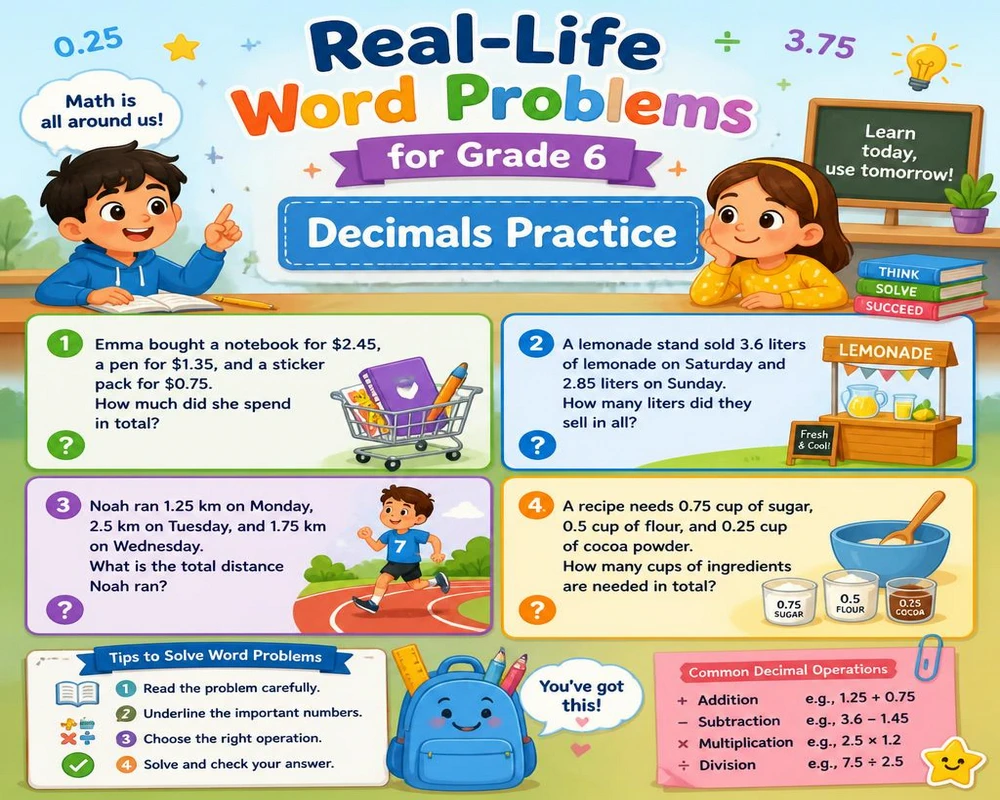
Common Mistakes in Grade 6 Decimals Practice
Three specific errors account for most of the wrong answers seen in Grade 6 decimals practice involving multiplication and division.
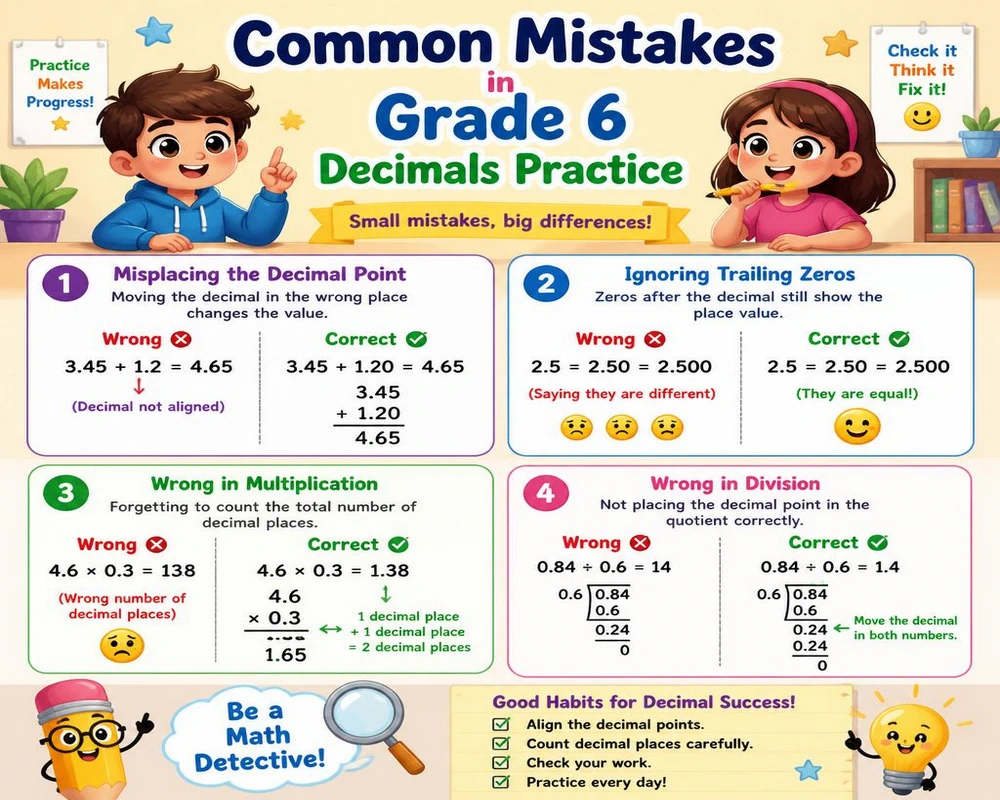
Skipping the Estimate Step
Students who jump straight to multiplying or dividing digits, without estimating first, have no way to catch a misplaced decimal point. Making the estimate step mandatory, not optional, is the single most effective fix for this entire category of error.
Counting Decimal Places Incorrectly When Multiplying
The number of decimal places in the answer should match the total decimal places in both factors combined. Skipping this count, or miscounting it, produces a plausible-looking but incorrect answer.
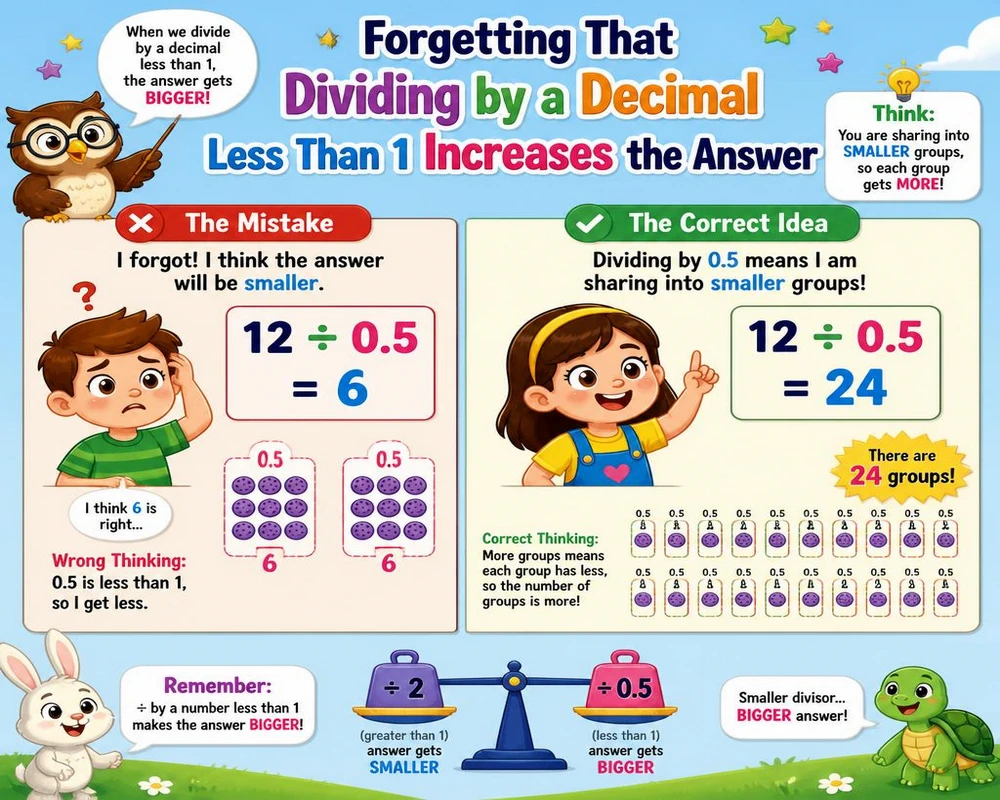
Forgetting That Dividing by a Decimal Less Than 1 Increases the Answer
Just like with fractions, dividing by a decimal smaller than 1 produces a bigger answer, not a smaller one — a genuinely counterintuitive result that catches many students off guard during Grade 6 decimals practice.
Frequently Asked Questions
1. Why does my child get the right digits but the wrong decimal placement?
This is extremely common in Grade 6 decimals practice and almost always means the estimate step was skipped. Estimating first gives a reliable check for exactly where the decimal point belongs.
2. How do I count decimal places when multiplying two decimals?
Count the total decimal places in both numbers being multiplied, then place the decimal point that many places from the right in the final answer.
3. Why does dividing by a small decimal make the answer bigger?
Dividing by a number less than 1 asks how many of that small amount fit into the total, and since the divisor is small, more of them fit, producing a larger result.
4. How can I practice this detective method at home?
Grocery receipts, gas prices, and recipe scaling all offer genuine, real-world Grade 6 decimals practice using exactly this estimate-first approach.
5. Should my child use a calculator to check decimal answers?
A calculator can confirm the digits, but it won’t catch a decimal placement error caused by incorrect input, so the estimate check remains valuable even when using one.
6. How much decimal practice should we do at home?
About 15-20 minutes, a few times a week, tends to work well, especially when multiplication and division are practiced together with the same estimation habit.
7. How does this connect to Grade 7?
Grade 7 builds on decimal operations with more complex multi-step problems and deeper connections to percent and ratio work.
Decimals are one part of a full Grade 6 year that also includes fractions, ratios, and integers. The estimate-first habit at the core of this Grade 6 decimals practice guide applies just as well to fractions and percents. Our Grade 6 math practice hub covers every topic in one place.
Interactive decimal models make estimation and place value easier to visualize than static worksheets alone. Mathies, Ontario’s free suite of digital math tools, includes decimal grids and number lines built for exactly this stage of learning.