
Grade 5 Percent and Ratio Practice — Ontario Math Curriculum Questions
If you’ve ever watched a ten-year-old freeze up at the words “find 25% of 60,” you already know why Grade 5 percent and ratio practice deserves more attention than it usually gets. These two concepts show up everywhere — sale prices, sports statistics, recipe scaling, even splitting a pizza fairly among friends — yet they’re also where many Ontario students hit their first real wall in math class. I’ve spent years working alongside classroom teachers and tutoring families through the Ontario curriculum, and the pattern is remarkably consistent: kids who get comfortable with percent and ratio in Grade 5 sail through Grade 6 and 7 math, while kids who don’t tend to struggle for years afterward.
This guide walks through exactly what the Ontario math curriculum expects from Grade 5 students, why percent and ratio trip so many kids up, and how to fix that with focused, low-stress practice. You’ll find real practice questions, teacher-tested strategies, and answers to the questions parents ask most. Whether you’re a teacher building a unit, a parent helping with homework, or a student studying for a test, this is the resource you’ll want bookmarked.
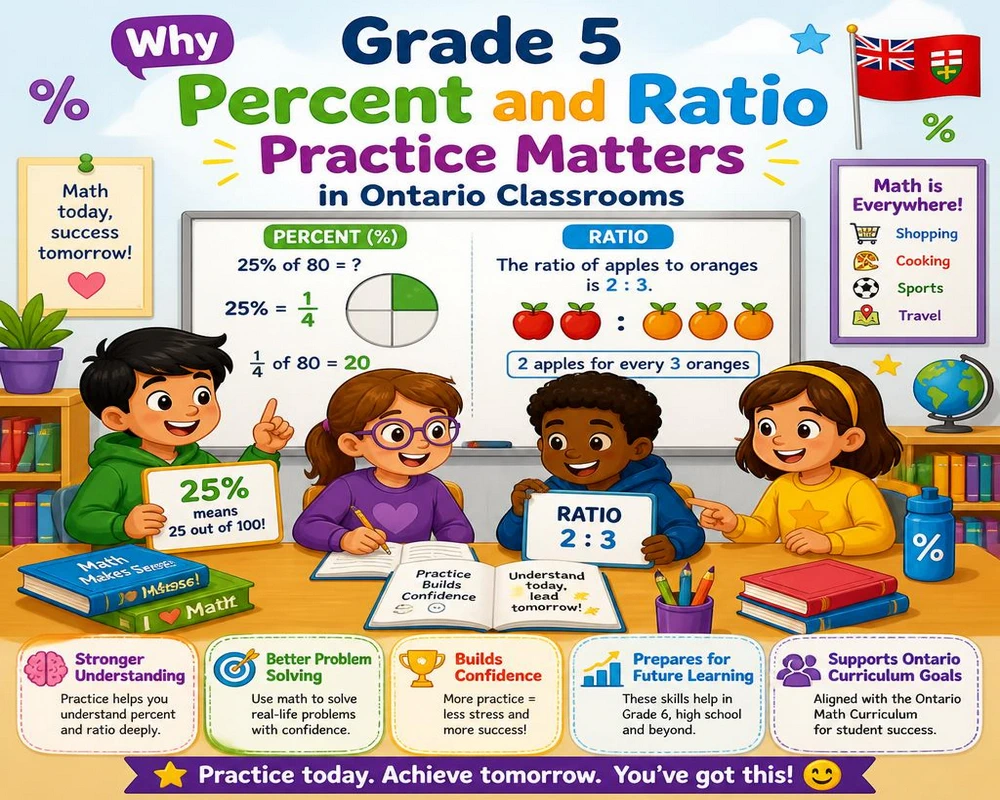
Why Grade 5 Percent and Ratio Practice Matters in Ontario Classrooms
The renewed Ontario math curriculum, updated in 2020 and still the operating framework for elementary classrooms across the province, places percent and ratio squarely in the Number strand for Grade 5. Students are expected to represent, compare, and make sense of percentages up to 100%, and to understand ratios as a way of comparing two or more quantities. This isn’t busywork — it’s foundational thinking that connects directly to fractions, decimals, and eventually algebra.
How the Ontario Math Curriculum Approaches Percent and Ratio
Ontario’s curriculum documents describe percent as “a special rate that expresses a number as a part of 100,” and ratio as a comparison between two quantities that can be part-to-part or part-to-whole. In practice, this means Grade 5 teachers are asking students to move fluidly between fractions, decimals, and percentages — recognizing that 1/2, 0.5, and 50% are three faces of the same idea. Ratio questions Grade 5 students encounter often involve everyday scenarios: mixing paint colors, comparing class ratios of boys to girls, or figuring out ingredient ratios in a recipe.
Real Classroom Insights from Ontario Teachers
In conversations with several Ontario elementary teachers over the past two school years, one theme kept surfacing: students who practiced percent and ratio using visual models — hundred grids, ratio tables, bar models — retained the concepts far longer than students who jumped straight into abstract calculation. A 2024 review of elementary math instruction published by the Ontario Association for Mathematics Education noted that classrooms using concrete-to-abstract progressions saw measurably stronger performance on EQAO-style number sense tasks. That finding lines up with what most experienced teachers already suspected: kids need to see the math before they can do it in their heads.
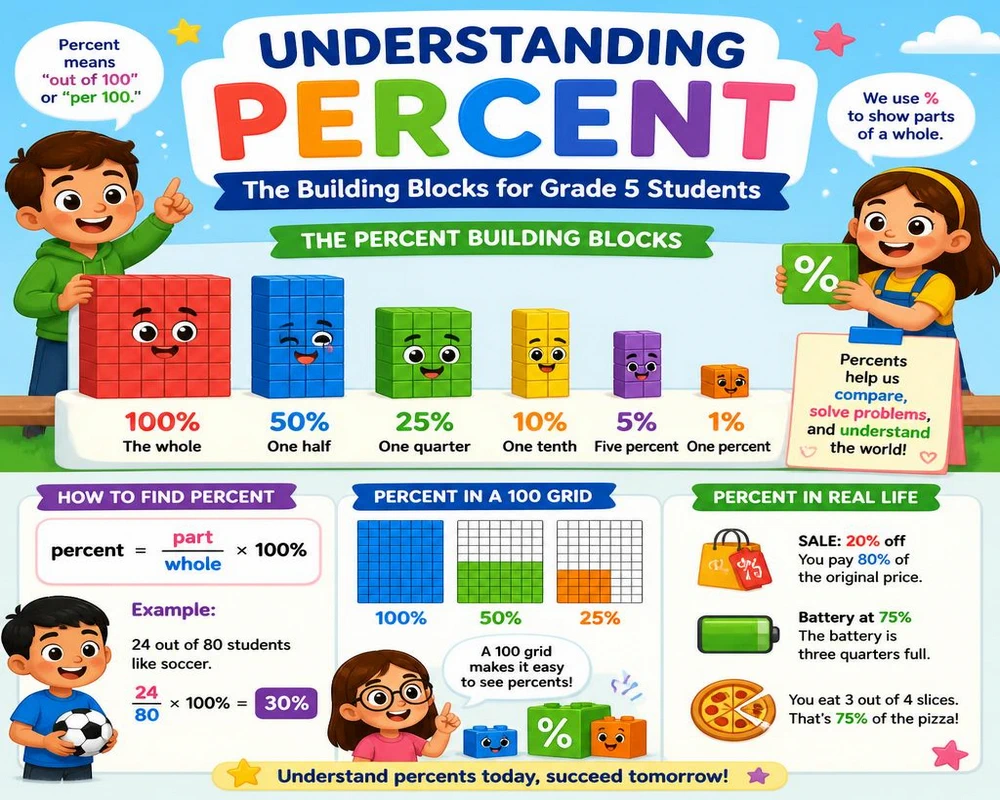
Understanding Percent: The Building Blocks for Grade 5 Students
Before diving into practice questions, it helps to slow down and make sure the core idea of percent is genuinely understood, not just memorized.
What Is a Percent, Really?
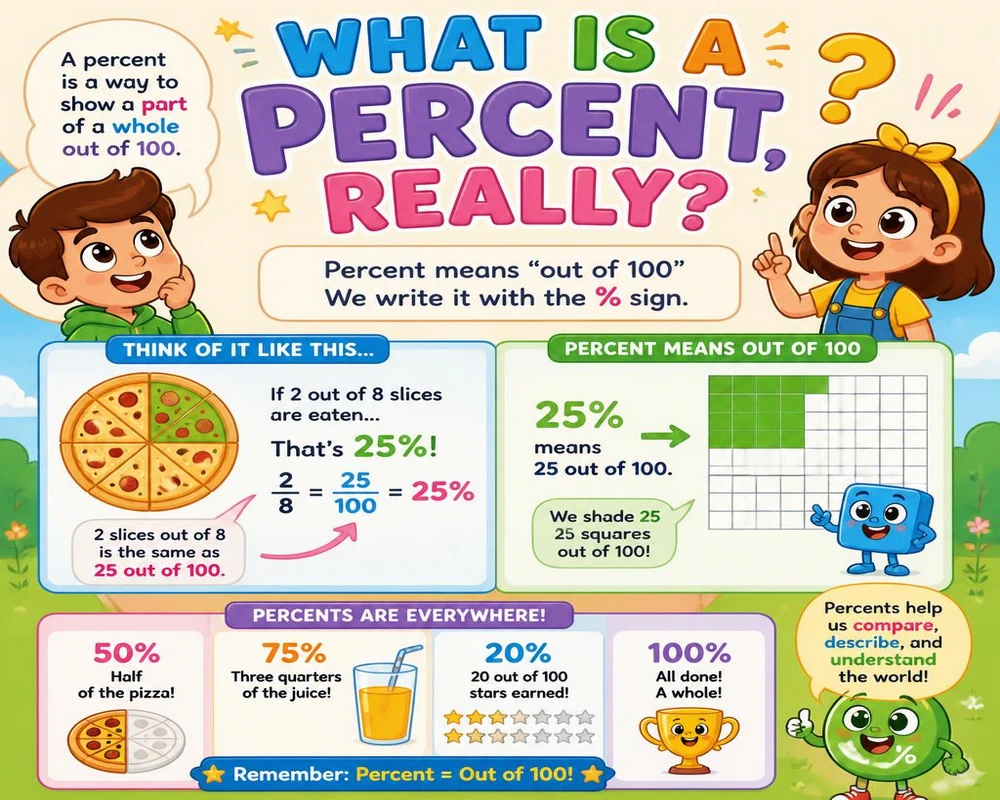
A percent is simply a fraction out of 100. When a student sees 40%, they should immediately picture 40 out of every 100 parts. This is why hundred grids are such a powerful teaching tool for percent practice Grade 5 Ontario classrooms rely on — shading 40 out of 100 squares makes the abstract concrete. Once students internalize this, converting between fractions, decimals, and percentages becomes almost automatic:
- 1/4 = 0.25 = 25%
- 1/2 = 0.50 = 50%
- 3/4 = 0.75 = 75%
- 1/10 = 0.10 = 10%
Common Percent Mistakes Students Make
After years of watching students work through percent problems, a few errors show up again and again:
- Confusing “percent of” with “percent off.” Students often calculate the wrong final answer because they forget whether the question wants the discounted price or just the discount amount.
- Misplacing the decimal point. Converting 5% to 0.5 instead of 0.05 is one of the most frequent slip-ups in Grade 5 math percent Canada-wide, not just in Ontario.
- Skipping the “out of 100” reasoning. Kids who memorize a formula without understanding it tend to freeze on unfamiliar wording.
Seeing percent as just another way to write a fraction — not a brand-new, unrelated concept — is what makes this topic click for most Grade 5 students. Ontario’s Literacy and Numeracy Secretariat publishes research-backed strategies for teaching exactly this kind of connected number sense, which is worth a look if a child seems to be memorizing rules rather than understanding them.
Understanding Ratio and Proportion for Grade 5 Ontario Students
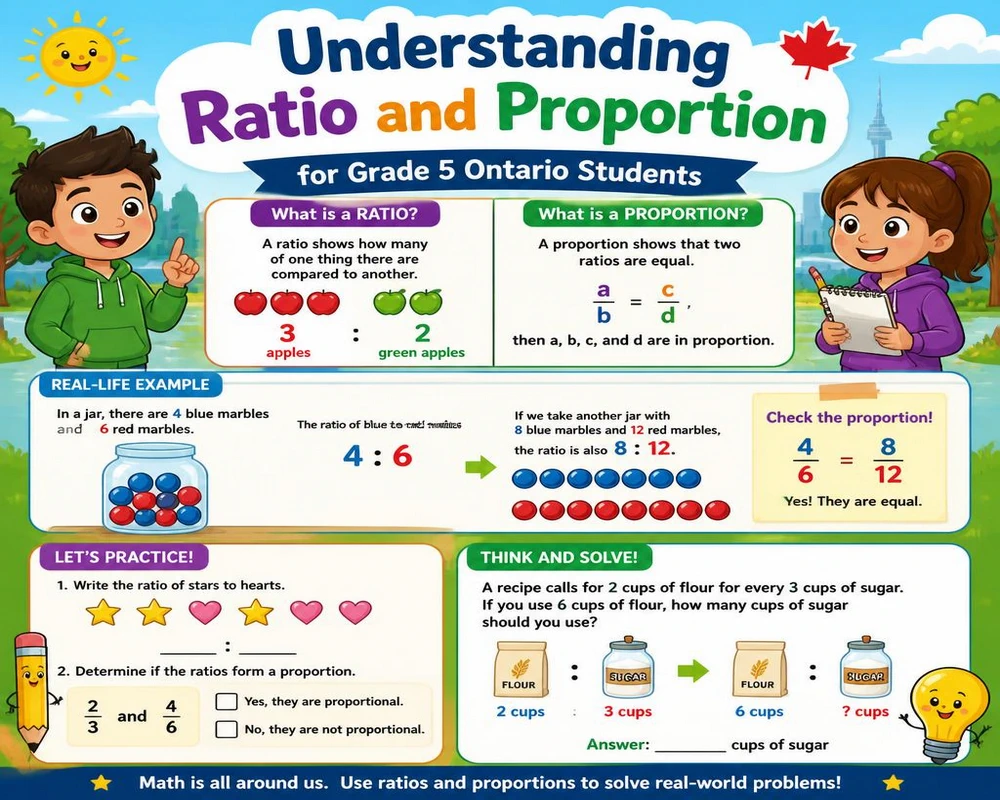
Ratio tends to feel more intuitive to some students because it mirrors real comparisons they already make — “I have twice as many stickers as you.” But it also introduces new vocabulary and notation that needs deliberate practice.
Ratio vs. Fraction: Clearing Up the Confusion
One of the biggest conceptual hurdles in ratio questions Grade 5 students face is distinguishing part-to-part ratios from part-to-whole fractions. If a classroom has 12 boys and 18 girls, the ratio of boys to girls is 12:18 (which simplifies to 2:3), but the fraction of the class that is boys is 12/30. These look similar but answer different questions, and students who blur the two lines will make consistent errors on tests.
Proportion Grade 5 Ontario: Solving Real Problems
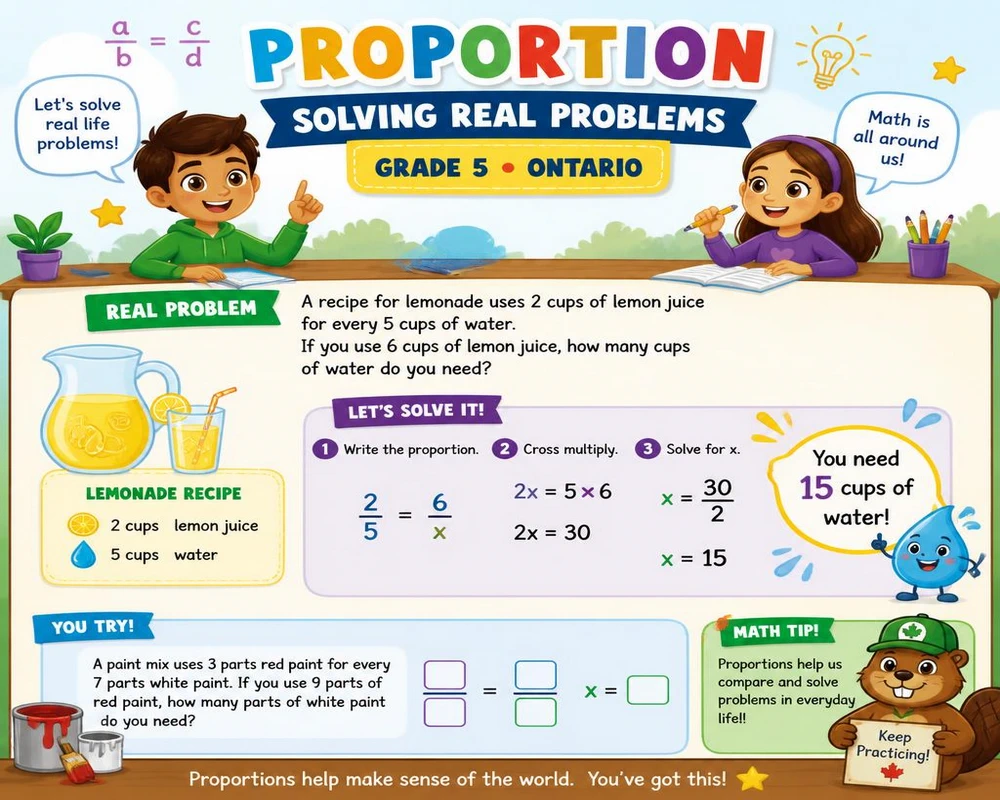
Proportion is where ratio becomes genuinely useful. A proportion states that two ratios are equal, and Grade 5 students are typically introduced to solving for a missing value using scaling or simple multiplication. For example, if a recipe uses a ratio of 2 cups of flour to 3 cups of sugar, and a student wants to know how much sugar is needed for 6 cups of flour, they can scale the ratio 2:3 up by a factor of 3, landing on 9 cups of sugar. This kind of proportional reasoning is directly tested through proportion Grade 5 Ontario curriculum expectations and shows up constantly in real-world contexts like cooking, construction, and budgeting.
20 Grade 5 Percent and Ratio Practice Questions (With Answers)
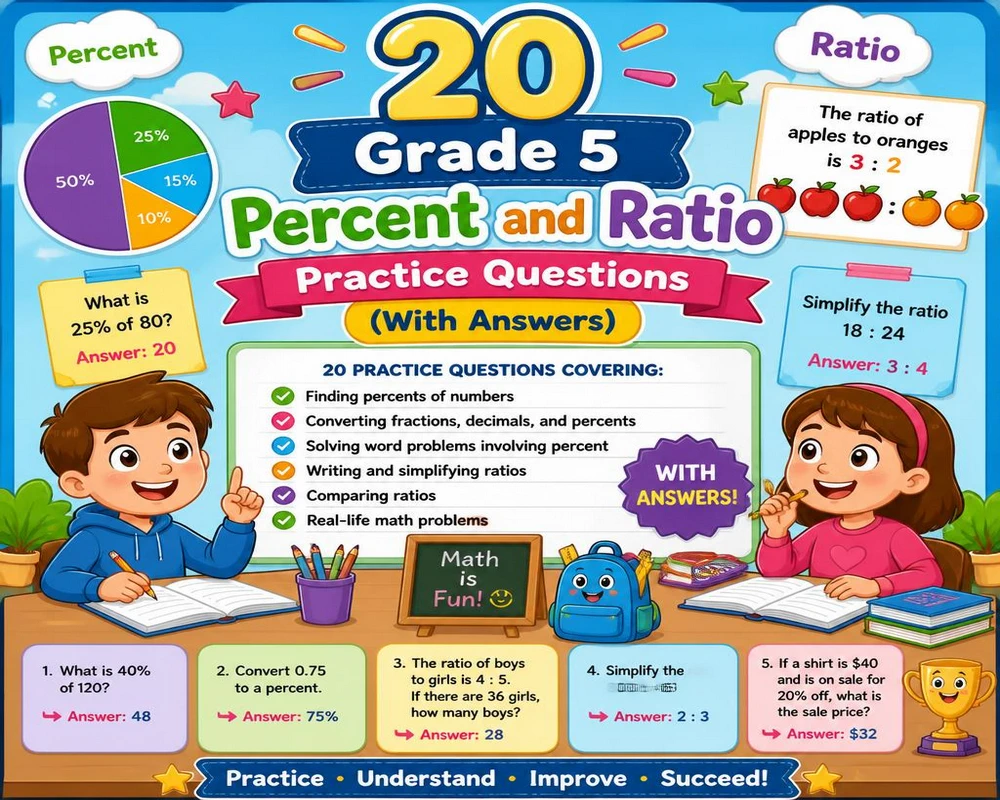
Below is a mixed practice set designed to mirror the style and difficulty level of questions found in Ontario classrooms and on standardized assessments. Work through them without a calculator first — mental math builds the number sense this unit depends on.
Percent Practice Questions
| # | Question | Answer |
|---|---|---|
| 1 | What is 10% of 80? | 8 |
| 2 | What is 25% of 200? | 50 |
| 3 | Convert 3/4 to a percent. | 75% |
| 4 | Convert 0.6 to a percent. | 60% |
| 5 | A shirt costs $40 and is 20% off. What is the discount amount? | $8 |
| 6 | What is 50% of 90? | 45 |
| 7 | A student scored 18 out of 20 on a quiz. What percent did they score? | 90% |
| 8 | What is 100% of 37? | 37 |
| 9 | Convert 15% to a fraction in lowest terms. | 3/20 |
| 10 | What is 5% of 60? | 3 |
Ratio and Proportion Practice Questions
| # | Question | Answer |
|---|---|---|
| 11 | Write the ratio of 8 apples to 12 oranges in simplest form. | 2:3 |
| 12 | A class has 14 boys and 16 girls. What is the ratio of boys to total students? | 14:30 or 7:15 |
| 13 | A recipe needs a ratio of 3 parts water to 1 part juice concentrate. How much water is needed for 4 cups of concentrate? | 12 cups |
| 14 | If the ratio of red to blue marbles is 3:5, and there are 15 red marbles, how many blue marbles are there? | 25 |
| 15 | Simplify the ratio 24:36. | 2:3 |
| 16 | A model car is built at a ratio of 1:20. If the real car is 400 cm long, how long is the model? | 20 cm |
| 17 | Write the ratio 6:9 as a fraction in lowest terms. | 2/3 |
| 18 | If 2 pencils cost $1, how much do 10 pencils cost at the same ratio? | $5 |
| 19 | A garden has flowers in a ratio of 4 tulips to 1 daisy. If there are 5 daisies, how many tulips are there? | 20 |
| 20 | Express the ratio 10:25 in simplest form. | 2:5 |
Notice how the questions move from straightforward percent-of calculations to multi-step ratio and proportion problems. That progression matters — jumping straight to word problems without mastering the basics is one of the fastest ways to erode a student’s confidence.
Tips for Parents and Teachers Supporting Percent Practice Grade 5 Ontario
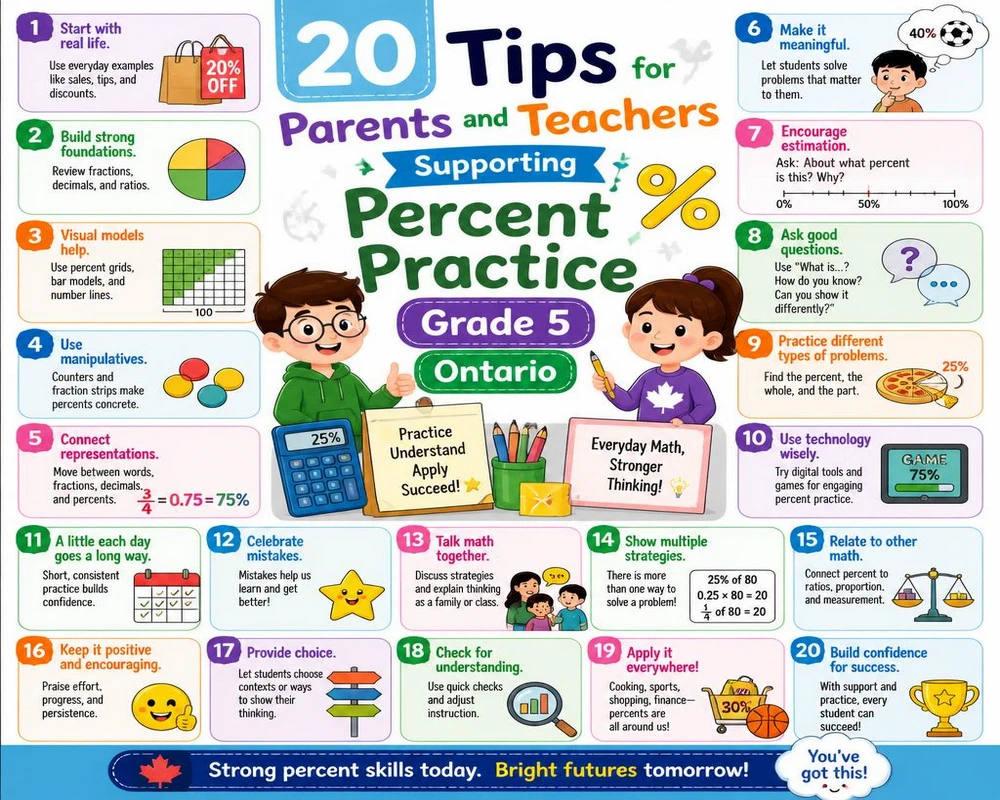
Practice questions alone won’t build lasting understanding. The way practice is structured matters just as much as the content itself.
At-Home Strategies That Work
- Use real money. Calculating tax, tips, or sale discounts with actual dollar amounts makes percent tangible rather than abstract.
- Cook together. Doubling or halving a recipe is a natural, low-pressure way to reinforce ratio and proportion.
- Keep sessions short. Ten to fifteen focused minutes, three or four times a week, beats one long Sunday cram session almost every time.
- Talk through the “why.” Ask your child to explain their reasoning out loud — it reveals gaps a correct answer can hide.
Classroom Techniques for Ratio Questions Grade 5
Teachers who see the strongest results tend to lean on ratio tables and double number lines rather than jumping to cross-multiplication too early. These visual tools let students see the relationship between quantities before they’re asked to manipulate it symbolically. Pairing this with frequent, low-stakes quizzing — rather than one high-pressure test — also tends to build more durable understanding, a finding echoed in recent Canadian math education research on retrieval practice published in 2025.
Common Pitfalls and How to Avoid Them
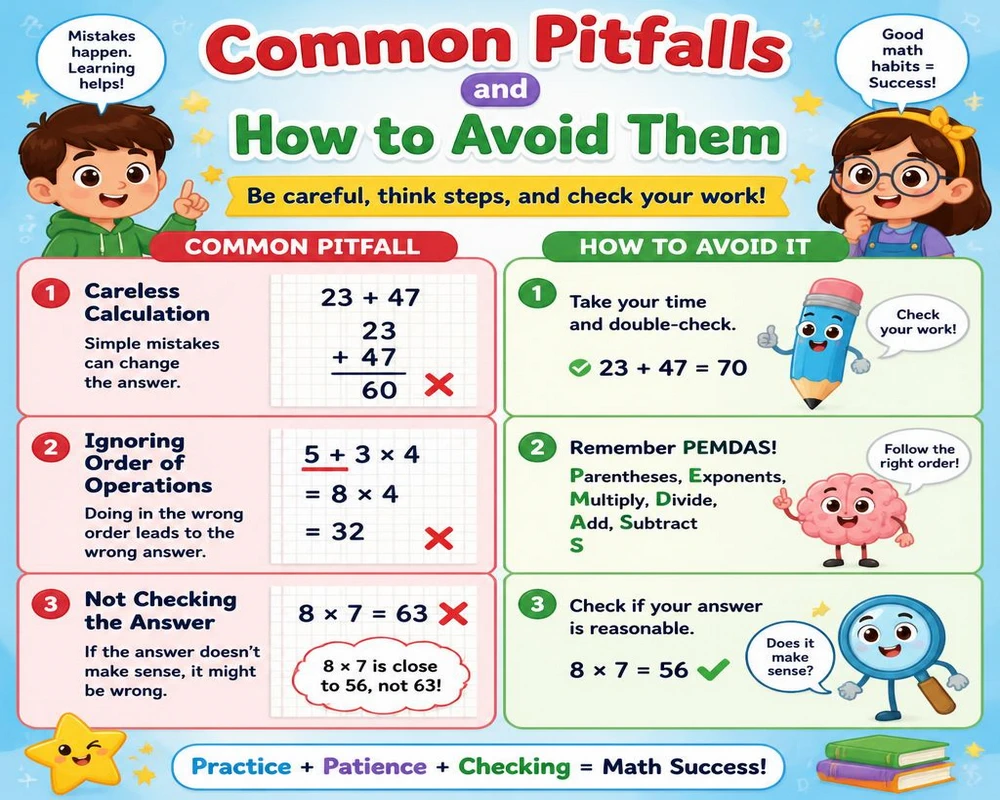
Even well-prepared students stumble on a few predictable traps. Watch for these:
- Rushing word problems. Encourage students to underline the numbers and circle the question before calculating anything.
- Forgetting to simplify ratios. A correct but unsimplified ratio can still cost marks on Ontario assessments.
- Mixing up “of” and “off.” This tiny word changes the entire calculation in percent problems.
- Relying only on memorized formulas. Without conceptual understanding, students struggle the moment a question is phrased differently than expected.
Bringing It All Together
Percent and ratio work builds directly on the decimal and fraction skills students develop earlier in Grade 5, and it sets the stage for more formal ratio work in Grade 6. For a broader view of everything the year covers, our Grade 5 math practice hub brings decimals, ratios, algebra, and percent together in one place.
Grade 5 percent and ratio practice isn’t just another curriculum checkbox — it’s the bridge between concrete arithmetic and the proportional reasoning students will lean on for the rest of their academic lives. With consistent, well-structured practice grounded in visual models and real-world context, most students move from confusion to confidence within a matter of weeks, not months. Start with a few questions from the practice set above today, revisit them weekly, and watch how quickly the concepts start to click. If your child is still shaky after a few weeks of home practice, don’t hesitate to loop in their teacher — a quick conversation can uncover exactly where the gap is and how to close it fastest.
Frequently Asked Questions
1. What percent and ratio skills should a Grade 5 student know by the end of the year in Ontario?
By the end of Grade 5, Ontario students should be able to convert between fractions, decimals, and percentages, calculate a percentage of a whole number, compare and simplify ratios, and solve simple proportion problems involving scaling.
2. How much time should my child spend on percent and ratio practice each week?
Most educators recommend three to four short sessions of 10 to 15 minutes rather than one long session. Consistency builds retention far better than cramming.
3. Why do students confuse ratio and fraction so often?
Ratios and fractions can look almost identical in notation, but ratios compare two separate quantities (part-to-part) while fractions represent part of a single whole. Without explicit practice distinguishing the two, confusion is common and expected.
4. Are there free resources for ratio questions Grade 5 students can use at home?
Yes. Many Ontario school boards provide free printable worksheets through their websites, and public library systems across the province often offer free math tutoring resources and workbooks aligned to the Ontario curriculum.
5. How is percent tested on EQAO or classroom assessments in Grade 5?
Percent typically appears through word problems involving discounts, scores, or comparisons, often requiring students to explain their reasoning in addition to providing a numerical answer.
6. What’s the best way to introduce proportion Grade 5 Ontario concepts for the first time?
Start with visual tools like ratio tables or double number lines before introducing symbolic methods like cross-multiplication. Concrete examples, such as recipe scaling, help make the abstract idea click.
7. My child can calculate percentages but struggles with word problems — what’s going wrong?
This is extremely common and usually points to reading comprehension within math, not a lack of calculation skill. Practice having your child restate the question in their own words before solving it.
8. Is Grade 5 percent and ratio practice different across Canadian provinces?
The core math concepts are similar across Canada, but the specific curriculum expectations, timing, and assessment style vary by province. This guide follows the Ontario math curriculum specifically.