
Grade 3 Patterns and Algebra Practice: 7 Clever Ideas
Grade 3 patterns and algebra practice tends to look deceptively familiar at first — kids have been extending simple repeating patterns since Grade 1, so a new pattern unit doesn’t sound like much of a stretch. But watch a student meet a growing pattern for the first time, one where the numbers themselves increase by a changing amount, and that familiar confidence often disappears fast. Having spent years supporting Ontario’s Junior Division classrooms, I’ve found this exact moment marks a genuine shift from simple repetition toward real algebraic thinking, and it deserves to be treated that way.
This guide walks through what Ontario’s Grade 3 curriculum expects around patterns and algebra, why growing patterns trip up so many students, and seven clever ideas to build lasting understanding at home.
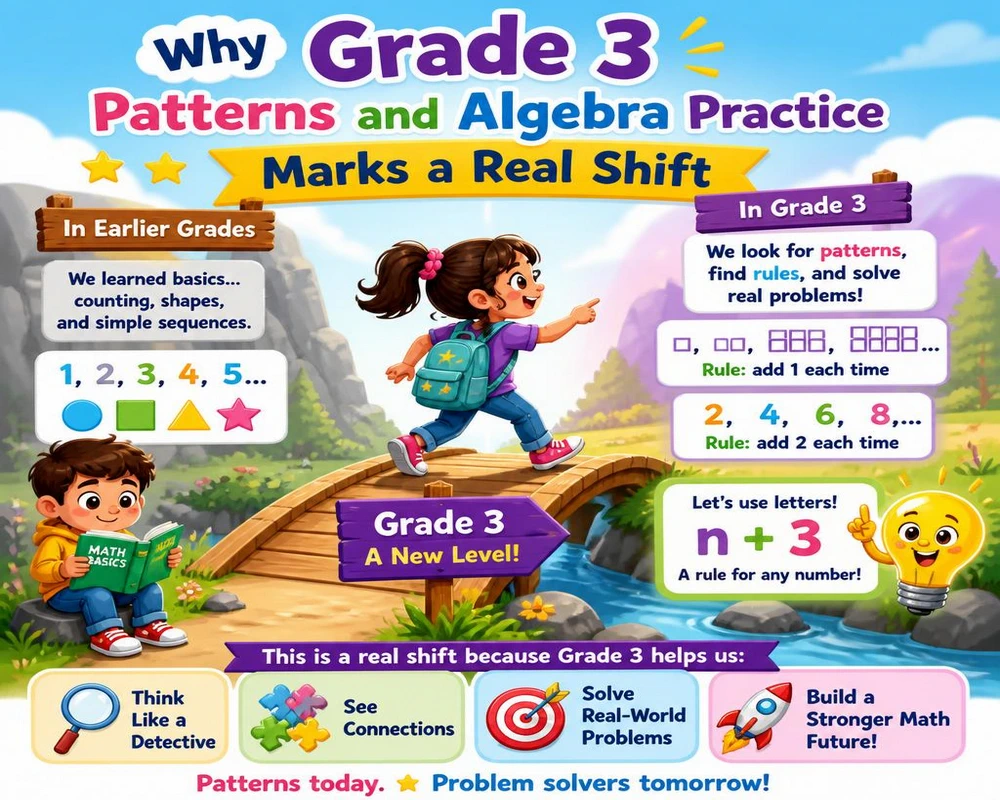
Why Grade 3 Patterns and Algebra Practice Marks a Real Shift
Ontario’s curriculum places patterns and equality under the Algebra strand, and Grade 3 is where this work genuinely deepens. Repeating patterns from earlier grades (red, blue, red, blue) give way to growing patterns, where each term changes according to a consistent rule. Students also start working more formally with number sentences and the concept of equality as balance, not just an answer waiting at the end of an equation.
This matters because Grade 3 patterns and algebra practice is quietly laying the groundwork for formal algebra years down the road. A student who genuinely understands that a growing pattern follows a rule, and that an equal sign represents balance rather than just “the answer comes next,” carries that thinking forward into far more complex math later.
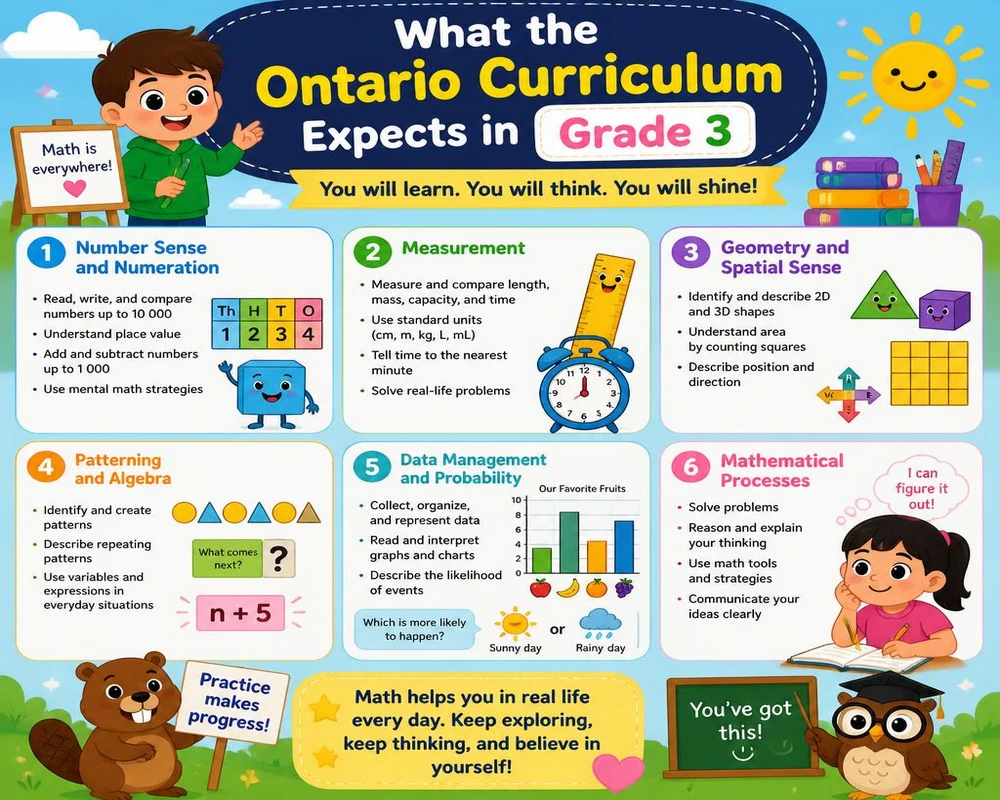
What the Ontario Curriculum Expects in Grade 3
By the end of Grade 3, students are generally expected to:
- Identify, describe, and extend growing and shrinking patterns
- Determine the pattern rule for a given sequence
- Understand the equal sign as representing balance between two sides
- Solve simple number sentences with a missing number
- Create their own patterns based on a specific rule
Notice how much of this list depends on identifying and explaining a rule, not just continuing a sequence by sight. Grade 3 patterns and algebra practice built around explaining the reasoning behind a pattern tends to build far deeper understanding than simple extension alone.
Growing Patterns: A Genuine Step Up
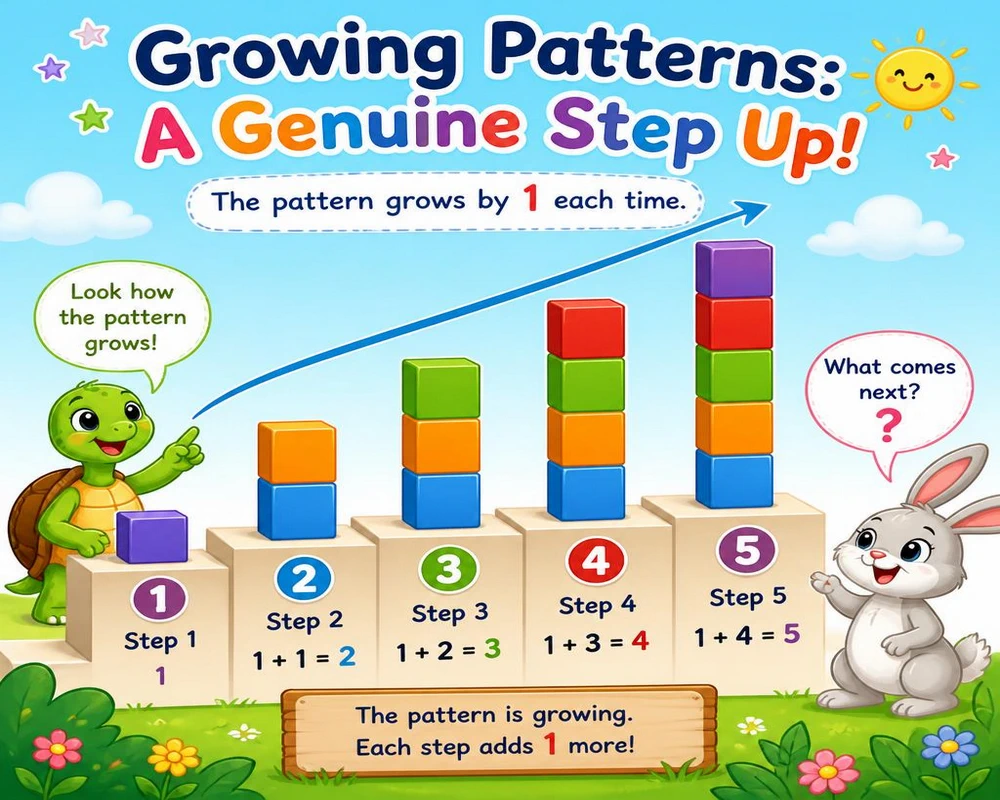
What Makes a Pattern “Growing”
A repeating pattern cycles through the same small set of elements. A growing pattern, by contrast, changes by a consistent amount at each step — 3, 6, 9, 12 grows by adding 3 each time, rather than simply repeating.
| Pattern | Rule | Next Term |
|---|---|---|
| 2, 4, 6, 8 | Add 2 each time | 10 |
| 5, 10, 15, 20 | Add 5 each time | 25 |
| 1, 3, 5, 7 | Add 2 each time | 9 |
Growing Pattern Practice Questions
- Continue the pattern: 4, 8, 12, 16, ___
- Describe the rule for this pattern: 3, 7, 11, 15
- What are the next two terms in this pattern: 10, 20, 30, ___, ___?
Answers: 1) 20 2) Add 4 each time 3) 40, 50
Understanding Equality and Number Sentences
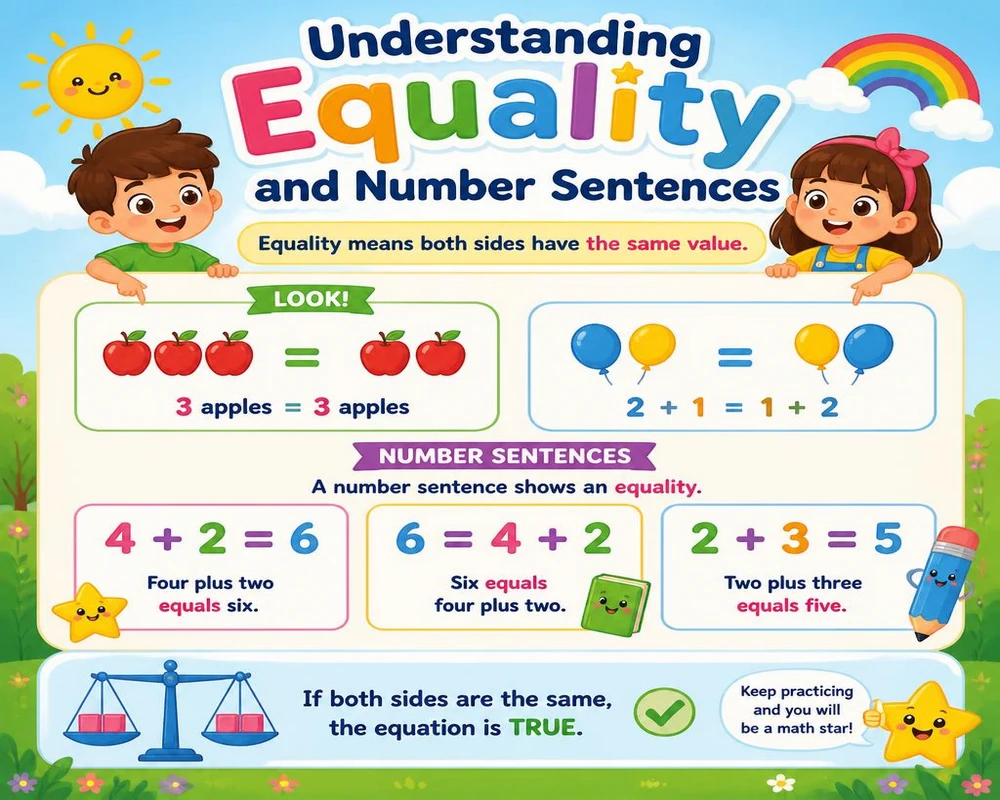
The Equal Sign as Balance, Not “The Answer”
A common misconception carried from earlier grades is treating the equal sign as a signal that “the answer comes next,” rather than as a symbol showing that both sides hold the same value. This becomes especially important once missing numbers can appear on either side of an equation.
Number Sentence Practice Questions
- 7 + ___ = 15
- ___ − 6 = 9
- Is 8 + 4 equal to 5 + 7? Explain how you know.
Answers: 1) 8 2) 15 3) Yes, both sides equal 12
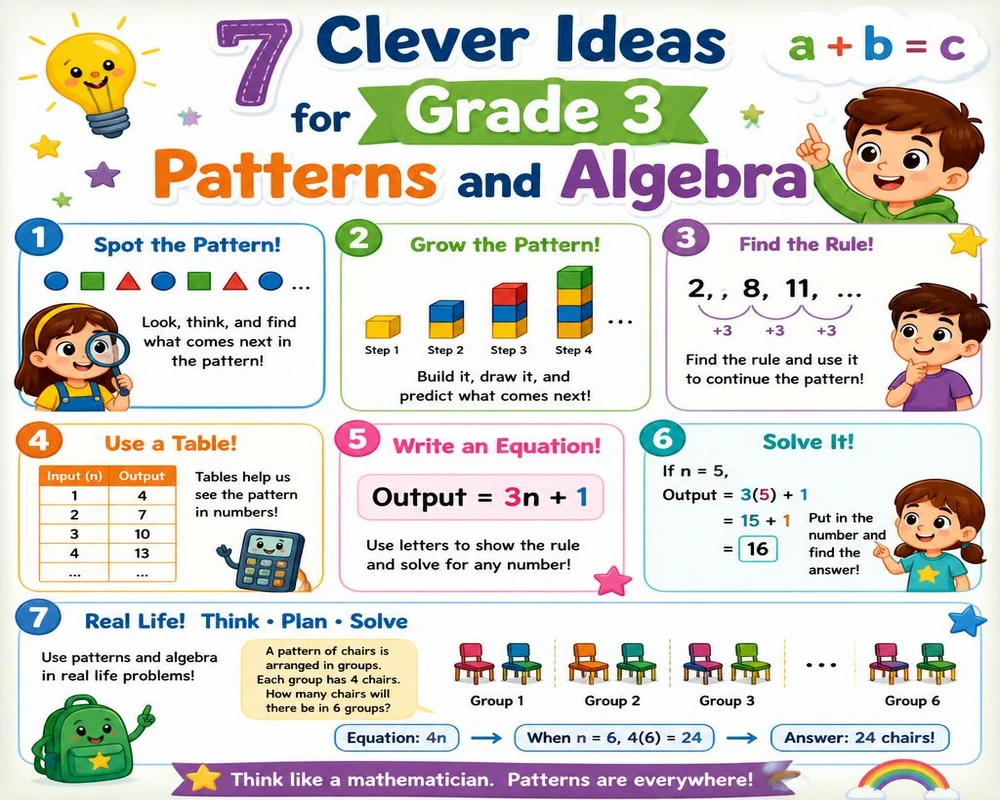
7 Clever Ideas for Grade 3 Patterns and Algebra
Idea 1: Build Growing Patterns With Real Objects
Use blocks or coins to physically build a growing pattern step by step, letting your child see exactly how much is added at each stage.
Idea 2: Always Ask “What’s the Rule?”
Rather than just asking your child to continue a pattern, regularly ask them to state the rule in their own words before moving forward.
Idea 3: Practice Equality With a Balance Scale
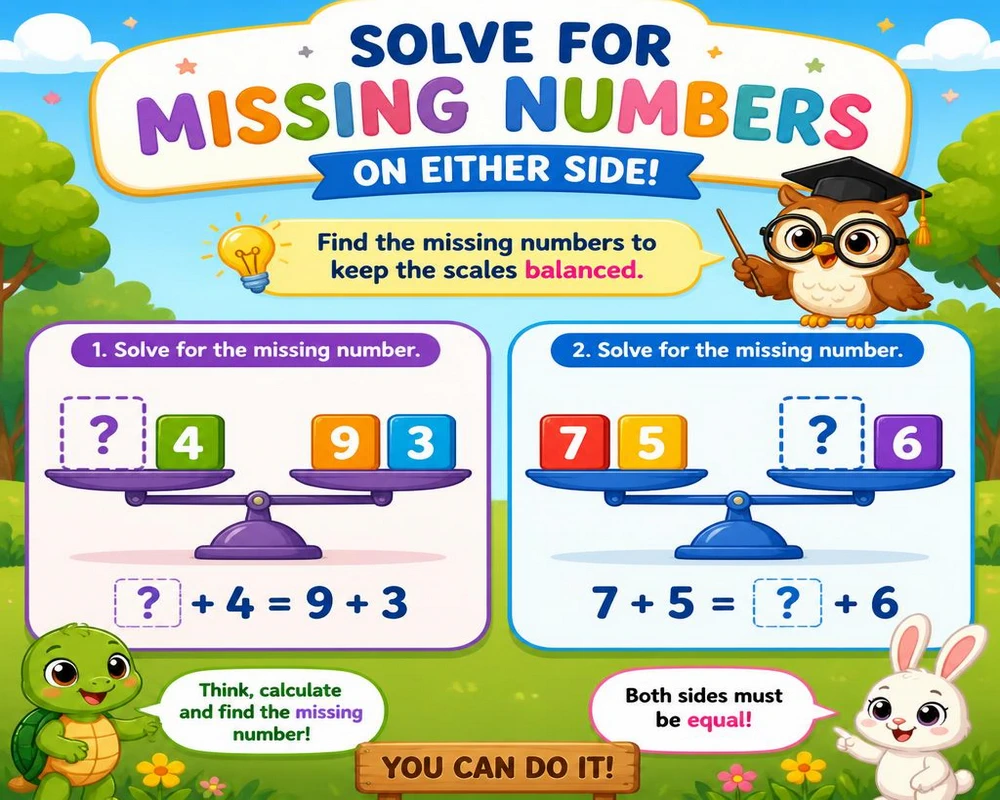
A real balance scale makes the concept of equal sides genuinely visible — both sides must weigh the same for the scale to balance, mirroring exactly what an equal sign represents.
Idea 4: Create Patterns in Both Directions
Practice growing patterns (increasing) and shrinking patterns (decreasing) together, so your child recognizes both types rather than assuming patterns always grow.
Idea 5: Solve for Missing Numbers on Either Side
Mix problems where the missing number appears first, in the middle, and at the end of an equation, avoiding the assumption that unknowns always come last.
Idea 6: Have Your Child Invent Their Own Pattern
Ask your child to create a growing pattern with a rule of their choosing, then explain it to you. This reveals whether the underlying concept genuinely makes sense to them.
Idea 7: Look for Patterns in Real Life
Point out real growing patterns — stacking cups, a savings jar increasing by the same amount each week — to show that this isn’t just an abstract worksheet skill.
Each idea in this Grade 3 patterns and algebra practice guide targets a different piece of algebraic reasoning, so combining several together builds far more flexible thinking than repeating just one.
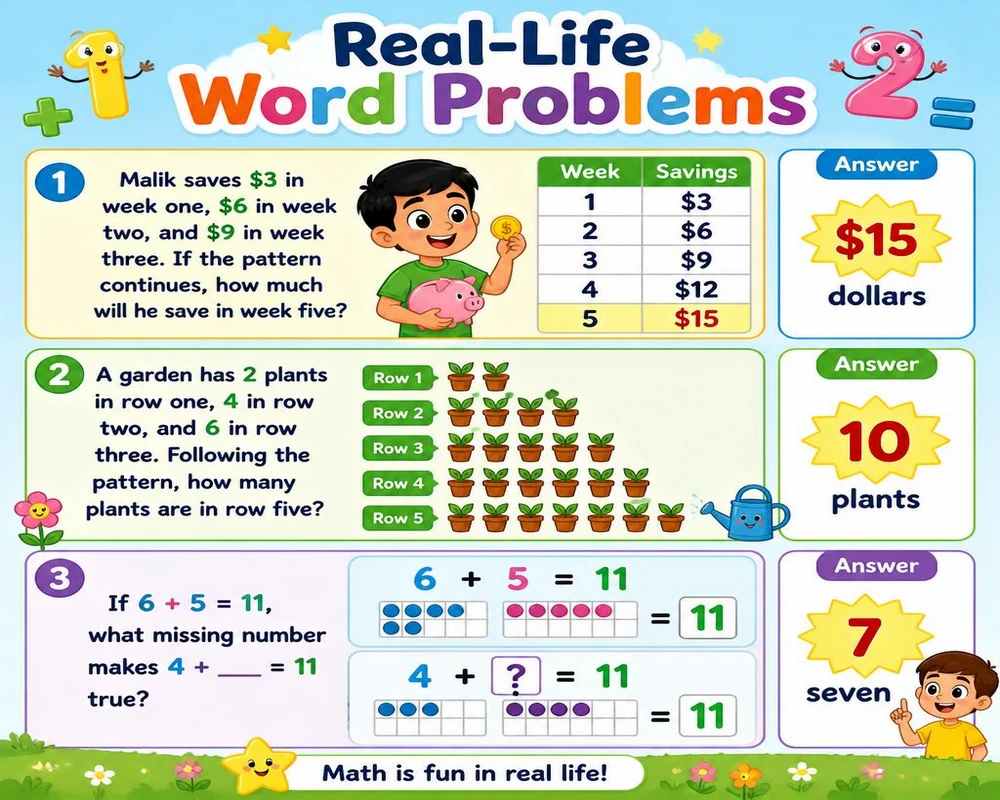
Real-Life Word Problems
- Malik saves $3 in week one, $6 in week two, and $9 in week three. If the pattern continues, how much will he save in week five?
- A garden has 2 plants in row one, 4 in row two, and 6 in row three. Following the pattern, how many plants are in row five?
- If 6 + 5 = 11, what missing number makes 4 + ___ = 11 true?
Answers: 1) $15 2) 10 plants 3) 7
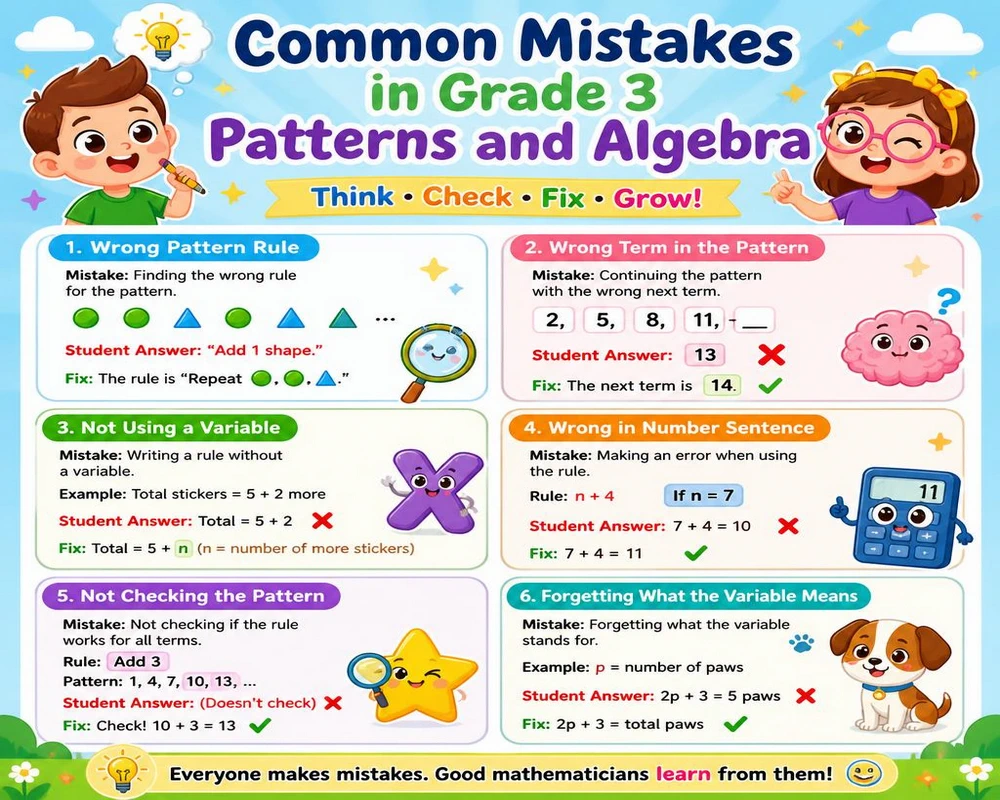
Common Mistakes in Grade 3 Patterns and Algebra
Continuing a Pattern Without Understanding the Rule
Some students correctly extend a pattern by copying the visual trend without being able to explain why. Regularly asking “what’s the rule?” catches this gap immediately.
Treating the Equal Sign as “The Answer Comes Next”
This deeply ingrained habit from earlier grades causes real confusion once missing numbers appear on either side of an equation. A physical balance scale helps rebuild the correct mental model.
Assuming All Patterns Grow
Some students default to adding when extending any pattern, even shrinking ones. Practicing both types together prevents this automatic assumption.
Most struggles during Grade 3 patterns and algebra practice come from copying a pattern visually without understanding the rule behind it, not from a genuine gap in reasoning ability.
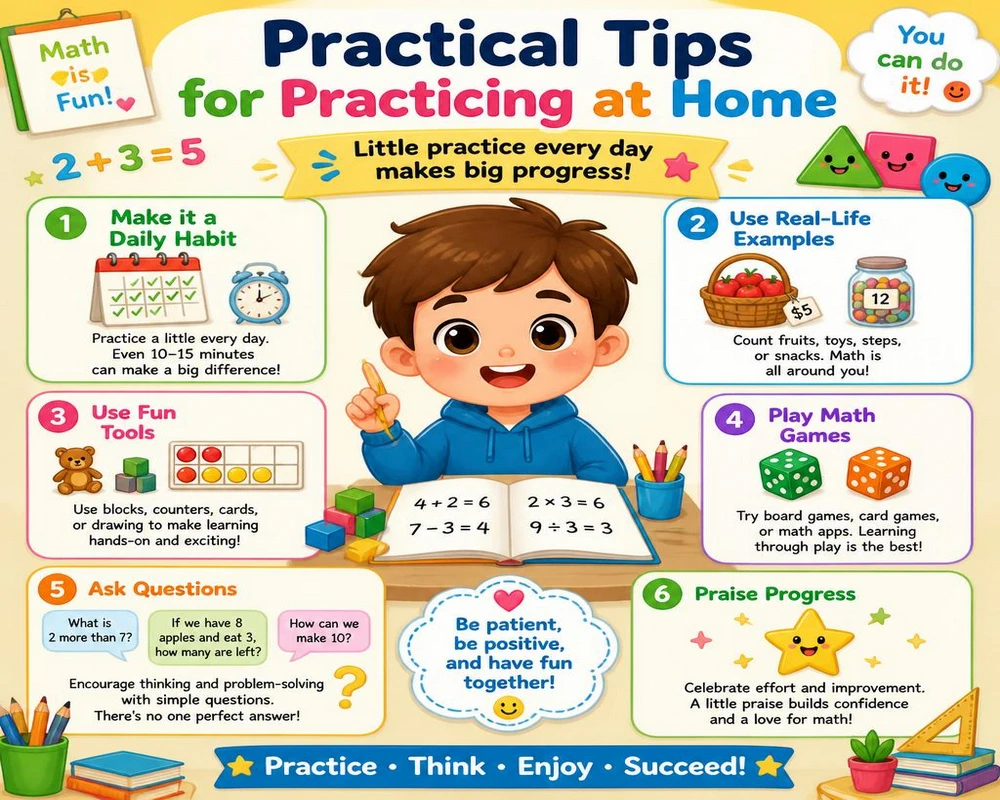
Practical Tips for Practicing at Home
Use a Real Balance Scale
A simple balance scale, even a homemade one using a coat hanger and cups, makes equality a physical, visible concept rather than an abstract rule.
Talk Through the Rule Out Loud
Encourage your child to say the pattern rule in a full sentence (“it grows by adding 3 each time”) rather than just continuing the sequence silently.
Keep Practice Short and Consistent
Ten to fifteen minutes of focused Grade 3 patterns and algebra practice, a few times a week, builds stronger reasoning skills than occasional longer sessions.
Conclusion: Building the Foundation for Real Algebra
Grade 3 patterns and algebra practice asks students to move beyond simple repetition into genuine rule-based reasoning — recognizing growth, understanding balance, and solving for unknowns wherever they appear. That’s real algebraic thinking, even at this early stage, and it deserves patient, hands-on attention now. Students who build this foundation carry it forward smoothly into the more formal algebra waiting in later grades.
Build a quick growing pattern with coins or blocks tonight and ask your child to explain the rule in their own words. A few minutes of hands-on practice like this build understanding no worksheet alone can match.
Regular Grade 3 patterns and algebra practice, built on real objects and explained rules rather than silent memorization, gives your child a genuine head start on formal algebra.
Frequently Asked Questions
1. What is the difference between a repeating pattern and a growing pattern?
A repeating pattern cycles through the same small set of elements, while a growing pattern changes by a consistent amount at each step, like adding 3 every time.
2. Why does my child struggle with the equal sign?
Many students carry forward the idea that the equal sign means “the answer comes next” from earlier grades, which causes confusion once missing numbers can appear anywhere in an equation.
3. How can I teach equality without formal algebra lessons?
A real balance scale is one of the most effective tools, since it makes the concept of both sides holding equal value genuinely visible and physical.
4. What if my child can continue a pattern but can’t explain the rule?
This suggests the pattern is being copied visually rather than genuinely understood. Regularly asking “what’s the rule?” helps build this missing explanatory step.
5. Are shrinking patterns as important as growing patterns?
Yes, practicing both prevents students from assuming every pattern automatically increases, which builds more flexible, genuine understanding.
6. How much patterns and algebra practice should we do at home?
About 10-15 minutes, a few times a week, tends to be enough, especially when built around hands-on tools like blocks or a balance scale.
7. How does this connect to later grades?
It builds the conceptual foundation for formal algebraic thinking, including variables and more complex equations, introduced in Grade 4 and beyond.
Patterns and algebra is one part of a full Grade 3 year that also covers multiplication, fractions, and area. For the complete picture, our Grade 3 math practice hub brings every topic together in one place.
Teachers across Ontario regularly share classroom-tested strategies for teaching patterns and equality through the Ontario Association for Mathematics Education, a professional network dedicated to improving math instruction across the province.